The Designer of This Victorian Home Wanted Its Entertaining Space to Feel Like a 'Private Dining Room' in a Restaurant — Here's How It Turned Out
From the color palette to the mix of textures, this space brings retro design to the modern age

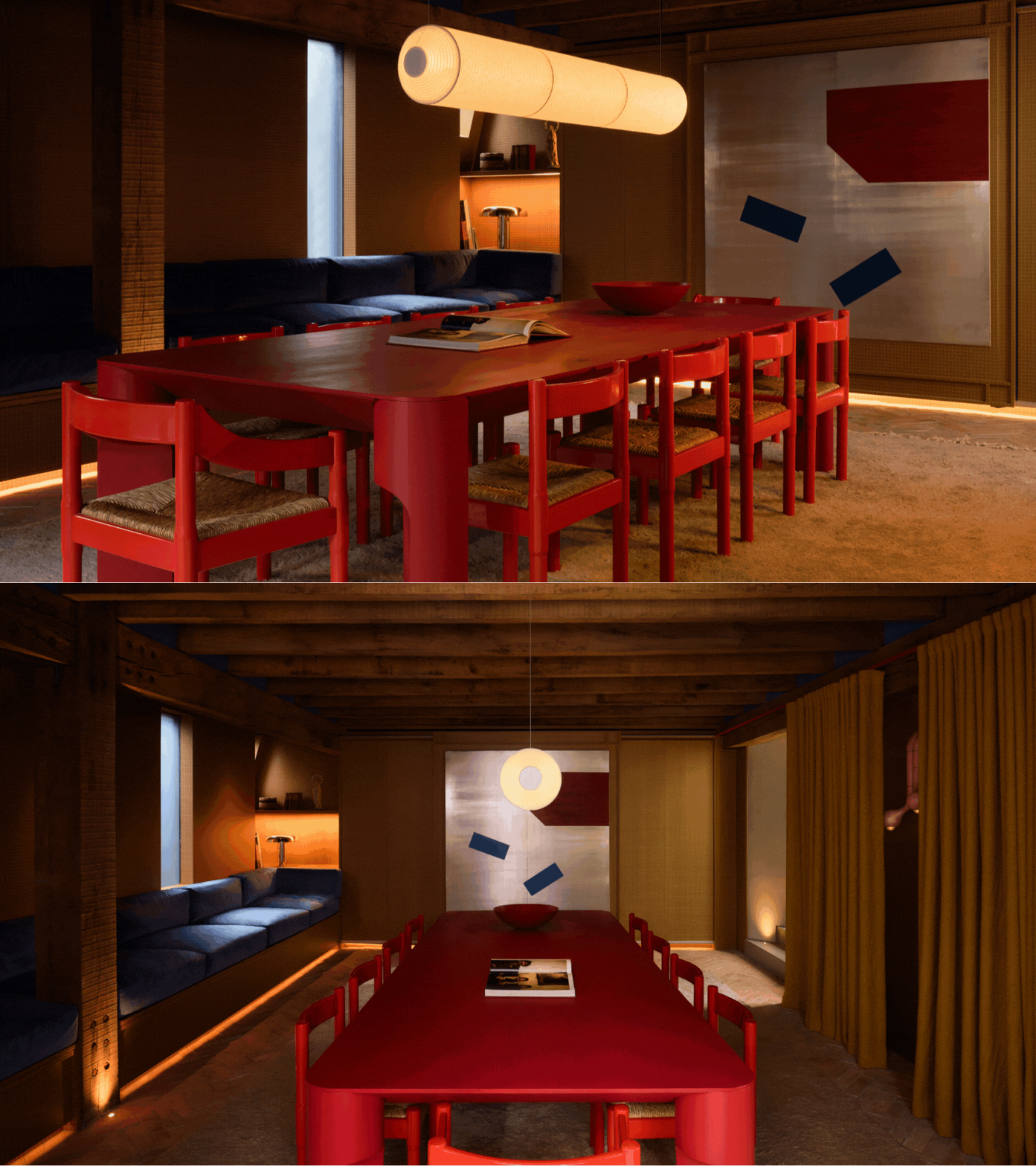
Nestled in the heart of leafy North London, you'll find a Highgate home with interiors anything like the traditional Victorian space you'd expect. Conceived by interior designer Oliver Lyttelton, the house maintains its cozy structure, while the rest has been transformed into a fusion of streamlined Scandinavian style and Space-Age 70s seduction.
The three-bedroom, four-bathroom project was built 20 years ago; however, Oliver's studio has completely transformed it to match both the client's unique personalities and their love for 70s-inspired style. Now, every room is alluring, warm, and strikingly experimental, but the dining room in particular caught my attention. Why? It's intriguingly modern and hits several of today's top dining room trends, yet it still feels inviting and unexplainably timeless.
I spoke with Oliver to learn more about the design and how each element was chosen to bring this space together as a whole. Something about the allure of moody retro design cultivates an exciting energy in entertaining spaces. Like what you see? Here's what Oliver has to say about designing a dining room like this.
The Mood

My eye was immediately drawn to the bold lighting and dramatic bouclé draping.
Part of what makes this dining room stand out so strikingly upon first impression is that it creates a clear sense of atmosphere and mood. The environment instantly elevates any meal or gathering that enters. "The goal was always to create an almost 70s private dining room experience," says Oliver Lyttelton, principal of London-based Oliver Lyttelton Studio.
Color, texture, and lighting all play a huge role in this (more on those elements to come), but as Oliver was working with a semi-open concept dining space, "we had to create a very distinct 'den' contrast from the cooking space," he explains. "The kitchen area is so bright and exposed, it was important to have an area you felt more covered."
The solution? A dramatic doorway curtain. "The curtain is Roam by Maharam and is a yellow bouclé, as we wanted almost a honey/beeswax inspired fabric," explains Oliver. The curtain helps create that distinct divide between the busy, bright kitchen and the sultry dining space, but it also serves for entertainment purposes.
"If the client was having people over for dinner, hiring a chef, or simply to hide the dirty dishes, then it can be closed to create a private cocoon," he adds. "It also really helps soften the quite sharp, bold lines of the room."

Oliver Lyttelton Studio is a London-based design practice working across interior design and creative direction. Oliver studied Product Design at Central Saint Martins and began his career at the original Conran Shop in Chelsea, where his appreciation for beautifully crafted objects and materials was shaped. His work is defined by a strong focus on bespoke furniture, innovative lighting, and creating an environment that harvests memories. The studio collaborates with both private and commercial clients, offering a tailored approach to spatial design, creative direction, and storytelling.
The Table

The red table brings color to the room while the rest of the palette helps ground it as a comfortable addition rather than a distracting statement.
Dining table trends are taking a bold and handcrafted turn, and the statement-making red table in this Highgate home leans into that mood beautifully. "The table is made by a furniture studio called Frank London," shares Oliver. "It was something I was a big fan of already, so when I first visited the client's house, and I saw that they owned one, I was very excited. It's something I've always wanted to use for a project."
For that reason, much of the color palette and design within the room stemmed from this playfully contemporary and timeless table. "It works perfectly in that room as the chunkiness of the legs really complements the heavy beams surrounding it," adds Oliver.
And while a red dining table may appear tricky to style, it actually can become an almost neutral-like piece, depending on the colors and materials that you pair with it.


The Palette

The red, blue, and yellow hues don't compete with each. Instead, they feel balanced.
Which brings us to the 70s-inspired color palette of this dining space. Something exciting to steal from contemporary interior design trends is the increasingly blurred line between restaurant design and private spaces. The deep, highly pigmented color palette brings that sense of theatrical drama that is more common in more experimental spaces like restaurants.
"We wanted to create a playful room using primary colors with a lot of inspiration from Corbusier, but in a refined way that didn’t seem too childish," says Oliver. With the dark undertones elevating the primary colors to more sophisticated shades of ochre yellows, navy blues, and oxblood reds, you almost don't initially realize these are the tried and true primary palette.
The mix of light warm vs cool colors helps keep the space vibrant and enveloping rather than too confining. This balance lets each moment shine (the blue bench seating, red table, or yellow tiles), without competing with one another.


The Lighting

Sconce lighting is always a good idea to increase mood, especially when it doubles as an art piece.
Image credit: Oliver Lyttelton

The chrome mushroom lamp is a true nod to the 70s.
Image credit: Oliver Lyttelton
The lighting was also essential to the glamorous and welcoming 70s lounge aesthetic. "We wanted to keep it as moody as possible, as again it was meant to be a den to almost hide from the other areas of the house that were very exposed to light," says Oliver.
Dining room lighting plays a huge role in how you interact with an entertaining space. Too bright a light can negatively impact a gathering, while finding the right softness sparks conversation and comfort. In Oliver's project, there is a mix of lighting sources that create a layered and nuanced effect.
A sculptural pendant light hangs overhead, acting as the main light source and also a central art piece, while smaller details (like the chrome mushroom lamp and organic pink sconce lights) cater more to mood and a dynamic space.


The Materials

The handcrafted vase, and even the cactus plant itself, adds visual interest and texture to the room.
While furnishings are easily noticed, specific material choices do important background work in a room. "Texture was a big influence on the design, which is why we have a mixture of reclaimed terracotta, wood veneer, wool, and velvet," Oliver explains. "Almost every choice in the room was made based on the wooden structural beams and the best way to complement them."
The wooden beams across the ceiling are the only existing feature from before the renovation. From there, "We used the terracotta tiles in a parquet form (typically reserved for wood flooring types) as this felt the right material to partner and create contrast in design with the beams."
However, out of all the textures and materials used, I was most captivated by the ochre subway tiles drenching the walls. Oliver shares, "The walls are actually wood veneer paneling with a white grid inlay from Alpi. I wanted to panel the room like the kitchen, but we needed something a bit different."
"The grid veneer walls were a really welcome contrast to have such a clean, sharp pattern against the more organic structure," he adds.


This dining room is an impressive study in how to blend contemporary, almost futuristic design elements with retro-inspired color schemes and materials. The result is an entertaining space that transports you to a groovier time, while staying a conversation-inspiring environment.
Who said formal dining rooms are out of style? Maybe they just need a little more experimentation.
