'Sleep Vacations' Are a Big Trend Right Now — How Hotels Are Making a Good Night's Rest an Art Form, and the Lessons I'm Taking Home With Me
From 'sleep concierges' to mandatory WiFi cut-offs, hotels dedicated to offering restful repose are having a moment that needn't stop just because your holiday is over

Had you asked me what vacations stood for a few years ago, my answer would have undoubtedly been one: all-day-long sightseeing and swimming in the ocean. But as years go by, I find myself reconsidering what time off should look like — whether, in fact, I should allow myself to forget about productivity altogether, including ticking hotspots and activities off my hot list, and indulge in actually restorative leisure for once.
It is a mindset that's taking up more space within the lifestyle industry, where 'sleep tourism' has earned a place of its own among the hottest travel trends of 2026.
In an era where it often feels impossible to know when and how to stop, time to properly unplug has become the latest social currency, or even better, the ultimate luxury. And so it's goodbye frenetic hop-on-hop-off holidays with more pitstops than hours of sojourn and welcome to the new era of invigorating stays and explorations. But what else is there to sleep tourism than a renewed focus on inactivity and repose? And how can designers help us bring its benefits home?
Inside the Sleep Tourism Movement — The Trend Reshaping How We Sleep, on-the-Move or at Home
An increasingly popular travel trend, sleep tourism is the phenomenon that sees more and more globetrotters worldwide embrace their time off as an opportunity to maximize their repose in whatever way possible, whether it's pure relaxation or learning how to sleep better.
So-called sleep tourism hotels may consist of anything from "formalized sleep programmes and pillow menus to circadian lighting and personalized consultations bookable as core parts of the guest experience," Martha Ferreira, the interior designer behind Present Made, a developer of UK rental neighborhoods "with thoughtful design and community at their heart," tells me. There can even be sleep-focused one-to-ones with seasoned consultants, as we saw represented in the Thai resort of White Lotus Season 3.
That many of the best spas in the world can be found inside sleep tourism hotels is no coincidence: for these addresses, true rest doesn't begin or end in the bedroom. Instead, it happens by choosing the finest lifestyle, wellness, and, yes, even cuisine for your holiday.

The soothing ambiance of Hotel Saltus, an health-enhancing retreat rising among the peaks of the Dolomites in northern Italy.
The advent of the sleep tourism trend coincided with the arrival of in-house 'sleep concierges', bespoke rest-aiding services now available in most high-end design hotels.
Ferreira, who applies the principles of neuro-architecture — a sub-discipline "looking at how space affects the brain and nervous system" — to her residential projects, suggests that people being more educated about quality sleep has made us "aware of how sensitive that can be to light, noise, and stress." This is a shift she noticed gaining momentum with the pandemic, when individuals, forced into their homes, realized how much their domestic choices impacted their well-being. It was when the world reopened that the hospitality industry began to raise expectations for rest and recovery.

Among London's best sleep tourism hotels is Mandarin Oriental Mayfair, whose signature Sleepfulness ritual consists of a warming massage conceived to ease tension linked to disrupted sleep, travel fatigue, and digital overload.
The sleep ritual of Santorini's breathtaking Andronis Concept Wellness Resort relies on guided breathing, visualization techniques, and a therapeutic massage to prepare body and mind for deep, uninterrupted sleep. At Hotel Saltus, a biophilic haven nestled among the leafy peaks of Sud Tyrol's Dolomites, the Wi-Fi is switched off nightly to favor undisturbed repose. Mandarin Oriental Mayfair, one of the best hotels in London, turns to aromatherapy and warming massages to help travelers doze off gently.
"When you experience a well-designed sleep environment in a hotel, you may begin to question your own bedroom at home," Ferreira explains. Letting that feel into your house "is less about replicating hotel features and more about understanding the psychology behind them — how light shifts throughout the day, how much control you have over sound and temperature, and the small rituals that signal to the body it's time to rest". Because in a burnout-inclined society, "investing in a better bedroom feels practical rather than indulgent," she says.
How to Get the Sleep Retreat-Like Feel in Your Home — A Dos & Don'ts Guide

Milan-based designer Cristina Celestino crafts residential bedrooms crafted to foster "a state of calm and disconnection from everyday life".
Stealing inspiration from the sleep tourism phenomenon can feel like a hard undertaking, particularly if you don't benefit from the budgets of some of the world's most exclusive digital detox boltholes. With a few precautions and advice from the right experts, though, giving your bedroom a sleep-optimized makeover can be as inspiring as fun.
1. Create "a Sense of Harmony" That Gently Calms the Senses by...

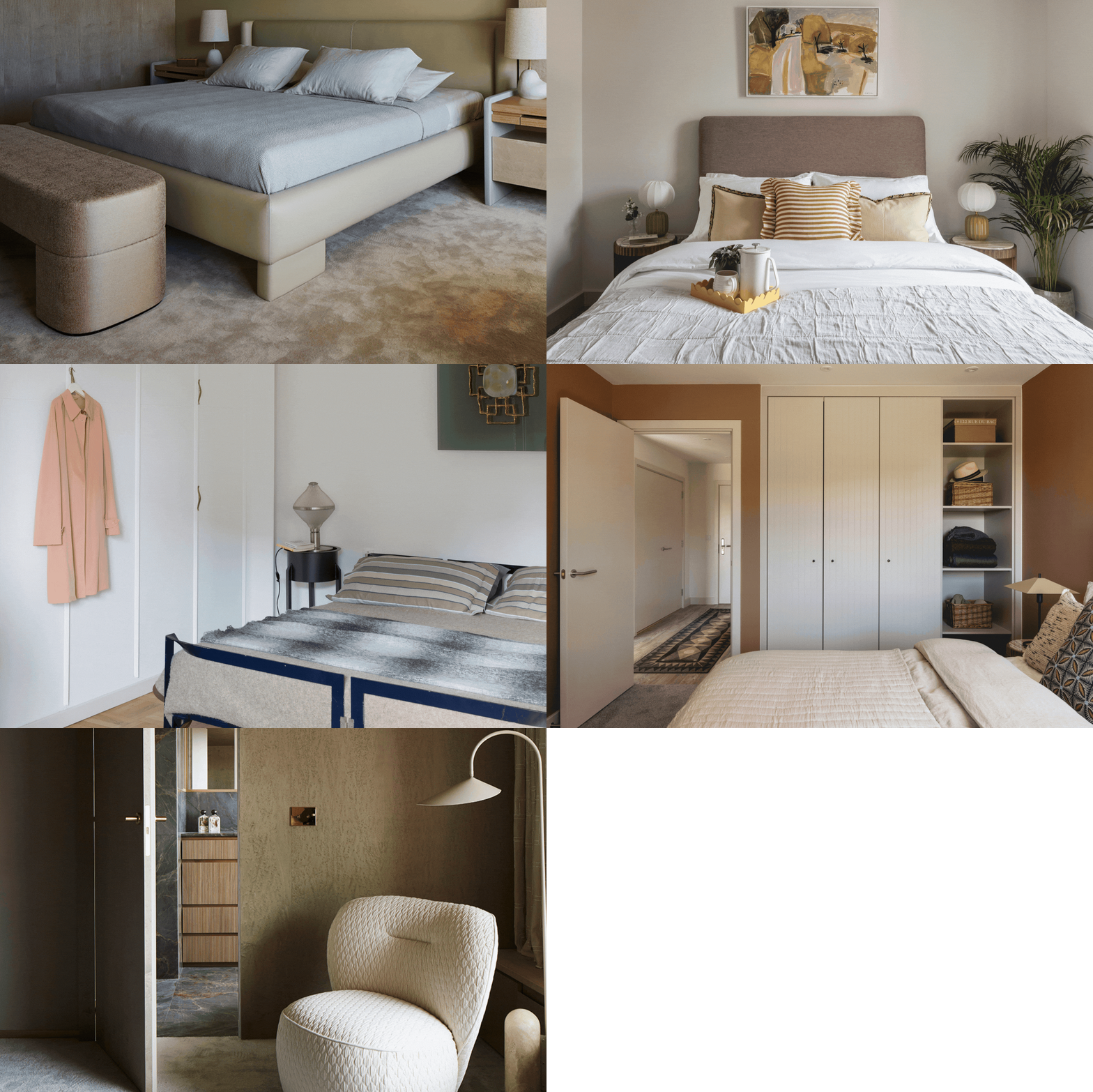
Warm woods, earthy tones, and comforting fabrics are every good night of sleep's non-negotiables.
It may sound obvious, but for a bedroom to enable true relaxation, it needs to evoke "a state of calm and disconnection from everyday life," Milan-based interior designer Cristina Celestino, whose namesake studio straddles interiors, art direction, and production design, tells me over email. She looks at this room as the domestic space that resonates with our most intimate side.
I. Balancing Busy and Empty Space
When it comes to ensuring this is as comforting and recharging as it can be, striving for "a sense of harmony" is necessary. And that's something that can be obtained through "balancing solids and voids" — essentially, busy and empty space — strategically, juxtaposing functional as well as aesthetic additions like desks, wardrobes, artworks, and armchairs in a way that guides the eye gently through the space.
II. Making the Bed King, Literally
One of the greatest appeals of sleep tourism is getting to stay in hotels renowned for their quality bedding. While picking the right sheets and pillows can give you a head start in improving your bedroom, Celestino claims real change comes from considering the bed itself as "a micro-environment capable of generating a sense of protection." Organically shaped, soft, and deeply textural bed frames like the padded Plumeau one she designed for Gervasoni, for example, elevate the furniture item from a simple surface to an active protagonist in your nocturnal wellness. Compared to more rigid structures, these act as a safe, cocooning space to decompress and recharge in.

Arts and crafts take center stage in the wellness spaces of Santorini's Andronis Concept Wellness Resort, as captured by its Kallos Spa facilities.
III. Letting Natural Materiality In
Celestino isn't alone in thinking that the way a bed looks and feels can predict how refreshing our sleep will be. In a peaceful bedroom, "materials should feel natural and tactile," Present Made's Ferreira says. Where "linen, cotton, wool, and timber all help create warmth without overstimulation, overly synthetic finishes should be avoided at all costs, especially in bedding and upholstery".
This isn't a simple stylistic choice. Instead, "woods, matte lacquers, and textured plasters, and textile additions such as hemp and soft rugs add quiet tactility and depth," Celestino explains. Thanks to their intrinsic perceptual quality, they can absorb light, sound, and touch: "they don't just furnish a space — they shape its atmosphere," the designer adds.
IV. Keeping the Palette Muted, Dusty
The last thing you want in a bedroom aimed at fostering calm is an overwhelming palette. "The bedroom should not demand attention; it should hold it softly," Celestino argues. And I couldn't agree more. She finds dusty, desaturated tones — "butter white, soft sage, and warm, muted hues that effortlessly envelop the room, widely stocked at my favorite paint brand, Farrow & Ball" — to work best.

One of the bedrooms Martha Ferreira designed for Present Made, a UK developer of interiors-led rental neighborhoods, in all of its tactile charm.
Ferreira too opts for warm neutrals like clay shades, sage greens, and gentle blues: "colors that make us feel grounded rather than energized". Bright whites and highly saturated shades would feel too stimulating for a sleep space. Together with sharp contrasts and bold, or oversized, patterns, they are not ideal, as they dominate the eye.
V. Minding Lighting and Sound
Another overlooked yet central feature of ingeniously designed sleep tourism hotels is the integration of circadian lighting — light fixtures that, through both their temperature and intensity, reflect the needs of our body clock, that is also sometimes called human-centric lighting. To achieve that effect, "lighting should never rely on a single source," Celestino advises. "Instead, opt for multiple, dimmable light points, all in a warm temperature range, allowing the atmosphere to shift throughout the evening."
In a sleep-focused bedroom, "light should feel diffused and layered, never clinical," she adds. So forget invasive LED strips, cold lighting, and direct, overly technical spotlights: in place of them, "rely on low-level mood lighting such as bedside lamps, wall lights, and concealed warm strips — add-ons that allow you to wind down gradually," Ferreira suggests. As for sound, one of the most effective, understated ways to contain it is "choosing an upholstered headboard over wooden or hard finishes," the designer explains. "Paired with curtains and layered fabrics, this creates a quieter, softer atmosphere that supports rest."


2. Cultivate a Clutter and Work-Free Mindset via Design

If you think a multi-functional bedroom was a perk, well, it's time to rethink that, as workstations and desks can impact your sleep patterns and ability to relax.
When I ask Celestino and Ferreira about the most common mistake people make when designing their bedroom, they point out the same: visible tech that notches stress-free mindfulness while also occupying valuable space.
Treating the bedroom as a multi-purpose place is the easiest way to disrupt the tranquillity that the designers carefully research in their projects. "Working from bed or placing a desk directly opposite it can blur psychological boundaries," Ferreira explains, while Celestino says she would avoid all easy-to-spot screens and displays. "If technology is desired," she adds, "integrated, discreet audio systems that support the experience without intruding upon it are preferable."
An abundance of objects, particularly on open shelving, "can create a subtle sense of stress," the designer explains. Closed storage or more curated clothing and book displays can reduce that tension. Though the optimal solution to turn your bedroom into a "sanctuary" is to keep a closet in a separate space, maintaining the bedroom "free from distractions and the demands of daily life," Celestino suggests.
3. Let the Right Buys Help You Maximize Tranquillity

Keen to get hotel-like rest all year around? Note down the tips from seasoned interior design experts Martha Ferreira and Cristina Celestino for beds that feel and look great at all temperatures.
Peace of mind is something you can't simply buy, but there are still things that can help you maximize it.
I. Start With Bedding
"Pillows and bed linens should be chosen with equal care — textures, colors, and materials all participate in the overall sense of comfort and the bed's role as a restful microcosm," the designer says. Ferreira is more specific: "breathable natural fibers help regulate temperature, while crisp cotton or washed linen can subtly signal comfort and cleanliness."


II. Layer in Natural Scents Only
Your at-home reinterpretation of the sleep tourism trend won't grant you access to the treatment rooms of the most coveted retreats in the world. Yet, premium home fragrance is the secret to scenting up your dreams — "just avoid all artificial fragrances, as scents can easily become intrusive in a space meant for calm," Celestino recommends. When used subtly, lavender, chamomile, and sandalwood will help you wind down and feed into the atmosphere.

Just because treating yourself to a lavish massage isn't an option this time of the year, it doesn't mean you can't emulate the calming effect of a spa treatment with the right home fragrance picks.


III. Throw in Some Analog Collectibles
One lesson I treasure from a recent stay at The Tawny, a five-star luxury hotel where great sleep is key, is how important it can be to choose analog forms of entertainment — books, journaling, or even playing some pocket board games — over screens.
In most sleep tourism hotels, bedside tables and shelves are stocked with all sorts of fidgety trinkets and reads that can help you disconnect. Small objects that, without requiring major investments, can help you tune into yourself and the people and places around you, granting you the groundedness you had been searching for days. Luckily for all Livingetc enthusiasts, this kind of collectible just got the design treatment.

Did you know that at Waldorf Astoria Maldives Ithaafushi, after being treated to a pillow tailored to their needs, guests are met with beautifully illustrated Turndown Artwork Cards that describe the most magical occurrences on the island?


Continue unwinding with our design-led edit of the best spas in the UK.
