After Buying His 8-Bedroom Childhood Home in Brussels, This Owner Wanted to Transform It From Traditional to Colorfully Modern for His Family
Designer Victoria-Maria reimagined the client's family home by blending its history and mid-century architectural elements with a fresh, contemporary look for a new generation to thrive in


A childhood home is never just a house. It is a living archive of scraped knees and slammed doors, of holiday feasts, exam-night silences, and the particular groan of a staircase that only family members know by heart. Over generations, it ages, but it never quite lets go and remains emotionally intact. Such is the story of this 600-square-meter, eight-bedroom Brussels home where the client grew up, which was designed in a more traditional style for a family of five. But when he acquired the property for himself, his wife and their two children, the couple sought to give it a fresher spirit.
To help reimagine it into a modern home, they enlisted interior architect and designer Victoria-Maria, who was tasked with reinterpreting it while honoring its generous bones. While nothing was retained from the old house, color became the mainstay. "Each room has its own identity thanks to its color scheme, but there is a continuity in undertones; nothing feels isolated," says Victoria-Maria. Vintage furniture picks, however, infuse the interiors with nostalgia, gently reminding the family of their roots and the home's endearing history.
The house unfolds across several levels. On the ground floor are a large living room, two separate home offices, a kitchen and dining area, a library, and ancillary spaces, including a mudroom and guest WC. The first floor contains the parents' suite, a guest bedroom, and a utility room. The second floor accommodates three children's bedrooms, a shared bathroom, and a playroom, while the basement houses a gym, technical spaces, a multipurpose room, and a fully self-contained guest suite.

The living room is carefully curated with elegant pieces mixed with softer textures, natural materials and subtle patinas.
Image credit: Mathieu Salvaing

"We introduced vintage 1940s armchairs sourced through Vintage Hoarder, which bring a slightly more structured presence and a sense of history," says Victoria-Maria.
Image credit: Mathieu Salvaing

Want to make a bold statement in your living room? This piece in a curved silhouette, quilted back detailing, and velvet upholstery might be the best pick.
The home does not subscribe to a single decorative theme. Instead, it feels collected and carefully curated, layered with comfort, polish, and a lightly lived-in quality. "To achieve this, we combined elegant pieces with softer textures, natural materials, and subtle patinas," shares Victoria-Maria.
The modern living room is a case in point: generous in scale and strongly connected to the outdoors, with abundant natural light. "We started with a very restrained palette of soft neutrals, which allowed us to work more subtly through texture and materiality rather than strong contrasts," the designer explains.
A sofa designed by Augustin Rose and upholstered in a Zimmer + Rohde fabric anchors the room, while adding a sumptuous dose of color. Nods to the home's vintage spirit come through in the 1940s living room accent chairs, sourced via Vintage Hoarder, which lend the scheme a subtle sense of history. "The straw marquetry coffee table is a key piece; it adds a tactile, almost artisanal quality that contrasts with the softness of the seating," Victoria-Maria says.

The artwork introduces a graphic and conceptual layer that offsets the softness of the interior.
An especially striking presence is Peter Halley's abstract artwork Six Prisons (2004), which plays a crucial role in the overall composition. "It introduces a graphic and conceptual layer that offsets the softness of the interior. The piece was sourced through Ars Belga (Sybille du Roy de Blicquy), and was chosen very specifically for its ability to hold the space without overwhelming it," shares the designer.
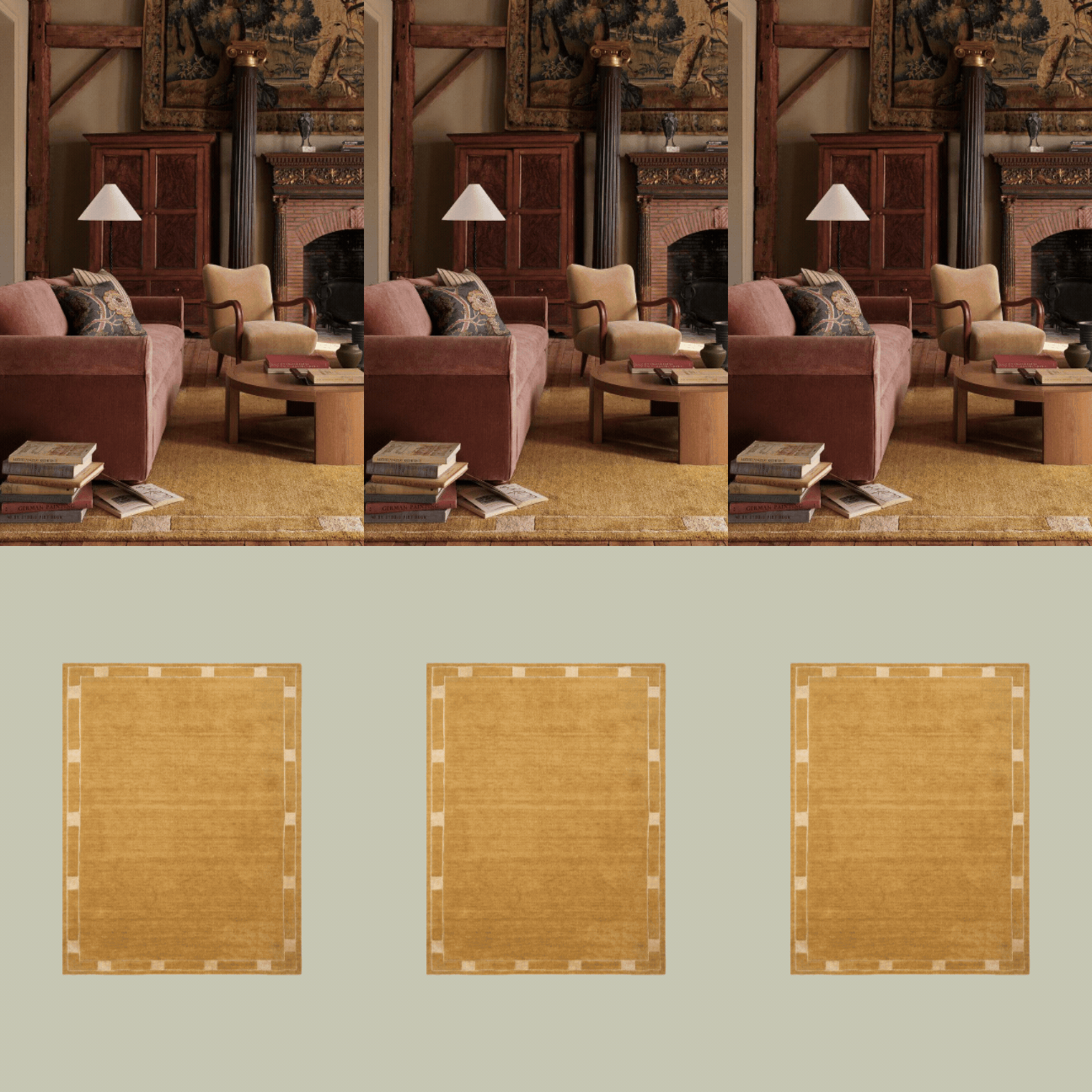
Not to be overlooked, the living room rug became, in Victoria-Maria's words, "the key element in anchoring the living room". A Persian rug from Pierre Frey (the Theodora) was chosen for its slightly faded tones and intricate pattern. Introducing a quiet patina, this is yet another subtle gesture that nods back to the home's vintage soul.

The dining room feels immersive, thanks to walls and ceiling in deep blue.
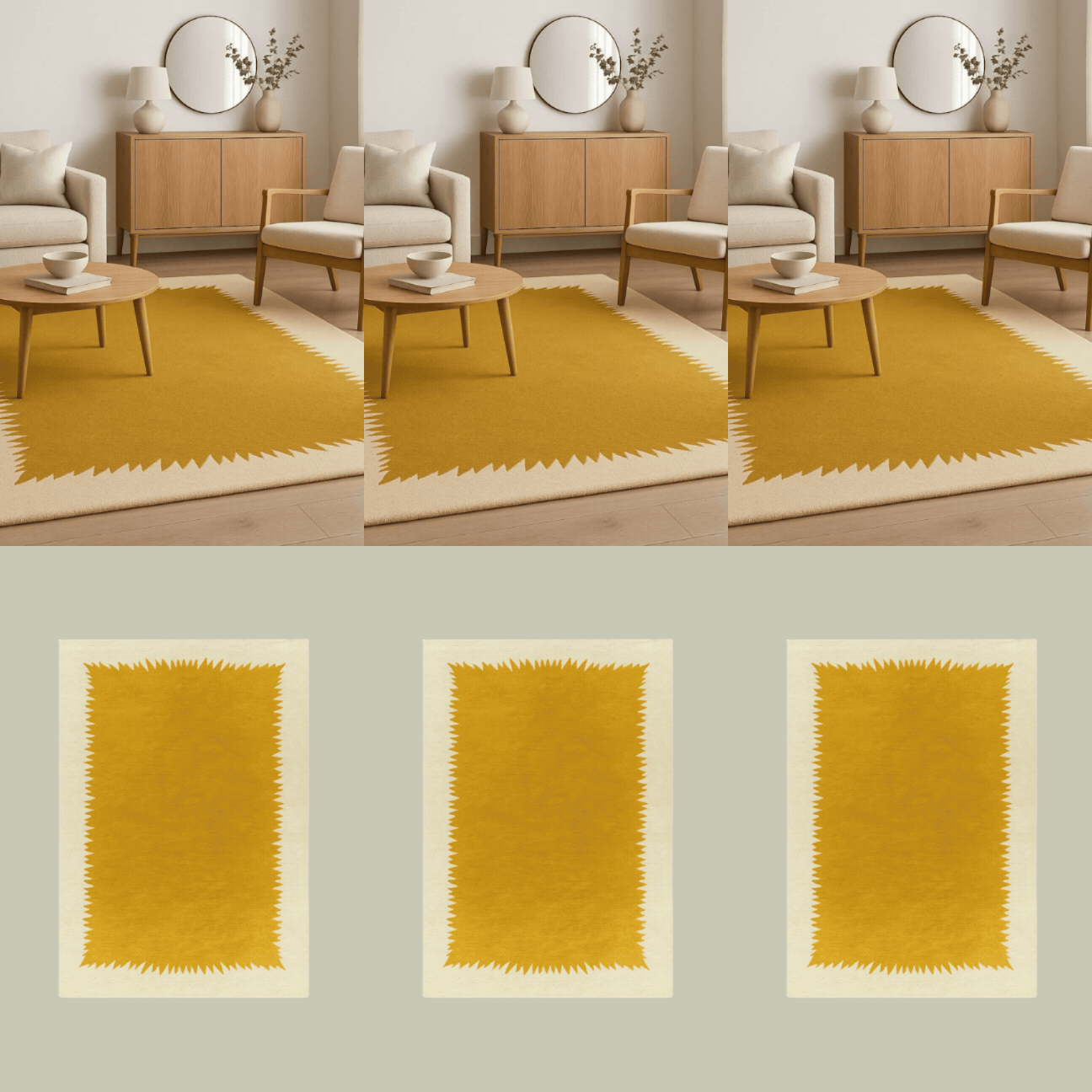
The dining room takes on a more enveloping mood, with walls swathed in a blue Dedar moiré that lends the space an almost jewel-box richness. A coordinating blue paint from Ressource deepens the effect, creating an immersive, tonal backdrop that feels both dramatic and refined. "Each element was selected to contribute to a strong, cohesive atmosphere rather than stand out individually," says Victoria-Maria.
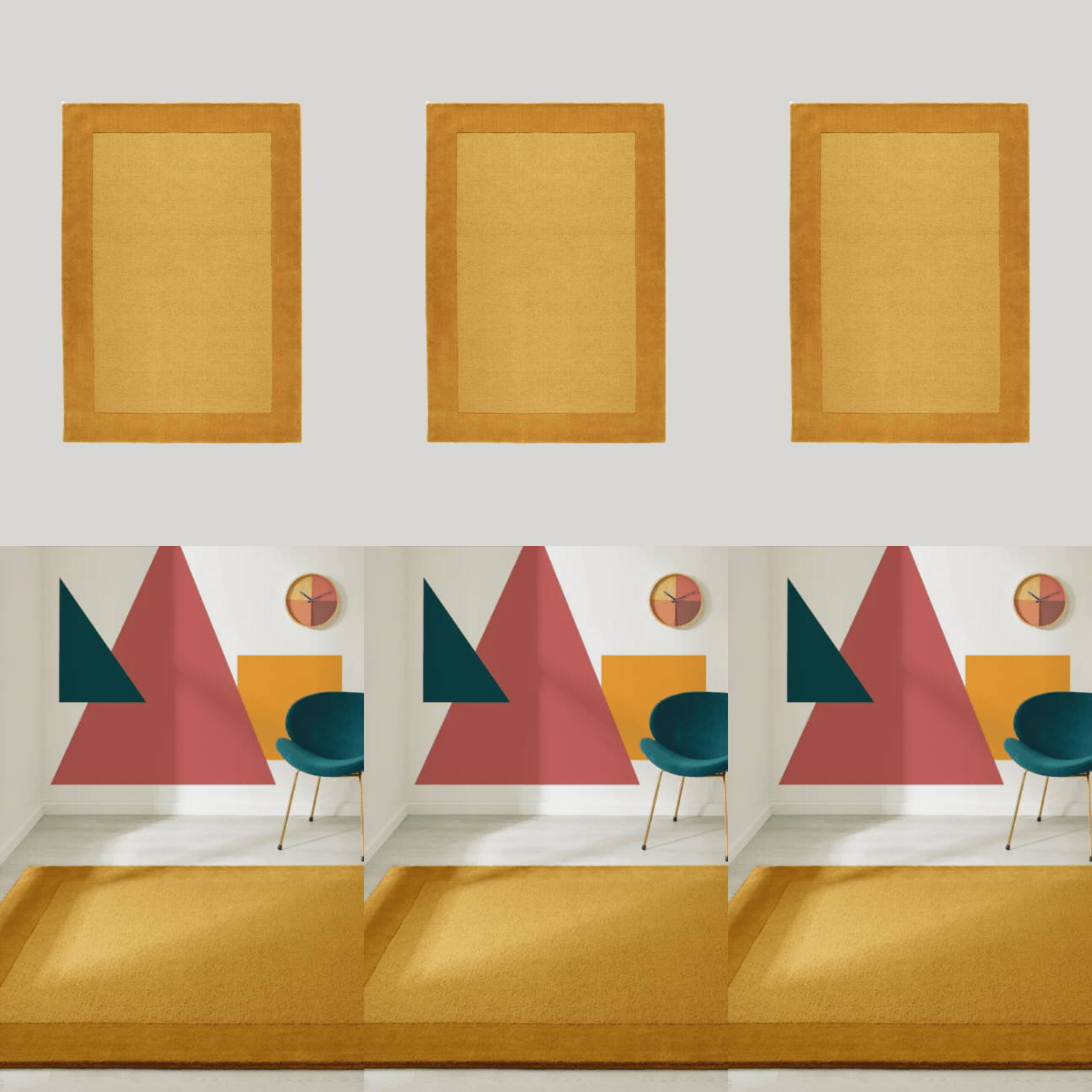
Against this saturated setting, the Calix chairs by Cardonès introduce a sculptural clarity, their silhouettes offering a subtle counterpoint to the softness and movement of the moiré-lined walls. Underfoot, Pierre Frey's Duke rug helps root the scheme, bringing a sense of warmth and ease that keeps the room from feeling overly formal or staged.
The decorative accents were approached with a more intuitive hand. "The Shibuis pieces from WANNAS, sourced from Surat in India, were a particular favorite," states the designer. "They bring a handcrafted, almost raw quality that contrasts with the more controlled and refined aspects of the room. I had an immediate attraction to them; they introduce texture, irregularity, and a certain warmth that makes the space feel less rigid."

The family room has an intimate, cocooning feel, thanks to its bold, dark wall and ceiling paint.
As in most homes, it is the family room that truly draws everyone together — here, wrapped in a luscious deep Bordeaux hue, complemented with pleasing pink sofas. "The tone reflects the clients' personal preference and creates a clear contrast with the lighter, more open areas of the house," says Victoria-Maria.

"As this is a space dedicated to work and concentration, it was important to avoid visual clutter and instead create an environment that encourages clarity and productivity," says Victoria-Maria.
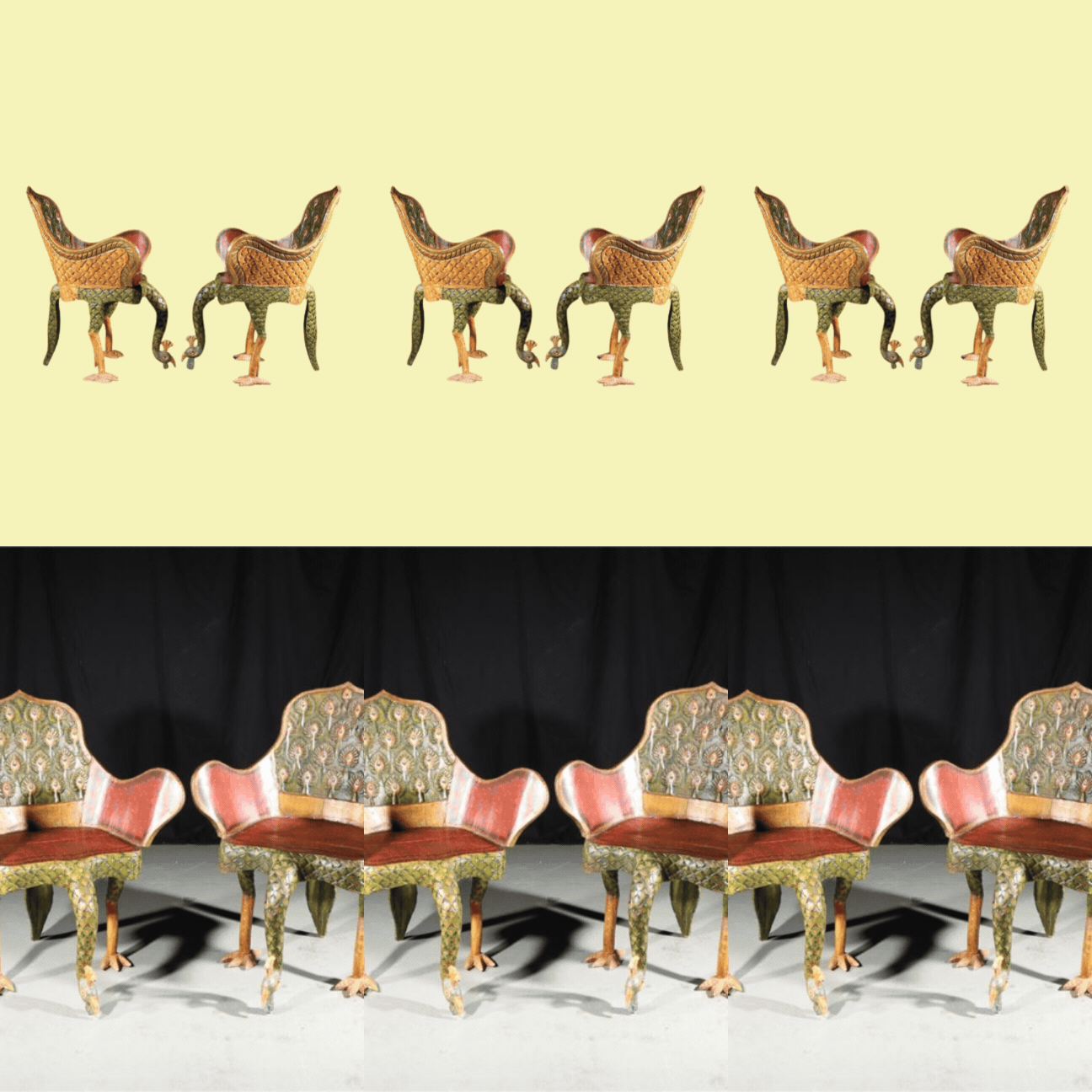
This dramatic pair of hand-carved Indian peacock armchairs, richly polychromed in jewel tones, delivers theatrical glamor and artistry.
For a calm work-from-home environment, the home office is intentionally free of visual clutter, its mood shaped by a soft, restrained palette. "The simplicity of the room allows the architecture and natural light to take center stage, which helps the space feel both airy and grounding," adds the interior designer.
The desk, with its clean lines and timeless silhouette, offers a practical workspace without feeling too weighty or dominant within the room. Meanwhile, the chair was chosen as much for its comfort as for its sculptural presence, its legs so wonderfully unique.

"I love having rugs on stairs, it makes going upstairs feel more inviting and less architectural," states the designer.
Image credit: Mathieu Salvaing1

Different artworks create interesting moments along the staircase.
Image credit: Mathieu Salvaing1
The staircase, a sculptural, winding presence at the heart of the home, reads almost like an artwork in itself, transforming circulation into something far more atmospheric. "I love having rugs on stairs, it makes going upstairs feel more inviting and less architectural. It also adds comfort and helps reduce noise," says Victoria-Maria. Rather than being treated as incidental leftover spaces, the landings have been approached as considered moments within the home's rhythm.
"We introduced a mix of pieces — from Bella Silva ceramics to works sourced through Ars Belga — alongside a Morrentz sideboard and a folding screen by Bondeel & Weyers. The idea was to create small pauses throughout the vertical circulation, almost like informal galleries."

"We worked with a palette of muted blues, greens and soft yellow undertones to create a layered but very calm atmosphere," avers Victoria-Maria.
Image credit: Mathieu Salvaing

The large windows ensure the room is bathed in light throughout the day.
Image credit: Mathieu Salvaing
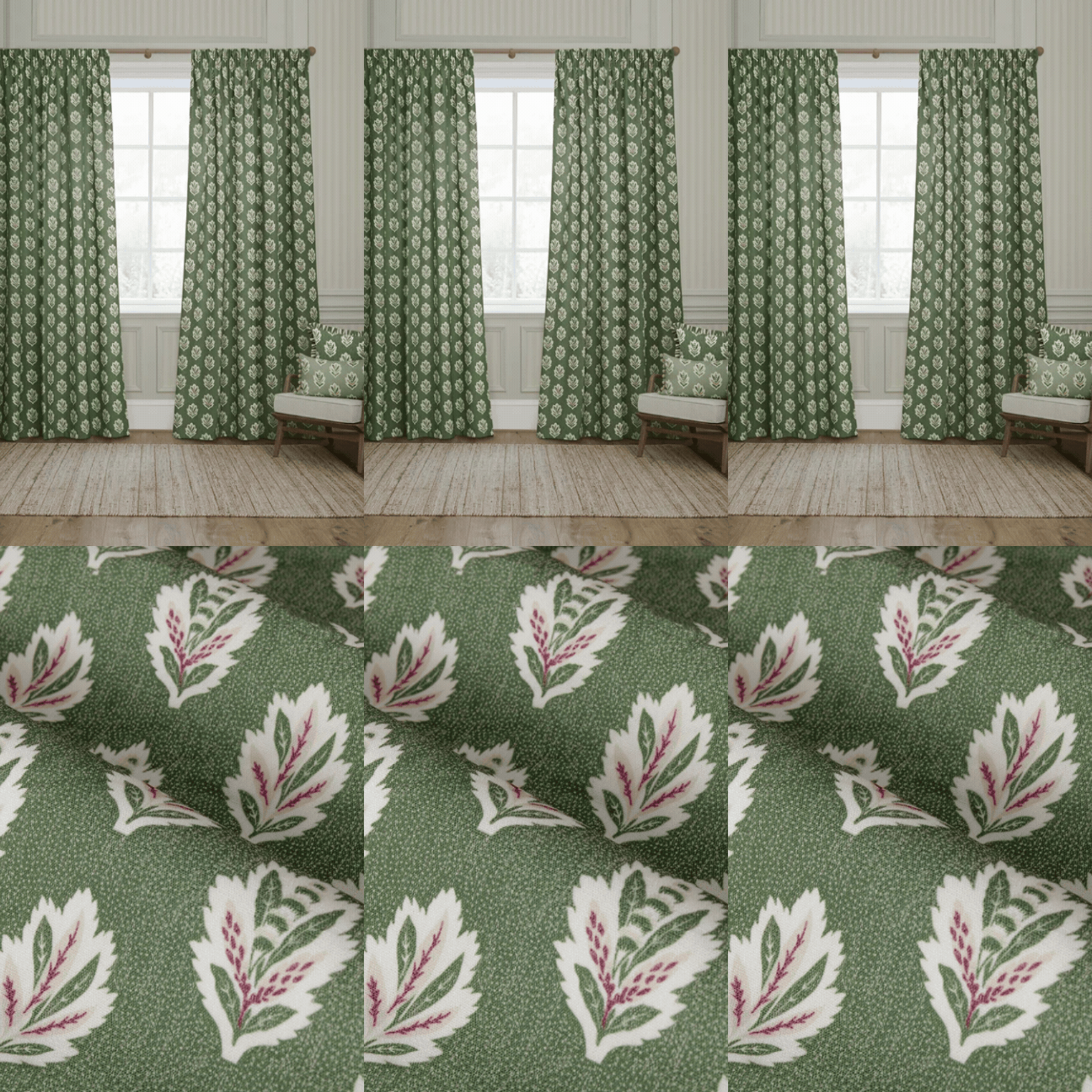

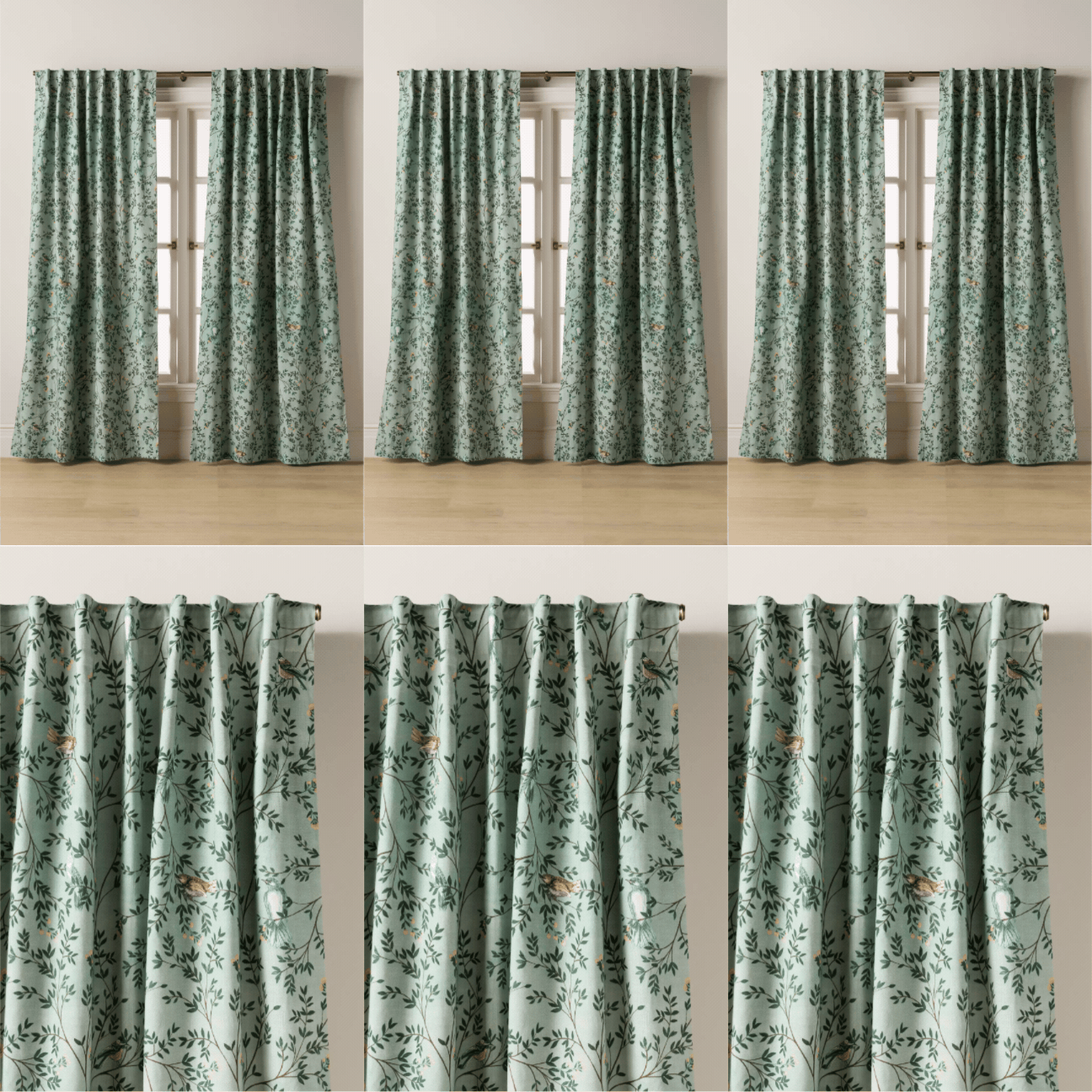
In the master bedroom, the aim was to create a retreat-like space, quieter and more restrained than the rest of the house. "We worked with a palette of muted blues, greens, and soft yellow undertones to create a layered but very calm atmosphere. The focus was on comfort and proportion rather than statement pieces," says Victoria-Maria.

The guest bathroom has an inviting appeal thanks to the artistic mosaic tiles.
The guest bathroom takes a more playful turn, embracing color and pattern with walls clad in Bisazza mosaics and wooden blinds by Atelier Souveraine. "In most spaces, color is used less as a statement and more as a way of structuring the experience of the house," avers the designer.
"While there is still an emotional attachment to the place and its history, our work hinged on reinterpreting it to adapt it to their current way of living, and to modernize it for the future," concludes the designer.
Want to see more imaginatively reinvented homes? Join the Livingetc newsletter for a weekly dose of inspiring design projects, cultural bites, and more.
