What Your Nightstand Really Says About You — Here's How Your Bedside Styling Impacts Your Entire Day, According to a Habit Expert
"The key principle is that every object on your nightstand should either help you wind down or help you wake up well. If it doesn't do either, it's just noise"


Your bedroom — and particularly your nightstand — acts as an environmental cue. In habit science, "we know that context powerfully shapes behavior," shares habit researcher Dr. Gina Cleo. "The objects around you send constant signals to your brain about what mode to be in." A nightstand covered in work, bright objects, or stimulating content tells your nervous system to stay alert, while one with calming, sensory-rich, low-stimulation items does the opposite.
"What's fascinating is that this works bidirectionally," she adds. "Your nightstand reflects your current habits, but it also reinforces them." If your phone is the first thing you reach for in the morning, that becomes a deeply grooved automatic behavior that starts shaping your entire morning mindset before you've even fully woken up. So, how you style your nightstand says more about you and your habits than you might realize.
Are you nervously glancing at the cluttered surface next to your bed? Don't worry, this revelation sparked instant conversation in the Livingetc office as well. So, I asked Gina to analyze a few of our very own nightstands and share what each says about its owner, along with some advice on what they should add (and remove) for a more intentional sleeping space.
How Nightstand Styling Affects Sleep, Productivity, and Rest

The best practice is to keep things orderly and intentional.
The nightstand is one of the most underestimated habit-design opportunities in a home. "Given that what happens in the 20–30 minutes before sleep and the first 20–30 minutes after waking are among the highest-leverage windows of the day for mood, focus, and wellbeing, it's worth being deliberate about what lives there," says Dr. Gina Cleo.
When it comes to building an intentional wind-down routine for sleep, the right sleep environment is paramount. Aspects like light, scent, visual clutter, and even the emotional associations of objects all affect how quickly you fall asleep, how deeply you sleep, and how you feel when you wake.
"A cluttered nightstand isn't just aesthetically busy — it creates low-grade cognitive load," says Gina. Your brain registers 'unfinished business' even when you're trying to rest. On the other hand, a thoughtfully styled nightstand creates what Gina calls a 'habit anchor' — a physical signal that reliably cues the brain into a particular state.
Dr. Gina Cleo started her career as a dietitian, helping people improve their health and well-being. After noticing continual patterns in people's behavior, Gina dove into research, completing a Ph.D. at Bond University. There she discovered the mantra behind her work: habit change isn't just helpful — it's essential. Now Gina runs a habit change-based course, working with patients to help build routines that work.
Below, she breaks down the nightstand styling of a few members of the Livingetc team to paint a clearer picture of how different setups stimulate the brain and affect your sleeping space.

Intentional, but tailored, should be the ultimate goal.
"The deep burgundy mushroom lamp from H&M Home is a statement piece — this person makes deliberate design choices," says Gina about Design Lab by Livingetc's stylist, Iokasti Sotirakopoulou's nightstand styling. (No surprises.)
The marble jewelry tray (which is similar to this one from Amazon) next to the bed means jewelry removal is part of this wind-down routine, "which is actually a lovely micro-habit," says Gina. "The silk sleep mask and the Soho House annual guide sitting underneath suggest someone who moves between wellness consciousness and a social, culturally engaged life," she adds. Both are fabulous ways of romanticizing your bedtime routine.
However, apparently, the hair clip speaks to a slightly more spontaneous, unstructured end-of-day unwinding, Gina suggests; "This person likely falls asleep easily but might not have the most consistent sleep schedule." Interesting.
A perfectly intentional nightstand is the goal, of course, but it's still important to keep things real and true to how you actually live within a space, spontaneous and all.

"Including this oil burner and candle has built a sensory ritual that their nervous system has probably learned to associate with sleep," says Gina. "That's powerful."
When analyzing the nightstand of Livingetc's social media editor, Abla Fahmi, Gina says, "The framed photo booth strip and the Lush Crème Brûlée candle signal someone who values comfort, connection, and nostalgia." That said, "The warm-toned mushroom lamp is doing a lot of heavy lifting here — this person understands that light matters for winding down," she adds.
And to add to that, the leather valet tray with matches suggests another nightly ritual. Plus, "The glass oil burner on stacked books is an interesting detail — aromatherapy before sleep points to someone actively trying to create a sensory cue for rest," says Gina.
Overall, "This nightstand belongs to someone who has probably thought about their bedtime routine, even if unconsciously." And isn't that kind of the goal? When looking for ways to sleep better, intentional bedside decor matters.

At the end of the day, it's important that your nightstand is styled with what makes sense for you.
"I'd say this one is the most revealing," says Gina. Believe it or not, it belongs to Livingetc's home wellness writer, Amiya Baratan. "A mini disco ball, a lit candle, a lip mask, a silk eye mask, markers and pens in a cup — this is someone creative, fun, and hasn't yet separated their daytime energy from their sleep space," says Gina.
"The writing tools in a cup right on the nightstand suggest the bedroom is functioning as a multi-purpose room," she suggests (correctly, I might add). "This person likely has a harder time switching off at night, not because they don't want to, but because their environment is continuously signaling 'do things."
And Amiya agrees. "This makes a lot of sense, as I live in a studio apartment where it's hard to maintain a separate sleeping space." Making an open concept space feel cozy is about carefully curating what you need for a moment of pause and rest.

Curate the bedtime space you want, and your habits will fall in line accordingly.
For Livingetc's design writer, Maya Glantz, "The towering stack of literary fiction (Didion, Murakami, Lena Dunham, David Szalay) tells you this person reads seriously and probably falls asleep mid-chapter most nights," says Gina. A book, whether it's a novel or a stylish coffee table book, helps to log off at nighttime, setting a healthy habitat in your sleeping space.
However, the raw rose quartz (these rose quartz bookends would be stunning on a larger nightstand), candle, and pink glass tray (similar to this vintage set on Etsy) add a layer of intentional beauty — this isn't just functional, it's curated. "Items like the blue floral eye mask tucked under the books suggest sleep is a priority, but the reading habit often delays it," says Gina. "This person likely has a rich inner life and uses bedtime as genuine decompression time."
There is a balance of form and function, where relaxation is still the primary goal.
How to Style the Perfect Nightstand

You can build a stylish and decorative bedside space without it feeling overly cluttered.
So, what's the recipe for a perfect nightstand? Functionally, the sweet spot is: "One light source with warm, dimmable light; one scent anchor (candle or diffuser); one book; water; and something that orients you gently toward the morning — a journal, a small notepad, or even just a beautiful object that makes you feel good when you see it," says Gina. Note: "No phone. No clutter. No items that belong in other rooms," she adds.
It sounds like a lot, but the key principle is that every object on your nightstand should either help you wind down or help you wake up well. If it doesn't do either, it's just noise.
The 'perfect' nightstand is different for different people, so below are a few styling ideas depending on your goal.
For Deep Rest
If truly deep rest and a low-cortisol bedroom are the ultimate goal, then you want to keep it to a wellness-centered minimum.
"Include items like a dim, warm-toned lamp; a calming scent (candle or diffuser); a physical book if reading helps you wind down; a glass of water; and perhaps one meaningful object (a crystal, a photo) that carries positive emotional weight," says Gina.
And definitely leave out your phone, anything work-related, and items that require decision-making.


For Energy in the Morning
Sometimes we all need a little help waking up in the morning. So, intentional waking and a seamless morning routine are your priority.
"Try including a journal or small notepad to capture morning thoughts before the day floods in," says Gina. Apart from that, "A water bottle and something that greets you visually with intention rather than chaos." For instance, some people find a small plant or a meaningful quote card helpful here.


For a Digital Detox
On the digital detox zone note, the phone is the obvious elephant in the room — keep it out of the bedroom entirely or at a minimum across the room. You can always replace it with an analogue alarm clock for a healthier morning routine.
But I get it, the morning scroll is a hard habit to break. "If you're someone who reaches for stimulation, have something tactile and low-effort on hand — a deck of cards, a coloring book, a journal — so you have an alternative to the scroll," says Gina.
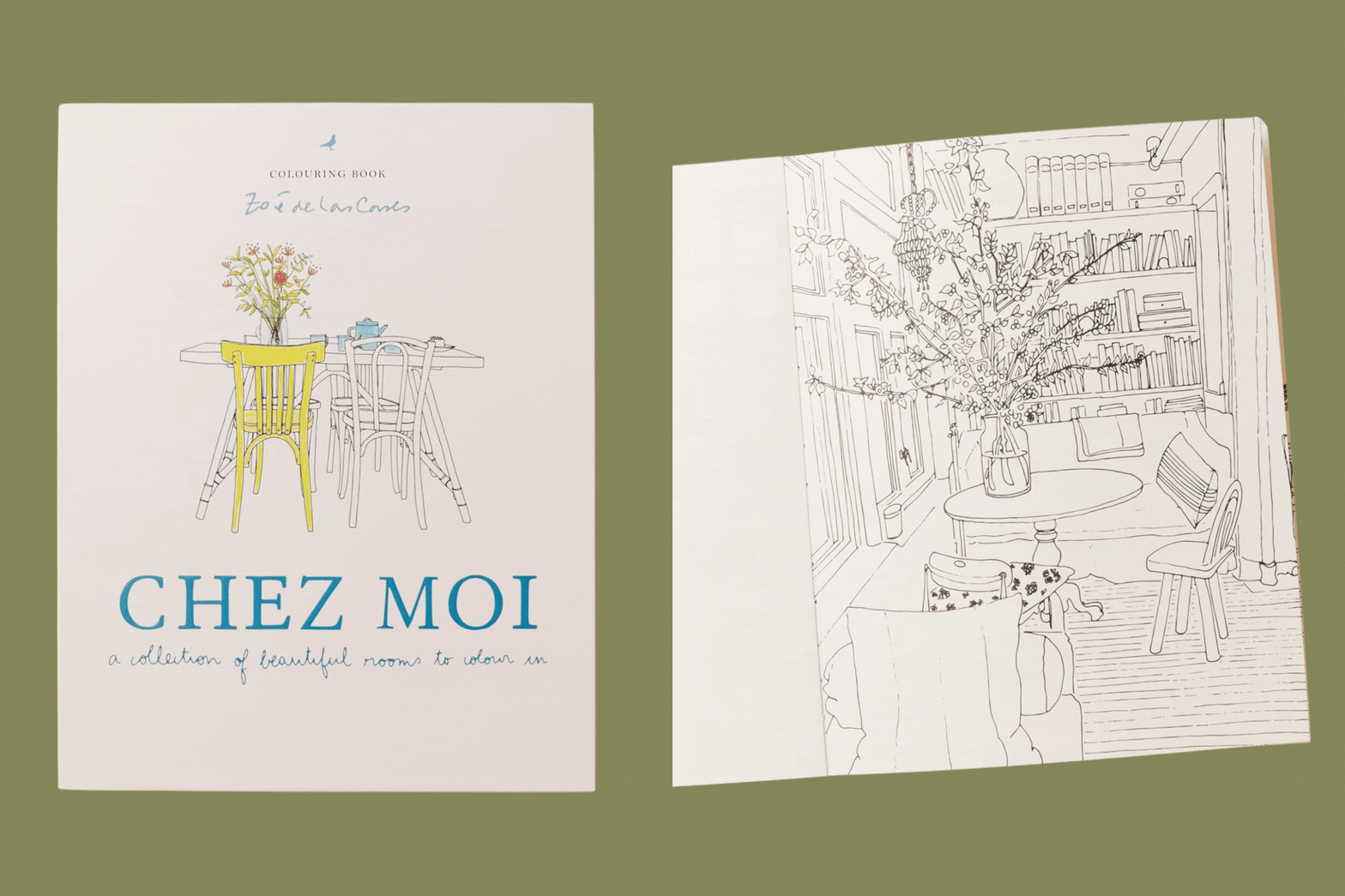


For Creativity and Reflection
Once you've broken the technology dependency, your nightstand can become a part of the ritual of getting your creativity and mindfulness back.
"A beautiful journal, a good pen, and space to write can be wonderful inclusions," says Gina. "However, the nightstand as a creative space can work, but only if the items there are intentional rather than accumulated."
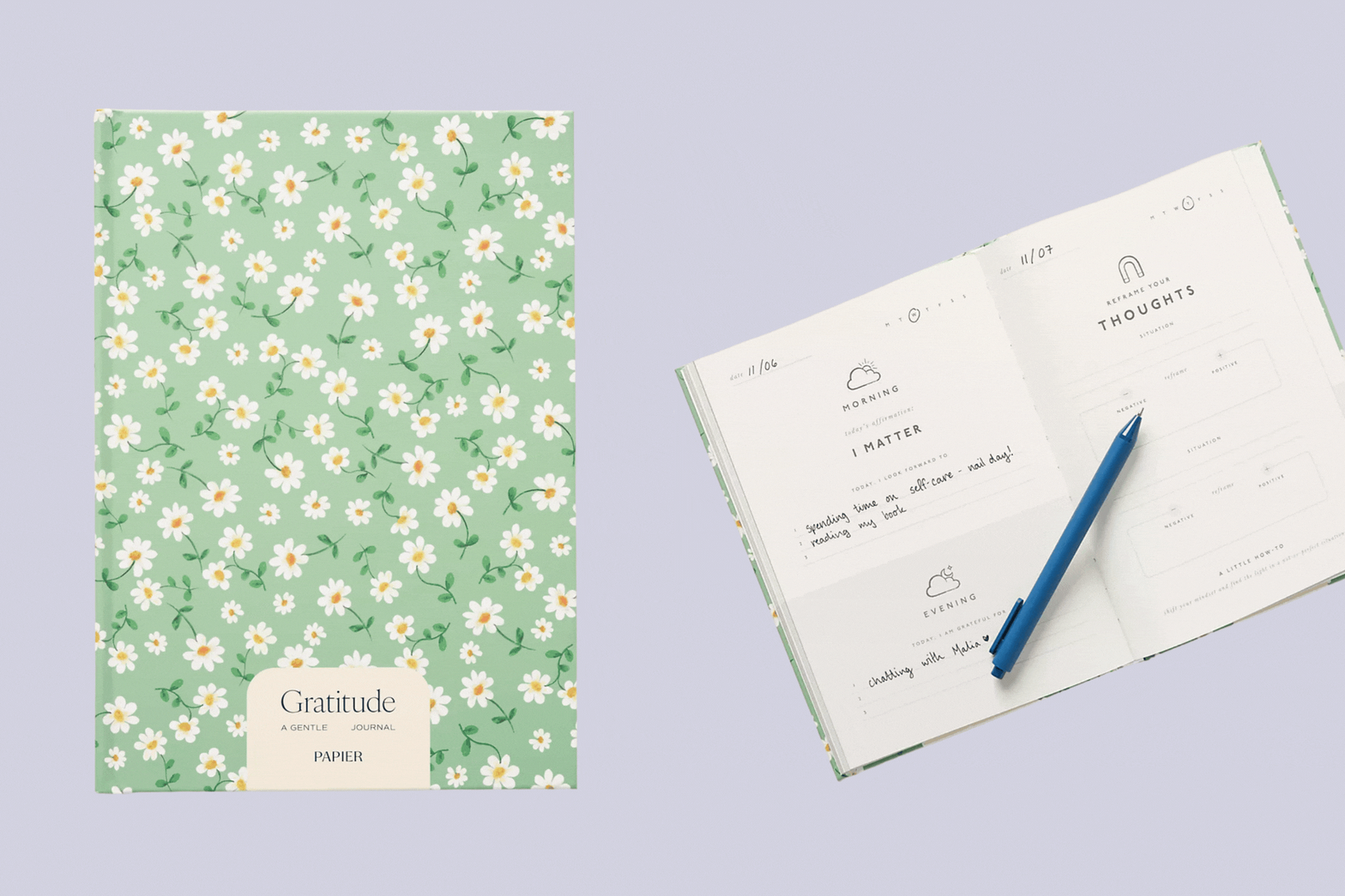


The goal isn't a Pinterest-perfect nightstand — "It's one that honestly serves how your brain and body transition in and out of sleep," says Gina.
For even more ways to make your bedroom more interesting and personal, be sure to subscribe to the Livingetc newsletter.
