Okay, Real Question: Do I Actually Need a Headboard in My Bedroom? Here's What Designers Say
It's essential, but a headboard doesn't have to be a rigid design element; it can be interpreted more loosely, says designers


The idea of a bed and a headboard has become so intertwined that for many, it's hard to imagine a bed without its solid backdrop. What will anchor it in the space? What will keep the pillows in place? A headboard seems integral to defining a design scheme and giving the bed its frame, but actually, it can be quite the style statement to ditch one altogether.
I know, I know, blasphemy, right? Well, that depends on who you ask. But, should you choose to forgo a headboard, you still need to do something with that negative space. "A bed without a headboard is like a sentence without a capital letter — it still makes sense, but it doesn't quite feel complete," says Design Lab by Livingetc stylist, Miaad Latoof. So to bring back the essence of totality, you need balance. For instance, a tapestry, a large piece of art, a window, or even curtains wrapped behind the bed.
So, whether your bedroom feels too small for a clunky headboard or you're simply looking for a more modern bedroom idea, below, I've argued both sides of the 'headboard vs no headboard' debate, and worked out how to style your space without one altogether. (Because yes, it's possible.)

Even something as small and simple as these dark sconces gives the blank wall a sense of visual intrigue that makes the headboard-free bedroom work.
The reason headboard ideas have become such a staple in bedroom design is not just about aesthetics. "A headboard gives the room a point of focus. It anchors the bed visually, so everything else, the bedding, lighting, even the wall, has something to relate to," explains Miaad Latoof. This sense of anchorage has a grounding effect in rooms designed for rest and relaxation, which is why it's so important.
That said, you don't have to have one. In fact, some styles, including fabric headboards or tapestries hanging behind your head, are even seen as contributing to poor sleep hygiene. Livingetc's wellness writer, Amiya Baratan, explains, "Without regular maintenance (which let's be honest, can be a hassle), cloth headboards can be a dirt magnet. Similar to how every other facet of your bedscape needs tidying, this element does, too."
In other words, if you're looking to curate a low-maintenance space, skipping a headboard can have its perks.

The small piece of art and the hanging lantern, paired with the wood paneled walls make this bedroom feel perfectly grounded.
Once you decide to go sans-headboard, it opens up a more interesting discussion stylistically. "The wall above a bed should be kept minimal, as we instinctively avoid placing anything too heavy or imposing over where we sleep," explains Jin Chen, founder of Ecru Studio. "There's a psychological dimension to it — we seek lightness, quiet, and a sense of release."
For this reason, you could argue that a headboard isn't really essential. It can be replaced by something more personal and expressive — a screen, a tapestry, a piece of art, or even a sculptural gesture. There are plenty of interesting things to hang on the wall, after all.
Ultimately, there are pros and cons to both sides, but the success of your bedroom's design scheme simply lies in how you style it. In this sense, interior architect Gudbjørg Simonsen explains, "A 'headboard' doesn't need to be a clearly defined object. It can just as naturally emerge through materiality or subtle architectural gestures."
So, what are some ways you can mimic the idea of a headboard, without actually having one?
Ecru Studio, based in Taipei, Taiwan, was founded in 2018 by Jin Chen. The firm is equally fluent in traditional and contemporary design idioms. Using a minimalistic decorative style, Ecru strives to achieve a perfect blend of primitive and modern in each and every project.
How to Style a Bed Sans-Headboard
1. Frame the Bed with a Large Art Piece

Artwork can mean whatever you want it to: this magenta fan adds a beautifully contrasted pop of color.
"I would always look for ways to ground the bed," says Miaad. "Something usually needs to take on that grounding role to create balance in your design, and an oversized artwork is the closest alternative." Artwork brings presence and gives the bed something to sit against, but the scale of the design is key. Too small, and it simply disappears.
"An eye-catching artwork is also a chance to introduce bold color or a stronger sense of narrative," adds Miaad. You can break up a color-drench with a piece in a complementary color hanging over your bed. The result is a fabulous high-contrast room with less effort than a full headboard.


2. Style Your Bed in a Nook
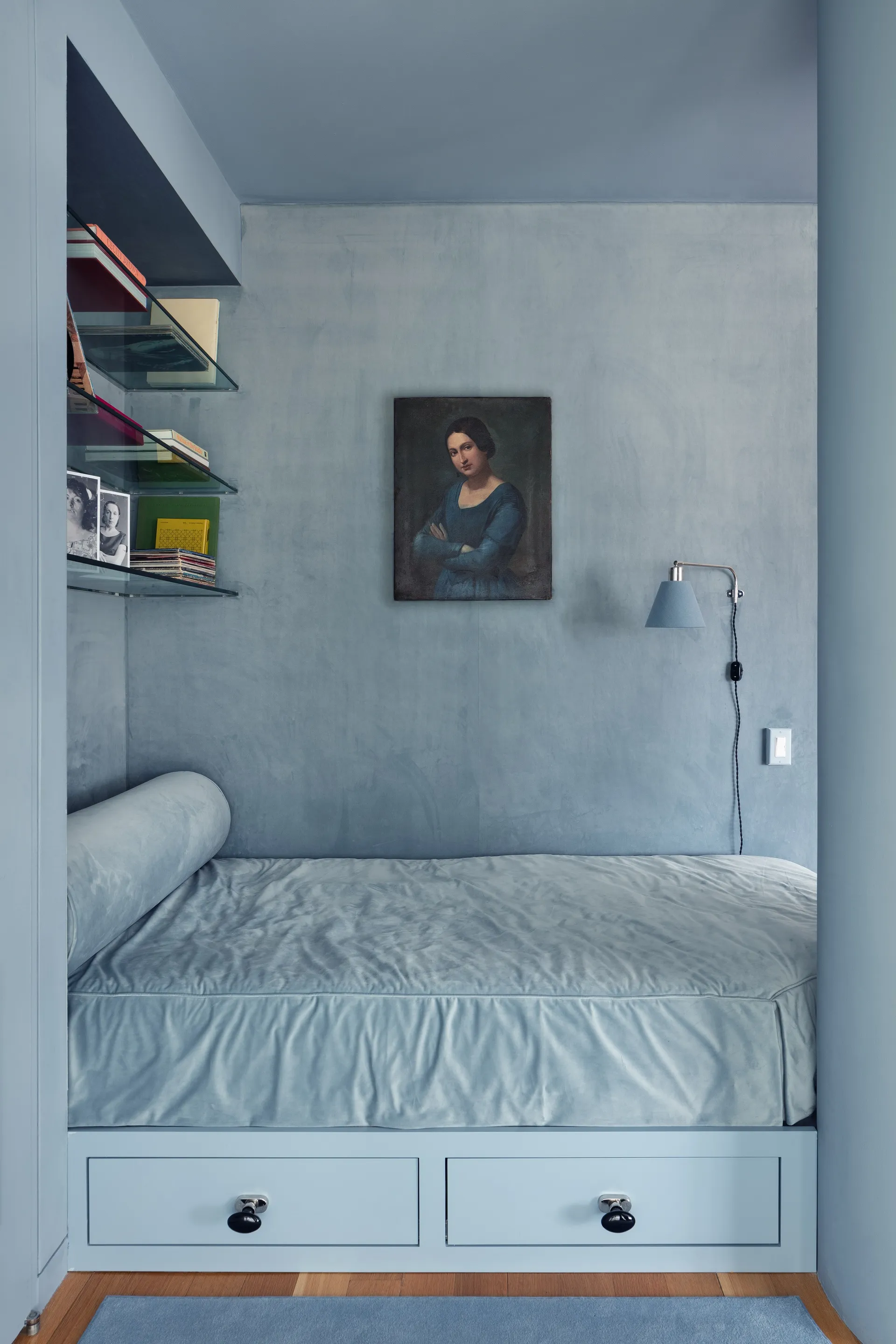
A bolster pillow is great for bedroom nooks with no headboard.
A bedroom nook is one place where ditching the headboard is almost intuitive. These small bedroom ideas usually mean space is a premium, so the last thing you need is a clunky headboard taking up valuable space.
An empty wall can end up feeling cozier in tight spaces — the streamlined aesthetic maximizes the sense of serenity. Plus, I'd venture to guess that a sleeping alcove may not be your main sleeping space. So, use the extra wall room for artwork, bookshelves, and cozy lighting to bring the space to life.


3. Put Your Bed in Front of A Curtain or Textile

A tapestry doubles as art and textile, making a room feel peaceful yet personal.
Replacing your headboard with a tapestry, textile, or a curtain behind the bed is the fastest way to restore balance and softness in your sleeping space. The tactile element is a delight for the senses, while keeping the place calm.
"I have used a silk wall covering in the past to introduce a soft sense of depth and to create a more intimate, enveloping atmosphere around the bed, and that layer of textile at head height instantly adds both comfort and tactility," says Gudbjørg.
Try decorating with sheer curtains for a more romantic bedroom feel, or go for a verdure print tapestry for something more statement-making. "A tapestry introduces warmth and texture in a way that feels relaxed, while also giving you room to bring in a pattern or a sense of story," adds Miaad.


4. Use Paint to Make a Visual Headboard
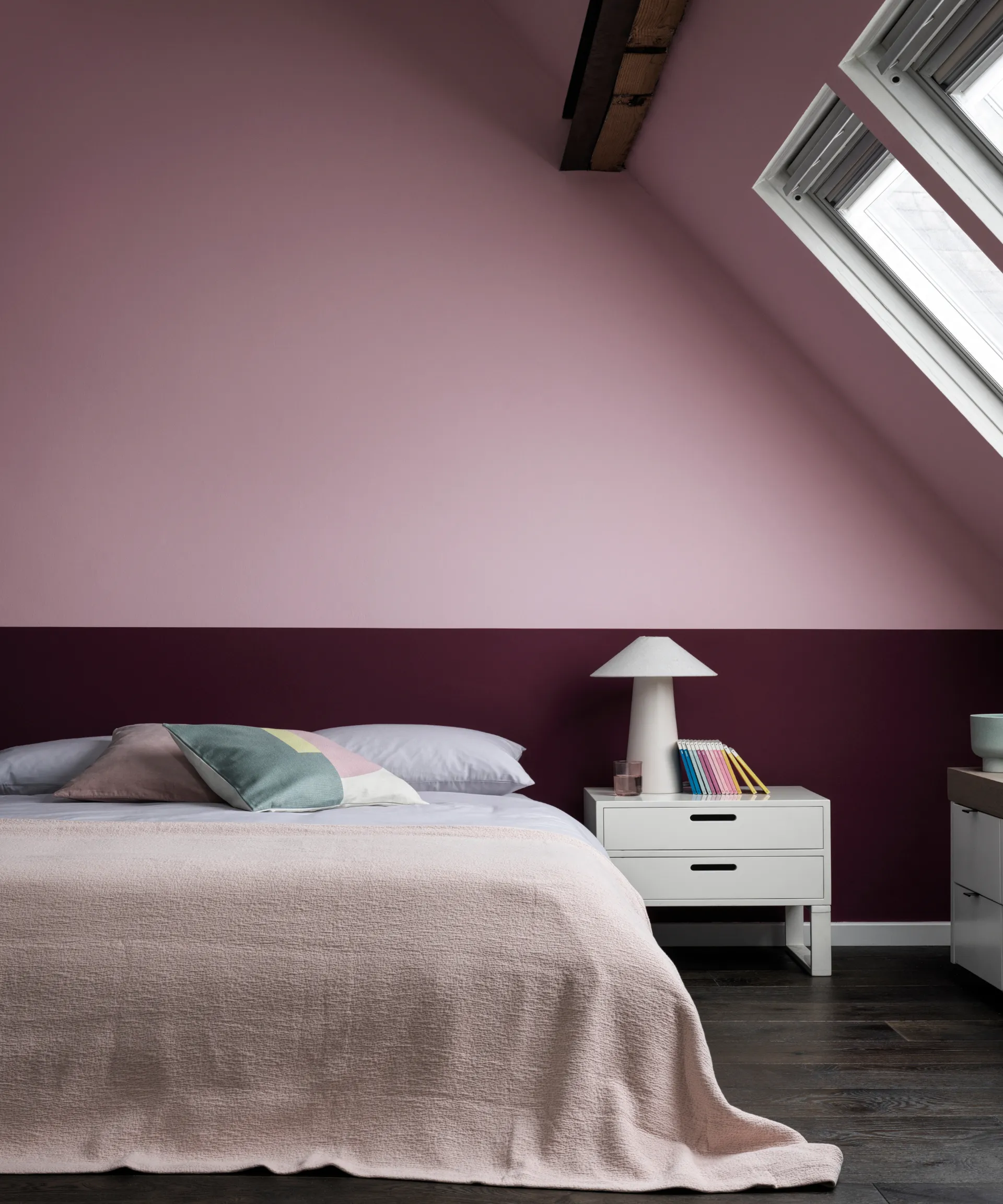
Color is a great stand-in for headboards as it brings intention and provides a visual break.
Ultimately, something needs to anchor the bed, whether through material or form. And it can be as simple as purposefully adding paint and color to your wall.
A modern color-blocking idea that hits right around head height works, or you could even experiment with hand-painted trims and decorative moments. Just be sure to opt for something that feels intentional because that's what a headboard provides.
"Without that anchor, the room can feel like it's still waiting to be finished," warns Miaad.
So, ultimately, you don't need a headboard in your bedroom, but you do need a design element that will help anchor your bed as a headboard would. "In many ways, this wall becomes one of the most intimate surfaces in a space — not defined by function, but by presence," says Jin.
And as always, subscribe to the Livingetc newsletter for more design inspiration.
