The Japanese-Inspired 'Bento' Garden Trend Is the Best Way to Bring Structure and Definition to a Small Garden
It's all about multiple, individual compartments coming together to create one cohesive whole, making it perfect for smaller, urban gardens


The internet loves a bento box. As satisfying to observe as they are to consume, there's something that scratches the mind about the perfectly formed, lovingly created little bites, each one in its own section, multiple distinct entities coming together to create one beautiful whole. So, when Garden Media announced 'Bento Gardens' as one of their top trends for 2026, it's safe to say our interest was piqued.
Taking the essential concept behind the Japanese lunchbox and adapting it to fit our outdoor areas, this garden trend is all about multiple, individual compartments coming together to create one cohesive whole. The Garden Media 2026 Trend Report states that "Everything is distilled into smaller, smarter, and more intentional formats, from communication to content to consumer products," continuing to note, "The rise of the bento design literally means curated spatial compartments. Each item has a purpose and contributes visually to overall harmony."
And, it just so happens that this style is uniquely suited to small, urban gardens — somewhat of a rarity when it comes to popular garden trends, and we're here for it.
What Is a Bento Garden, And Why Is Everyone Talking About Them?

"People like that they can shift things around. You’re not locked into one layout — you can move planters, swap things out, and the garden evolves with you," says Gina.
As appealing as the name is, it's not enough to fully establish what this trend actually entails. So, let's begin by breaking down the idea behind the look.
"At its heart, a bento garden is just about breaking a space down into a series of smaller, intentional areas — a bit like a bento box," explains Gina Taylor, from East London Garden Design. By dividing your garden into distinct sections and tailoring each one to fulfill a particular role, you're able to distill the essential essence of your garden into a few parts, simplifying and minimizing the process.
Taking cues from traditional Japanese design principles, this trend relies on an essential rejection of excess. It's all about stripping back to the core and making super intentional, informed decisions about what you put in your garden.
Each section is distinctly individual, while coming together to create one cohesive whole. "Just like a bento box, where each item is perfectly laid out, the Botanical Bento trend sees each element of garden design serving its purpose in the bigger picture," says Katie Dubow, president of Garden Media.
To Katie, this trend is reflective of a wider mindset shift towards our outdoor spaces, "Where people are making the most of what they have by designing spaces that feel thoughtful, functional, and personal rather than oversized or excessive."
Drawing on the rise of what she identifies as 'curated consumerism', we are moving away from the 'more-is-more' mindset and are instead prioritizing a more considered, intentional approach. "In Botanical Bento design, we’re seeing consumers shift toward smaller, smarter, more intentional living. People are editing everything, from their homes to their habits, and gardens are no exception," she says.
This trend is particularly well-suited to the new rental generation. When, for many of us, outdoor space can feel like a true luxury, making the most of what we have can feel more important than ever. "It also works brilliantly in tiny spaces — balconies, small courtyards — because dividing things up actually makes the space feel bigger and more usable," says Gina.
What Spaces Are Best Suited to the Trend?

In small, urban gardens, this trend allows you to make the most of your space.
In a refreshing contrast to the majority of trending garden ideas, this style is uniquely suited to small, urban spaces, where the contained approach can help bring structure and definition.
However, Katie notes, "While it thrives in small gardens, patios, balconies, and courtyards, Botanical Bento isn’t limited by size."
At the core of this trend is the idea of multiple, defined segments making up one cohesive whole, and this can just as easily be applied to a huge, sprawling garden to create "intentional rooms or pockets" as it can a small patio, explains Katie.
"It’s especially effective anywhere space needs to work harder, where a single area might need to function as a place to relax, grow, entertain, and recharge," she says. "The key is not square footage; it’s clarity of purpose within each zone."
As this concept is so effective for creating 'zones', it can actually be a particularly useful tool in large gardens that lack definition, as Gina says, "It’s especially useful anywhere you want to introduce a bit more structure or create different 'moments' — somewhere to sit, somewhere to plant, somewhere to just enjoy."
How To Create Your Own
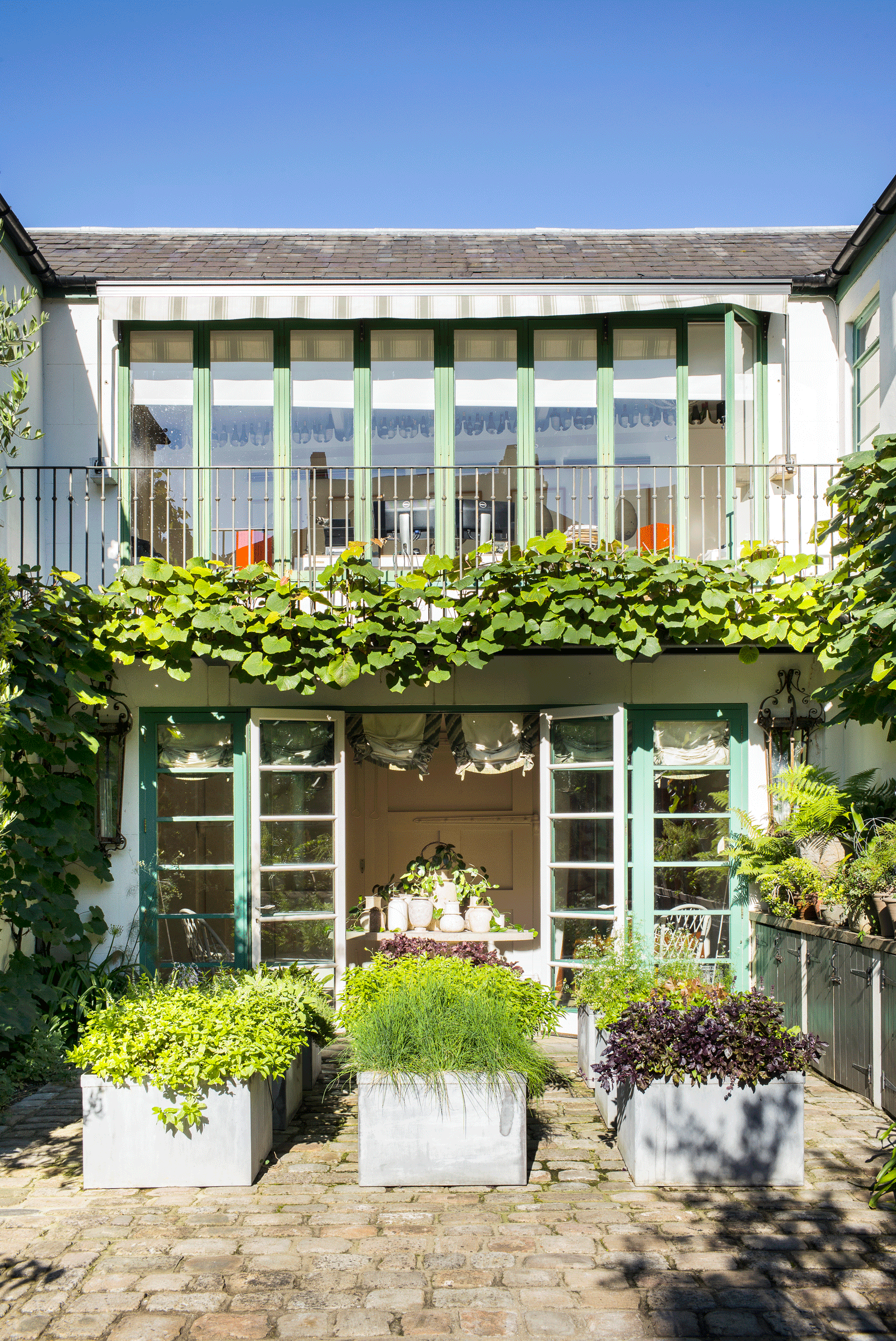
Choose your containers wisely, they don't have to match, but it's best if they feel cohesive.
To create this look in your own modern garden, you'll have to have a clear idea of the various roles and functions you want to fulfill within your garden design.
For Gina, the best way to start is with your layout. "It usually starts with a simple layout — dividing the space into squares or rectangles — and then softening that with planting," she says.
Katie adopts a similar approach, explaining, "To create one, start by mapping out any space into compartments, each with a clear purpose, i.e. outdoor dining, growing herbs, bold florals."
Once you've mapped out your sections, you can begin to select your containers, which, Gina notes, "often do a lot of the work, which keeps things flexible."
She explains, "The key is not to overcomplicate it. Give each section a purpose, keep your materials fairly consistent, and think about how the eye moves through the space. And don’t be afraid to move things around — that’s part of the charm. It’s quite a playful way of gardening once you get into it."
Reject the impulse to buy in bulk, as Katie says, "This trend rejects impulse buying. Instead, it embraces curation over collection." Intention is key here, so make sure everything you include is there for a distinct reason.
The Best Plants to Use In Your Bento Garden, And Which to Avoid

"Botanical Bento is about control, clarity, and composition. If a plant can’t maintain its role within the design, it doesn’t belong," says Corrina.
If you're a gardening novice, it may feel slightly intimidating to dive into this trend. Luckily, our bona fide experts have all the advice for the best plants to include, as well as those that are best avoided.
As this trend relies quite heavily on definition and structure, it is best to begin with some strong foundational plants. "I tend to approach a bento-style planting by building a strong structural framework first, using evergreen plants that hold their shape well in containers," says Gina. She goes on, listing "Pittosporum tenuifolium, Pittosporum tobira ‘Nana’, and Euonymus" as reliable additions, before concluding with some stronger "architectural plants to give the scheme presence". For this, she highlights, "Fatsia japonica, Nandina domestica, and small multi-stem trees like Acer palmatum or Amelanchier."
Corrina Murray, outdoor living expert for Southern Living Plant Collection, agrees with Gina's recommendation for beginning with a strong, structured base, saying, "Plants that stay compact, hold their shape, and offer strong texture or color work best." Adding, "Since most home gardeners won’t want to replant their garden every season, evergreen shrubs with multi-season interest will save time and money while reinforcing the 'garden bento' look."
From here, though, you'll likely want to add some softer, textural elements to balance out the rigidity of the evergreen plants. For this, Gina suggests ferns, as well as "low-maintenance ground cover or trailing plants to act almost like a living 'floor' within the containers — things like Vinca minor, Ajuga reptans, Erigeron karvinskianus, or trailing Helichrysum petiolare."
These elements help to soften the overall design, ensuring the boundaries don't feel overly harsh. "Overall, it’s about balancing strong, evergreen structure with softer, flowing, and seasonal elements so the planting feels both composed and dynamic," she says.
There's quite a wide scope for you to explore with this trend, but when it comes to the plants to avoid, Gina warns against "Anything too vigorous or sprawling." As she explains, "Very loose, wild planting can work, but it needs to be contained quite carefully, otherwise it fights against the whole idea."
Similarly, Corinna says, "Steer clear of large, fast-growing shrubs that will quickly outgrow their zone, sprawling ground covers, or anything that self-seeds prolifically or that is invasive (such as bamboo, mint, or ivy). Tall, unruly perennials that flop and need staking would also disrupt the composed, structured aesthetic the style depends on."

For a sleek, modern look, I love these high-shine planters from H&M Home, especially in this dark, burgundy shade.

This wide, white ceramic planter, with its rounded form has a subtle elegance and softness to it that would make a gorgeous contrast in an urban setting.

Or, for a more industrial, striking look, opt for some cool concrete-look planters like these. Fill with flowing, hanging plants for an interesting juxtaposition.
If the structured rigidity of this trend doesn't appeal to you, you could find yourself preferring something more along the lines of the 'nature-drenching' trend instead.
To stay on top of all the newest trends, for your outdoor area and beyond, subscribe to our newsletter.
