Hidden Trails — Ippolita Rostagno's Insider Guide to Exploring Florence
The artist, jewelry designer, and Artemest co-founder owes much of her creative flair to her Florentine upbringing. Here, she shares her favorite places in town beyond the Uffizi


What better way to see the world than through the eyes of our favorite tastemakers? In Hidden Trails, we look at the places that feel most like home to our community of design insiders — wherever those might be — to help you uncover what their cities have in store for you.
"The most meaningful connection I have to Florence lies in its deep history of patronage of the arts. Growing up there, you are steeped in a civic understanding that art is not an accessory to life but its very foundation," Ippolita Rostagno, the creative director of Italian crafts platform Artemest, tells me of the relationship to her Tuscan hometown.
A high school graduate of the city's prestigious Istituto D'Arte, Rostagno moved to Los Angeles in 1982 to study English Literature at Occidental College, where she set up an experimental dance and poetry company together with painter Anna Stump. Since 1999, the multi-hyphenate has been at the helm of her namesake jewelry brand, Ippolita, an innovative house reinterpreting precious stones, rosé, silver, and gold in bold, sculptural form, styled up by the likes of Jennifer Lopez and Charlize Theron.
"An artist first and a designer second," as she says, with the launch of Artemest — the retail and talent hub dedicated to the promotion of Italian design that Rostagno launched with Marco Credendino in 2015 — she has made her pursuit and love of Made in Italy into a lifeline. It's a choice you can fully understand only by acknowledging the influence that her Florentine roots have had on the shaping of her creative outlook and enterprises.
"The entire city stands as living proof that art can be central to a civilized society," Rostagno says. "Caring for its history, its buildings, and its legacy of artistic patronage is what makes Florence one of the most magical places on earth." But so do the addresses the Artemest co-founder invites us to discover below.
What to See in Florence, According to a Local
Heading to Italy's Renaissance cradle for Pitti Uomo (January 13-16; June 16-19), one of the hottest appointments of the global fashion calendar, or to soak in its centuries-spanning artistic heritage, but still feel stuck for ideas on what to see in Florence? Trust a local culture insider to make your trip worthwhile.
1. Catch "Craftsmen at Work" at Two Old-Style Artisan Studios

The sculpture-busy workshop of Galleria Romanelli — a one-way ticket to Florentine artistry — photographed by Tomaso Lisca for Artemest.
Studio Galleria Romanelli, Borgo S. Frediano, 70, 50124; Castorina 1895, Via Santo Spirito, 15r, 50125 Firenze FI, Italy
The design hotspots I love most are traditional artisan shops where you can still see craftsmen at work. Two must-sees are Galleria Romanelli, a sculpture studio housed in an old church, and Castorina 1895, a traditional wood-carving shop that makes ornate table legs and all sorts of frames and objects.
2. Discover a Secret Masterpiece in a Brunelleschi-Designed Chapel

Jacopo Pontormo's "The Deposition of Christ" (1525-28), as seen inside the Capponi Chapel, Santa Felicita, Florence, Italy.
Chiesa di Santa Felicita, Piazza Santa Felicita, 3, 50125 Firenze FI, Italy
Hidden in the tiny chapel of Santa Felicita near Ponte Vecchio, you can find one of the most spectacular frescos by 16th-century Mannerist painter Jacopo Pontormo. It is kept inside the Capponi Chapel, one of the longest-standing chapels signed by pioneering architect, designer, and sculptor Filippo Brunelleschi, commissioned in the early 1400s. Make sure to bring change to turn the lights on; otherwise, it’s in the dark!
Book your tickets to Santa Felicita.
3. Get a Taste of Florence — Whether Old or New

A Lampredotto sandiwch, a typical Florentine dish made from the stomach of a cow, captured in front of the city's famous Duomo.
Buca dell'Orafo, Via dei Girolami, 28/R, 50122; iO, Osteria Personale, Borgo S. Frediano, 167R, 50124; Trippaio Albergucci Mario (also known as Trippaio Da Marione), Piazzale di Porta Romana, 50124 Firenze FI, Italy
Whenever I crave traditional Florentine food, I head to Buca dell'Orafo, literally underneath Ponte Vecchio. My favorite dish there is spaghetti con i piselli, which is my go-to order when fresh peas are in season.

Most traditional Florentine restaurants find their home in the city's so-called buche ("hole"), small establishments tucked inside the cellars or lower ground of ancient, historic palaces, formerly used by families for storing wine and cured meats.
For a modern option, try iO, Osteria Personale. They have a super interesting menu, especially when it comes to the desserts, including the gelato al rosmarino con polvere di olio d'oliva ("rosemary ice cream with olive oil powder"), meringa ai capperi ("caper-scented meringue ice cream"), and gel di limone ("lemon jelly").
As for street food, my favorite indulgence is a lampredotto sandwich at the Trippaio Albergucci Mario, located in the Piazza di Porta Romana and affectionately known as da Marione.
4. Experience Florence's Independent Shopping Scene

Active since 1998, Alessandra Tabacchi and Franco Mariotti's art and interiors gallery, Flair, bridges the gap between old and new, fusing sensations borrowed from the world of creativity, fashion, and decor.
Flair, Lungarno Corsini, 24r, 50123; Officina Profumo Farmaceutica di Santa Maria Novella, Via della Scala, 16, 50123 Firenze FI, Italy
In Florence, so much of the romance is provided by the city itself, but how people care for and curate their shops is the cherry on top. A shining example is the art and interiors gallery Flair, which relies on local artisans to restore vintage pieces and on artists to create new things that fit in with the old.

A Florentine institution, Officina Profumo Farmaceutica di Santa Maria Novella speaks as much about the Tuscan city's history as it captures its legacy of fragrance.
Another tip that can't be missed on your 'What to See in Florence' itinerary is the recently restored Officina Profumo Farmaceutica di Santa Maria Novella.
5. Retreat from the City in This Lush, Urban Oasis

The Italian Renaissance gardens par excellence, the Boboli Gardens are a thriving green lung and UNESCO World Heritage site located in the heart of the city, dotted with sculptures, grottos, fountains, and grand avenues.
The Boboli Gardens are still my favorite spot for a respite from the bustle of the city. I went to school at the Istituto D'Arte, which was housed in the Scuderie Reali, the stables of the garden. I spent many days wandering amongst its curated hedges, and it is still beautifully maintained.
Book your ticket to Boboli Gardens.
6. Unwind at a Palatial Hideaway

Sculpted from plush, textured fabrics, sheeny marquetry, and brought to life by softly glowing lamps, the Family Room at Villa Cora is in itself a must-see.
Villa Cora, Viale Machiavelli, 18, 50125 Firenze FI, Italy
Situated just outside the city walls, the 5-star luxury hotel Villa Cora is very romantic. The frescos and the garden are lovely, and I stay there whenever I can.
One (Lesser Known) Thing

"The city stands as living proof that art can be central to a civilized society. Caring for its history, its buildings, and its legacy of artistic patronage is what makes Florence one of the most magical places on earth." — Ippolita Rostagno, creative director of Artemest
The greatest thing about Florence is that beauty is palpable. The buildings seem to cast a spell with their perfect proportions and historical gravity. The artisans who crafted them are still present in their work, and for me, this enduring presence has been one of the most powerful motivations to support craft and art as a lifelong endeavor.
Where (Else) to Stay in Florence
The Hoxton, Florence

The charming Alassio restaurant at The Hoxton, Florence brings a slice of the Italian Riviera to the Tuscan city.
IN A SENTENCE Unveiled last year, The Hoxton, Florence stands out as a very welcome contemporary design addition to the Tuscan city's hospitality scene, with whimsical, layered interiors crafted to impress by in-house team AIME Studios in collaboration with architectural practice Lev-Arch.
DESIGN DOWNLOAD Nestled in a tranquil area of Florence, less than a 20-minute walk from major attractions like the Duomo, the Uffizi Gallery, and the Fortezza da Basso, The Hoxton, Florence beautifully renders the fusion of old and new that makes the city coveted around the world. Composed of two buildings, a historic, 16th-century palazzo and a modernist, 1980s Andrea Branzi edifice, the stay seeks to reconcile two seemingly clashing eras: namely, Renaissance and contemporary style.

Much like the hotel as a whole, each of the 161 bedrooms at The Hoxton, Florence marries the stay's time-traveling vision in a journey between the evocative artistry of the 17th-century and the wit of the 1980s.
It does so by juxtaposing miraculously preserved frescoes and stunning arched walls with the retro-hip furnishings and palette that have earned The Hoxton group a name across the globe, leaning into plush, quirky fabrics, comforting volumes, and imaginative artwork to make visitors feel at home and absorb them in a sense of awe.
ON THE MENU Head to the Italian Riviera-inspired Alassio restaurant for a taste of the sea and truly outstanding wall art, or retreat into the intimate, dimly lit Enoteca Violetta for curated wines and moreish plates that delight the palate.
DON'T MISS The Hoxton, Florence's hireable rooftop terrace — the ideal spot to take in the city's grandeur while sipping a Martini.
Holiday Delights
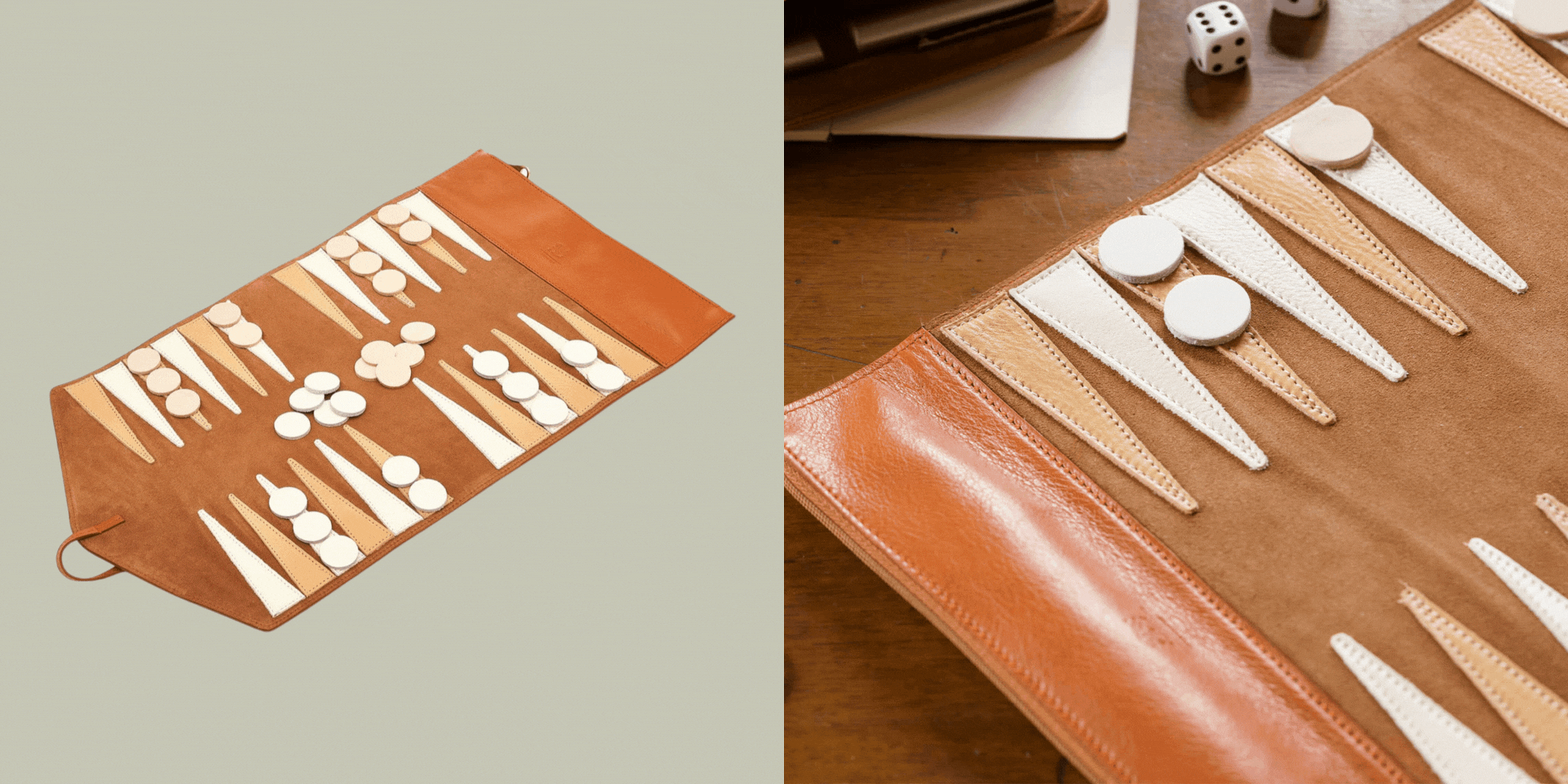
When what to see in Florence is no longer a question, start pondering a new dilemma: how to bring the artistic vibrancy of this Italian legend home? Try with this edit of Florentine, artisanal buys.








If there's one thing that Ippolita Rostagono's insider guide to her hometown shows, it's that the best way to discover what to see in Florence is to engage with its long-lived heritage, culture of hospitality, and artistry.
Ready for more adventures? Don't forget to check out our The Weekend Itinerary curation or our recent deep-dive into 5 underrated cities for design lovers.
