IKEA's Stacking Twin Bed Is a Box Room Savior — It's Solid Wood, Non-flimsy, and Super Versatile When You're Hosting Guests
With stackable beds, you can save on space and have various bed setup options for guests — from twin beds to doubles


Small guest rooms can require a bit more thought than generously-sized spaces, but with some clever ideas, they can be stylish and functional in equal measure. One of those clever solutions? Stackable beds.
Box rooms, home offices — wherever you put guests up to stay, stackable beds save on valuable floor space when not in use, while providing either two single beds or a double as and when you need.
Livingetc's editor, Hugh Metcalf, has IKEA's UTÅKER Stackable Bed in his own small guest bedroom, and says it's much better than a traditional trundle bed. "With trundle beds, they're easy to pull out, but you often end up with one bed lower to the floor, whereas with this bed, you get a generous double bed, so I don't feel bad putting adults in there."
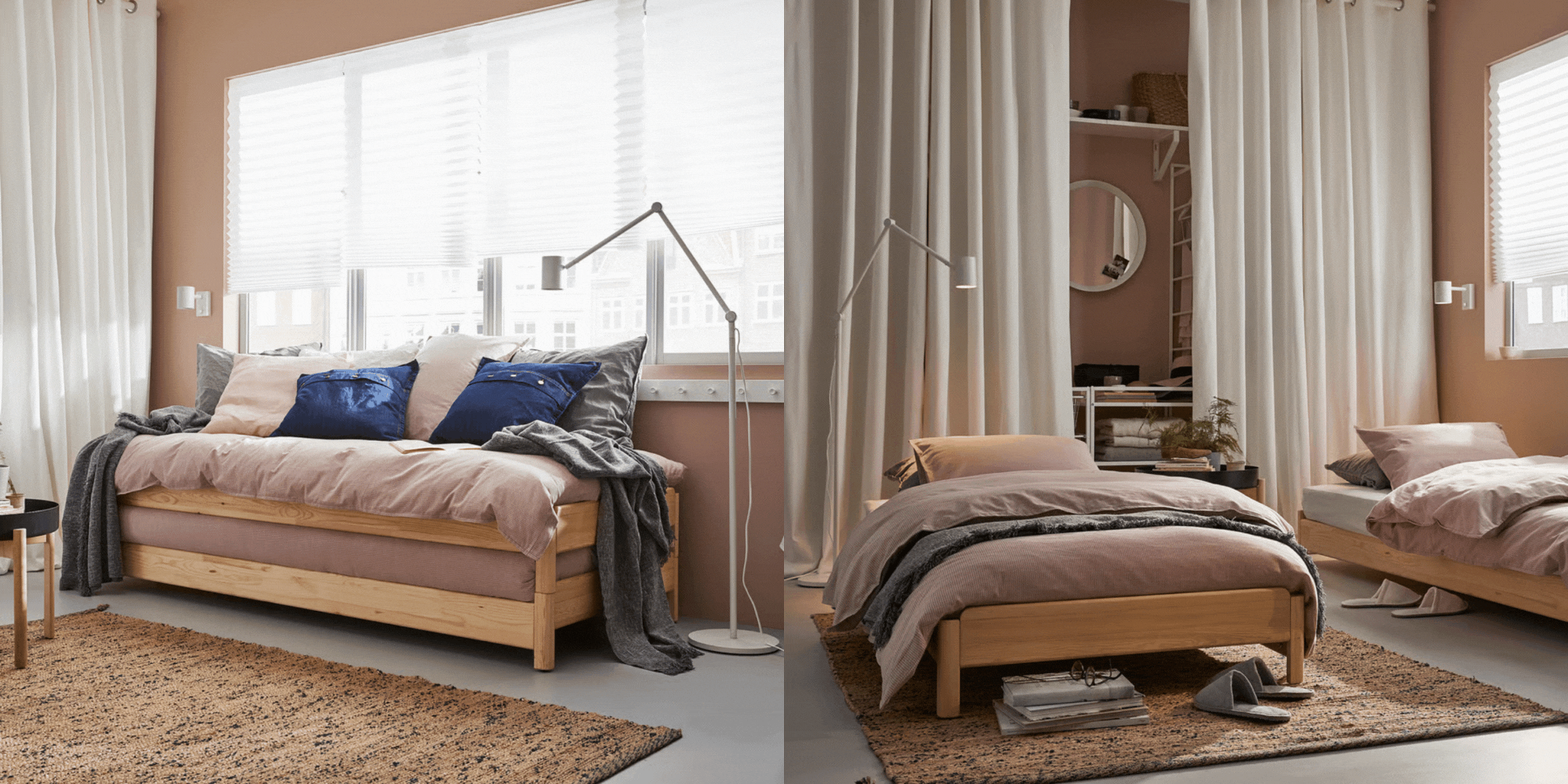
Crafted from solid pine, these stackable twin beds are sold as a set, and there are lots of ways you can use them. When unstacked, they can be made into a double bed or kept apart as two separate twin beds. When less bed space is needed, you can keep them stacked and use them as a higher single bed, and you can style it as a sofa (or even a corner sofa) the rest of the time. It's worth noting that these beds are designed specifically to be used with the ÅFJÄLL Foam Mattress, which is sold separately.
"If they're a couple, you can put them together, but often I've had friends over, and it's meant we've either been able to have them as separate twin beds in the spare bedroom, or move a bed to another room so everyone has their own space," Hugh explains.
And if you're worried about it being flimsy, don't be. Hugh says the key to a stylish setup is to treat it like a daybed "with lots of cushions along the back" when not in use.
There are also ways to make the bed more comfortable; for example, you may want to add a mattress topper (try this £24 option from Habitat) to your setup, says Hugh. The corresponding mattress itself is "not exceptionally comfortable," he adds. "I'm telling you this so you know you can add a mattress topper and still stack the beds up; there's just enough space between them when stacked to accommodate one."
Looking for something a little different? Perhaps a stackable bed with a bit more style? Discover some other great options below.

This stackable bed comes in two neutral color options: white and gray, for a contemporary look. A brilliant space-saving solution for small spaces, you can stack two single beds on top of each other to function as a sofa or comfy bench, and simply use them as two single beds when needed. These would also work well in a kids' room.

The clean and minimalist form of this stackable bed makes it a stylish choice for modern homes. It is made from solid pine and comes in four different color options (gray-green, white, caramel, or natural wood), so you can either keep them matching or mix and match for a more playful look.

This daybed is more of an investment piece, but it looks every bit stylish with the wooden frame and upholstered mattresses. It includes two single beds, which can also be styled as a king-size (or stacked as a daybed), along with two foam mattresses and bolster cushions. You can also choose from a whole range of fabrics and colors to best suit your space.

This option from Amazon can also be stacked if you have multiples. Choosing a solid wood pine bed increases how long your bed will last, as it's more durable — and makes for a comfier night's sleep for your guests. Beds are sold separately, and you could even stack three if you wanted!

This bed comes in both a single size and a small single, so if you're really limited on storage space you have the option to size down. The shape of the base allows for you to push two beds together to form a double, without having an awkward gap in between.

While this bed doesn't exactly stack, you still have the same utility, as the trundle can be neatly stored underneath the twin bed when not in use. The trundle has wheels for ultimate ease, and the simple design means when stored away, it just looks like a regular bed.
These stackable beds are a saviour for hosting guests when space is limited, whether that's in a small guest room or a home office that needs to double as a temporary sleep space. To ensure these beds look good and are comfortable for guests, take a look at how to style a sofa bed — from adding accent pillows to layering colorful textiles.
