'New England' Doesn't Just Mean Coastal — Here's How to Bring the Iconic Style Into Your Home, Wherever You Are
It is more about texture, craftsmanship, and comfort than themed decorating

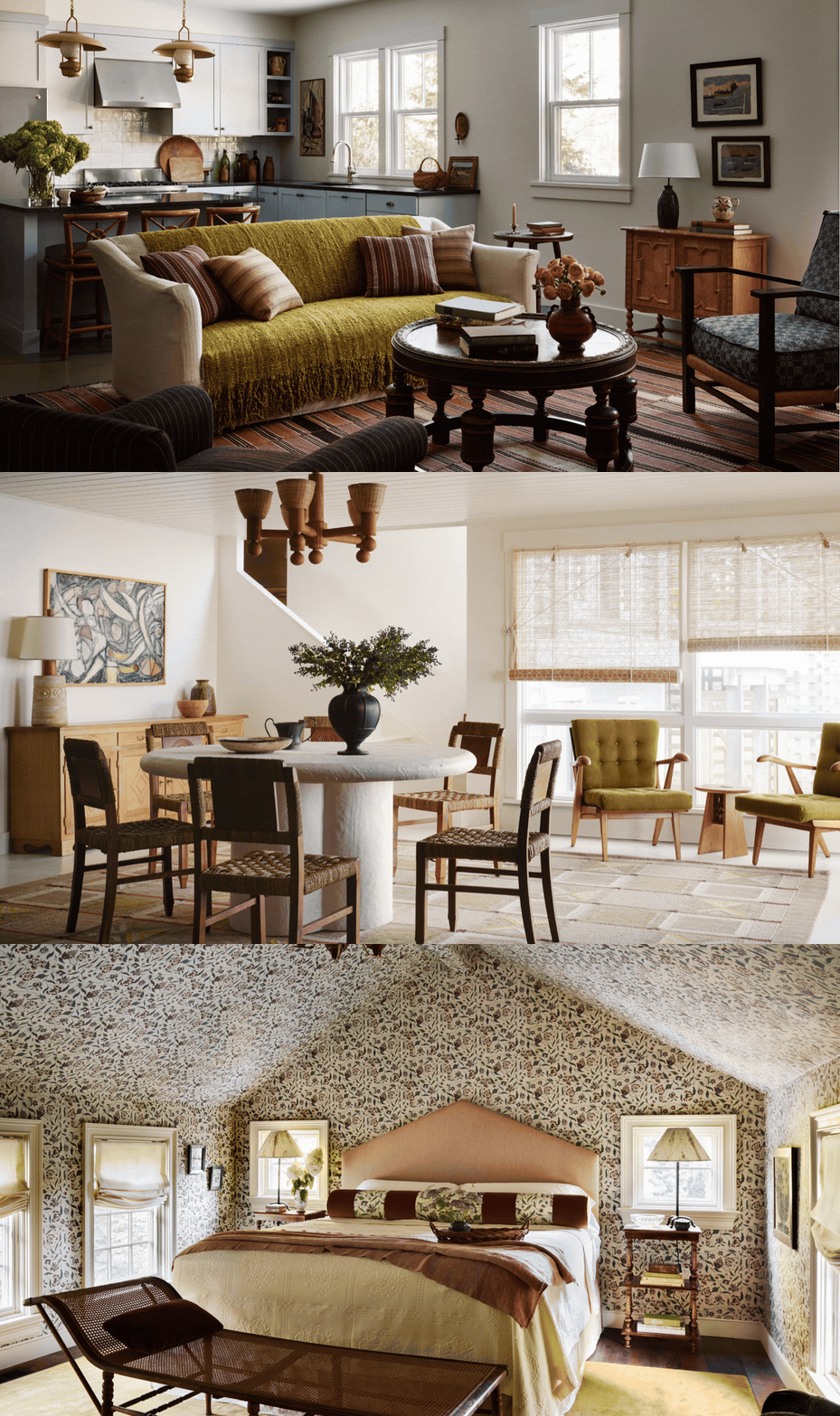
I grew up in South Carolina. I know that's not New England, but coming from the southern part of the United States' eastern coastline, we have certain preconceptions when it comes to design in the Northeast. Namely, navy blue, preppy coastal, a lot of historical architecture, and those iconic Cape Cod shingles. However true some may be, on their own, I'm the first to admit they're a broad misconception of what New England design really consists of.
New England design is layered. It represents years of history and craftsmanship, with a deep respect for place. Nina Farmer, a New England-based interior designer who specializes in characterful, contemporary homes in the region, tells me it's "less about a specific look and more about a way of living. The homes that inspire me have evolved over generations," she shares. "They feel collected rather than decorated, with architecture and interiors that have grown together over time."
So while modern coastal trends may be front of mind (and still have their place in these homes, of course), there is a lot more to this regional interior design style than its reputation suggests. "There is a quiet restraint to New England interiors that allows natural materials, beautiful proportions, and thoughtful details to take center stage," says Nina. In fact, it's a beautiful way to decorate a home, wherever you are in the world. Below is everything you need to know to master the art.
New England vs Coastal Style

This blend of patterns, materials, and lived-in pieces brings the history of this region to life in this room.
People often bundle New England style in with coastal interior design. The first point to note is that New England is a fairly large region, with semi-different sub-styles as you move inland from the coastline. So while, say, a Cape Cod style home by the water is a slice of New England design, it is not the whole pie.
Moreover, traditional coastal interiors tend to emphasize lightness, bright whites, and overt nautical references. New England interiors, by contrast, are grounded in history. "They embrace patina, antiques, architectural character, and a sense of permanence," explains interior designer Nina Farmer.
And homes near the water are influenced by maritime history, traditional architecture, and generations of craftsmanship rather than beach-house decor. "They feel connected to the landscape without relying on obvious coastal motifs," adds Nina.
So, the takeaway here is that a coastal New England home is not just about decorating with light blue and anchors. "The aesthetic tends to be more layered, tailored, and architectural, with a stronger emphasis on heritage, texture, and permanence," adds designer Blair Moore, also New England-based. And that heritage-rich, layered design extends across all New England homes.

Nina Farmer's design philosophy is rooted in a classical sensibility. Her sophisticated eye and use of color lead to interiors that are elegant, comfortable, and timeless. The Boston-based designer is a graduate of Tulane University and the New York School of Interior Design. She works almost exclusively in the Northeastern Region of the United States, with a deep knowledge of the region's design style.

This room feels moody, but still grounded. And the different textures give the space depth.
Image credit: D Mitchell. Design: Nina Farmer

The more interesting and collected your pieces are, the more you will get that New England feel.
Image credit: D Mitchell. Design: Nina Farmer
From the storybook singles of Nantucket and Cape Cod to the more rustic farmhouse style influence throughout the Hudson Valley and Vermont, New England design will always hint at what came before. "Patina'd wooden shingles, colonial homes, brick homes with ivy crawling up the sides, white picket fences — there is an understated elegance when building a true New England home," explains Blair Moore.
And while it helps to be grandfathered into a historical home in the region with a strong architectural base, decorating in the New England design style is adaptable. Embrace layering in interior design and intentionality in the right way, and you'll almost be able to smell the salty air and crisp pines outside your home.

Blair Moore is an award-winning interior designer across residential and commercial projects based in New York and Rhode Island, and her firm is influenced by her Aussie/American team. Blair works to create cohesive interiors that focus on function while layering organic and sustainable elements that bring depth and sculpture into a space.
How to Decorate Your Home in a New England Style

Mixing bold colors with natural materials makes for a balanced New England style.
So let's put this 'characterful' and 'history-rich' style into concrete decorating ideas, shall we? Based on those main descriptions, there are several ways you can go, but there is still further nuance to be known. Certain materials, color palettes, and finishes will help bring a New England-inspired design to life.
First of all, natural materials are essential. Wood wall panelling ideas, wide-plank floors, weathered oak and cedar, unlacquered brass, linen, wool, aged leather, and stone are several of the examples that both Nina and Blair say contribute to the warmth and authenticity of a New England home.
When choosing which materials and textures to include, again, layering is key. You can mix them all if you'd like, but Blair says, "New England interiors are built around layers that age beautifully. So, invest in natural materials, prioritize craftsmanship, and don't be afraid to mix old and new pieces." You want the quality to outshine just the aesthetics — this allows your home to grow with you as well.


In coastal settings, you can still lean into classic colors and materials, but with a more storied twist.
As for the color palette, Nina "gravitates toward colors found in the New England landscape: soft stone grays, mossy greens, weathered blues, warm creams, muted ochres, and rich earth tones." The palette is layered rather than high-contrast, creating spaces that feel timeless and lived in. It's like an earth-tone-meets-modern-heritage color palette — soft and grounding, but with deep, moody moments.
Then the fun really begins as you collect the decor for a New England-inspired space. I intentionally used the verb 'collect', as learning how to thrift (and thrift well) is essential to a genuine New England home — antiques, vintage finds, or inherited objects instantly add depth and authenticity.
"Books, collected artwork, vintage lighting, and antique case pieces are always wonderful additions," says Blair. They help create the sense that a home has evolved, which is really at the heart of New England style. But this isn't to say your home has to look like a history museum.
Contemporary New England design is not about throwing a few interior design trends into the mix. It is about creating spaces that feel relevant to how people live today. "I honor traditional architecture and craftsmanship but edit away anything that feels overly formal or precious," explains Nina.
Clean-lined upholstery, carefully considered lighting, and a thoughtful sense of balance help create rooms that feel fresh while preserving their sense of history. "That dialogue between old and new gives a room energy without losing its soul," says Nina.


"You want to honor the spirit of traditional New England design without feeling constrained by it," says Blair. "The goal isn't to recreate a historic interior but to create something that acknowledges its history while still feeling fresh and reflects the family within."
Even a blend of designs, like a coastal farmhouse aesthetic, with the right materials and pieces, would call to the spirit of the New England home while keeping things modern.
For more inspiration like this, be sure to subscribe to the Livingetc newsletter.
