4 Designer-Approved Ideas to Follow If Your Bed Takes Up Almost the Entire Bedroom — To Maximize Space and Style, No Heavy Renovations Required
You don't have to sacrifice a bigger bed size just because you have a small bedroom — these ideas maximize style and functionality


After years of apartment hopping in London, I know firsthand how hard it can be to design a stylish bedroom when space is at a minimum. Plus, I recently upgraded my standard full to a king-size frame — what little room my apartment bedroom had is now even less. So what do you do when your bed takes up almost the entire bedroom?
Just because we don't all have space for a separate vanity area or window bench in our bedrooms doesn't mean it has to be boring; the best small bedroom ideas make the most of whatever space you have. So if the size of your bed only leaves a small square footage left to work with, that just means it's time to get creative. Could a bed nook make the space into a cozy haven? Would a canopy bed create a dramatic, enveloping environment? There are way more options than you might imagine to make your bedroom a stylized blend of form and function.
And to generate ample inspiration, I called in the experts. I asked interior designers for their favorite ways to make a small sleeping space feel as fashionable as one with ample room. Whether it's a small guest bedroom you're planning or your main sleeping space, below are a few ways to crank up style — no heavy renovations required.
1. Combine Functionality Across the Space

A nightstand that's part of the headboard is both elevated and practical.
Rather than getting discouraged, think of a bed that takes up most of the bedroom as a design challenge. You don't have to stick to strict bedroom design rules here. Still, London-based interior designer Qian Wang from Xu & Wang Studio says, "I usually look at this kind of bedroom situation from both a functional and visual point of view."
Functionally, reducing or combining some of the practical elements can be a good approach for a small bedroom. For example, "instead of having a freestanding bedside table, we might simplify the storage and integrate it into the headboard," says Qian. Not only does this save space, but extended headboard design makes the space feel elevated and cohesive — you're creating a more custom aesthetic. Which, Qian says, going bespoke or built-in when you can "makes better use of the available space."
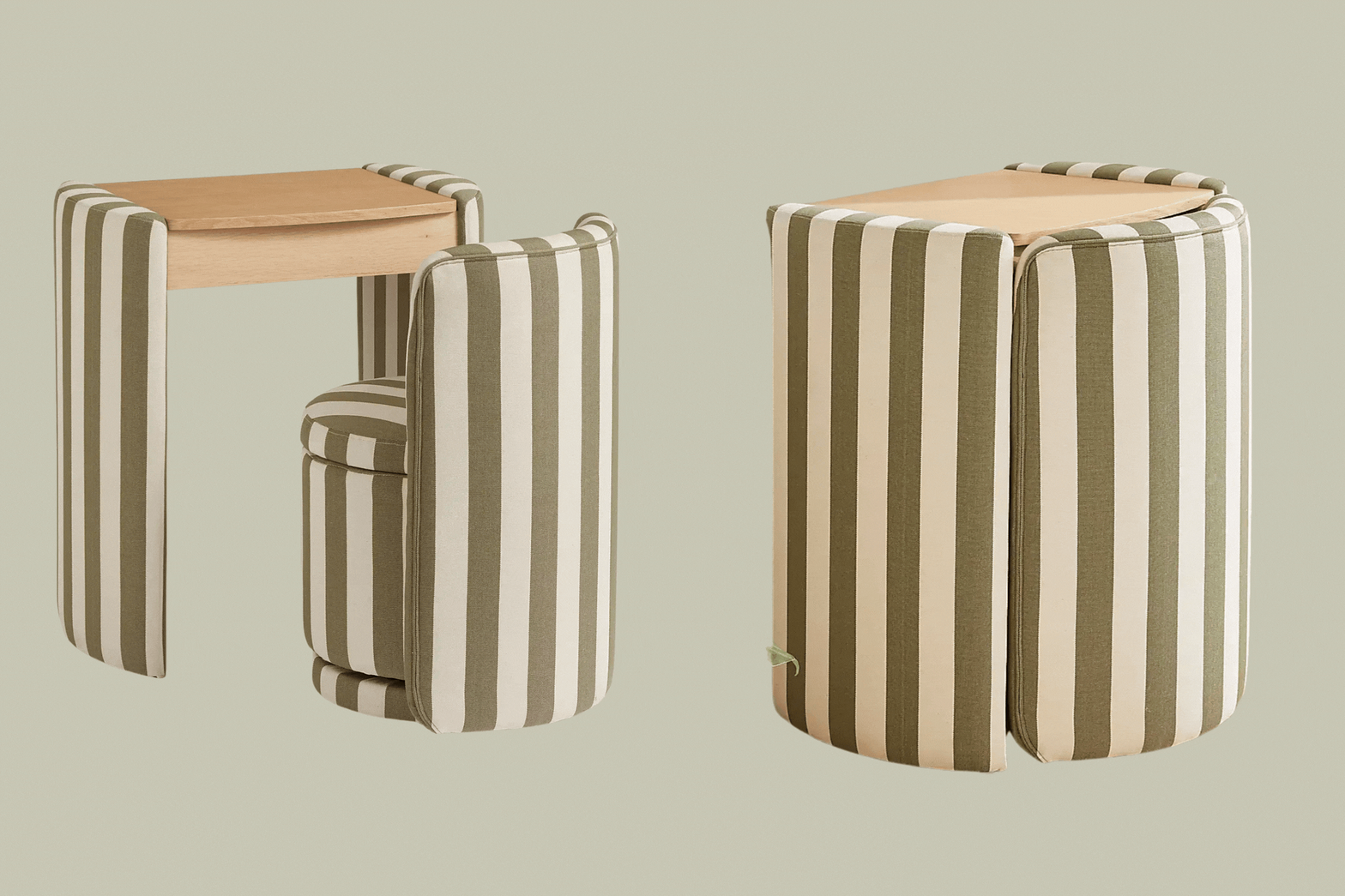
This combining of functions can translate in a variety of ways. I always love a make-up vanity idea for a bedroom, but how do you fit a vanity when the bed encroaches on most of the space? Qian says, "A vanity could potentially replace a bedside table." Further, if there isn't enough room for that stylish wardrobe you're dreaming of, "a bed with integrated storage could be used for clothes that aren't worn as often, while everyday clothes could be kept on a simple freestanding rail," adds Qian. Every seemingly small bedroom layout problem has a smart and stylish solution.


2. Create a Nook When You're *Really* Tight For Space

Lean into the coziness of a small bedroom with a dedicated nook.
Or, if you are really tight for space, creating a bed nook is a fashionable way to reclaim the room. "A nook is a good way to make the bed feel more integrated into the room and, actually, reduce its visual presence," explains Qian.
By creating a dedicated cozy corner, the bed becomes the main focus of the room, and you can (and should) highlight this. For instance, a canopy bed in a room where the bed takes up most of the room actually gives the space more intention and character. For one, the drapery draws the eye upward, making the room feel larger. Plus, the bed then becomes a style statement rather than a cramped afterthought.
A nook is also a good opportunity to squeeze more storage into your bedroom. However, Qian says, "I think it probably works better in a children's room or a secondary bedroom rather than a main bedroom. Compared to a more open bed arrangement, it can feel slightly less formal and perhaps not create quite the same sense of comfort and openness for sleeping."
Basically, contrary to what you might naturally assume, interior designer Gabriela Eisenhart says, "I always lean towards larger or integrated furniture like this in a smaller space." Think about building the room around the bed rather than fitting everything you can in. Canopies, nooks, nightstands built into the headboard, sconces on the wall, and a built-in wardrobe for storage — these clever solutions both increase functionality and visual impact.


Gabriela is an Atlanta-based interior designer and the founder of Silo Studio Design. Rooted in an organic modern sensibility, Gabriela loves layering minimal, tactile materials to create soft, grounded interiors with just a hint of the unexpected.
3. Make Use of Vertical Space

Use things like color, decorative trim, and built-in storage to draw the eye upward when there's no room to build outward.
When you can't build much outwards, think of what you can do upwards. "Visually, we would look at the overall volume of the room. If the room is very small but has a generous ceiling height, we might think about how we use the vertical volume to make the room feel bigger," explains Qian.
Again, this is where a custom built-in will save the day. Built-ins can help you make the most of an underutilized space and provide more storage. "You can design it to maximize your vertical space, add storage exactly where you need it, and create an intentional solution rather than squeezing more furniture into the room," says Gabriella. But if you can't go custom, other design solutions can help maximize your vertical space.
Color drenching is a really good way of doing this, especially in more contemporary bedrooms. "It helps soften the boundaries between the walls and ceiling, which can make the space feel bigger," says Qian. Add bedding in a similar or tonal colorway, and a too-big bed will feel exceptionally stylish and cozy.
Or, if you don't want to drench, another consideration is the material palette. "A dark floor against lighter walls and ceiling helps to emphasize the height of the room and makes the space feel more generous," says Qian. Don't overlook the space your walls and ceiling can provide.


4. Create Cohesion Through Restraint

Keep materials cohesive and use color and decor to layer in texture and visual interest.
When a bed takes up most of the space in a bedroom, restraint will be your best friend. This is not to say you can't make striking design decisions (like a canopy or custom headboard); it just means you really need to think about how every material, finish, and color works within the room.
"For a small bedroom, we tend to be quite restrained with the architectural finishes. Too many elements can create too many points of attention, and that's not necessarily the feeling you want to create in a bedroom." Instead, bring in more texture through fabrics and smaller decorative elements. This allows the space to feel rich and layered without feeling too busy.
Layering in design, and especially textures, is incredibly important in any space, especially a smaller one. "I like to use lots of neutral textures within a similar color palette. Immediately, it brings warmth and depth to the space without overwhelming the senses," says Gabriella.
Keep things fairly simple and limit the number of different materials for architectural finishes, so the space has a clear visual focus," adds Qian. You can then add more visual richness through objects and accessories.


Choosing the right bed size for your space makes the design feel more generous, but I get it — sometimes the bigger bed is something you don't want to compromise on. For that, these ideas bring intention back to the room.
For more inspiration like this, be sure to subscribe to the Livingetc newsletter.
