5 Lessons in Minimalist Country Interiors From Somerset’s Coolest Farm-to-Table Restaurant — A 16th-Century Inn Reborn as a Bathed-in-Sunshine, Characterful Hideout
At chef Merlin Labron-Johnson's Michelin-starred eatery with rooms, Osip, a new farmhouse (life)style is on the rise, one where tactile notes, nature-inspired flavors, and contemporary craft intertwine

The air feels crisp and, suddenly, clean when I alight at Castle Cary in south Somerset: genuinely the most picturesque train station I have seen in my five years in England, wrapped in greenery on either end and complete with a shiny deli-cum-cafe sculpted from glass, wood, and red brick, The Creamery. Autumn is in full swing; it's not even 6PM, but the sky has already dimmed. Yet, from the window seat of the taxi driving me to Michelin-starred farm-to-table restaurant, Osip, I can still catch a glimpse of the surrounding countryside as it darkens into shadows beside me.
Founded in November 2019, Osip started as an ingredient-led concept tucked inside the Number One Bruton boutique hotel, serving plates made with produce, meat, seafood, and poultry sourced in and around the namesake town. One of the English pioneers of the 'field-to-plate' movement, the establishment was dreamed up by Devon-bred chef patron and farmer Merlin Labron-Johnson. A burgeoning name on the international gastronomic scene, Labron-Johnson's debut eatery, Fitzrovia's Portland, earned him a Michelin star aged 24, less than a year after launching in 2014, and was quickly followed by the buzz made by the nearby neighborhood restaurant Clipstone, his second opening.
Since November last year, Osip has found an expanded home inside a 16th-century former coaching inn just outside a pine forest in Hardway, a short drive away from its original Bruton base. One of the most in-demand farm stays in the UK, this Bindloss Dawes-restored hideout is no longer just a destination for fine-palate epicureans, but also boasts four modern rustic bedrooms, meaning that, no, you don't have to book a same-day return to get a taste of Merlin Labron-Johnson's hyper seasonal tasting menus. Whether stopping off at Osip on an inspired day trip from London or choosing to spend the weekend, the chef has only one piece of advice for guests: "to view Osip as a cultural destination, not just a restaurant."
Checking in at Osip, Somerset

Osip's chef patron Merlin Labron-Johnson, photographed out on the grounds of the restaurant's farms.
Image credit: Dave Watts

All fruit and vegetables guests can taste at Osip are sourced from the eatery's two plots of land and its orchard.
Image credit: Dave Watts
"The space is first and foremost an old house, our house, where you can stay the night, linger by the fire, and encounter beautiful craft, objects, and works of art," he tells me.
Needless to say, "you can also have a very nice dinner, looking out over fields of cows, or a serene breakfast, watching the cooks go about their business before rush hour," he adds — anything to make visitors "feel enveloped in the environment", the heritage of the building, and its pervading sense of serenity.
This vision, Merlin Labron-Johnson recounts, is reflected in the minimalist country interiors of this increasingly talked-about, award-winning eatery and boutique design hotel.

Since launching in 2019, Osip has grown into a premier destination for all culinarians and gourmands interested in putting seasonality at gastronomy's heart.
Its pared-back yet warming ambiance suggests that, perhaps, it's time to embrace a different farmhouse (life)style: one that reframes all key historical elements in a clutter-free light, allowing essentially beautiful tactile notes, nature-inspired flavors, and contemporary craft to engage both the taste buds and the eye.
Lessons in Minimalist Country Interiors From Somerset's 'It' Retreat
But what aspirations guided the Osip team, local studio Bindloss Dawes, who spearheaded the architectural renovation of the building, and Johnny Smith of hospitality group Smith & Willis, who helped shape the destination's visual identity while also curating the interiors, in the reinvention of its location?
1. Valorize History, But Don’t Let It Limit You

Osip's in-house drinks and photography aficionado Andrea Marcon, who curates the destination's wine and cocktail list, captured at the stay's front desk and bar.
"This building dates back to the 16th century, and I wanted to preserve as much of the original detail and charm whilst making it feel contemporary," Merlin Labron-Johnson explains.
That the site where Osip resides, formerly known as The Bull Inn, was a pub is rather evident when, pulling into the parking lot, my cab stops opposite the tall sign that, already back then, must have signaled its presence to passersby, now reinterpreted in a back-lit, monochromatic flair to match the restaurant with rooms' understatedly luxurious vibe.

Still, whether because of Osip's mazy plan — the eatery expands longitudinally over a bright stretch tucked behind the front desk, with thriving gardens wrapping the kitchen and four plush guestrooms awaiting visitors past a winding staircase upstairs — or its unexpectedly hip, mid-century modern-infused atmosphere, by the time I am all checked in, the inn's image has already faded: in its place is that of an inspiring domestic idyll.

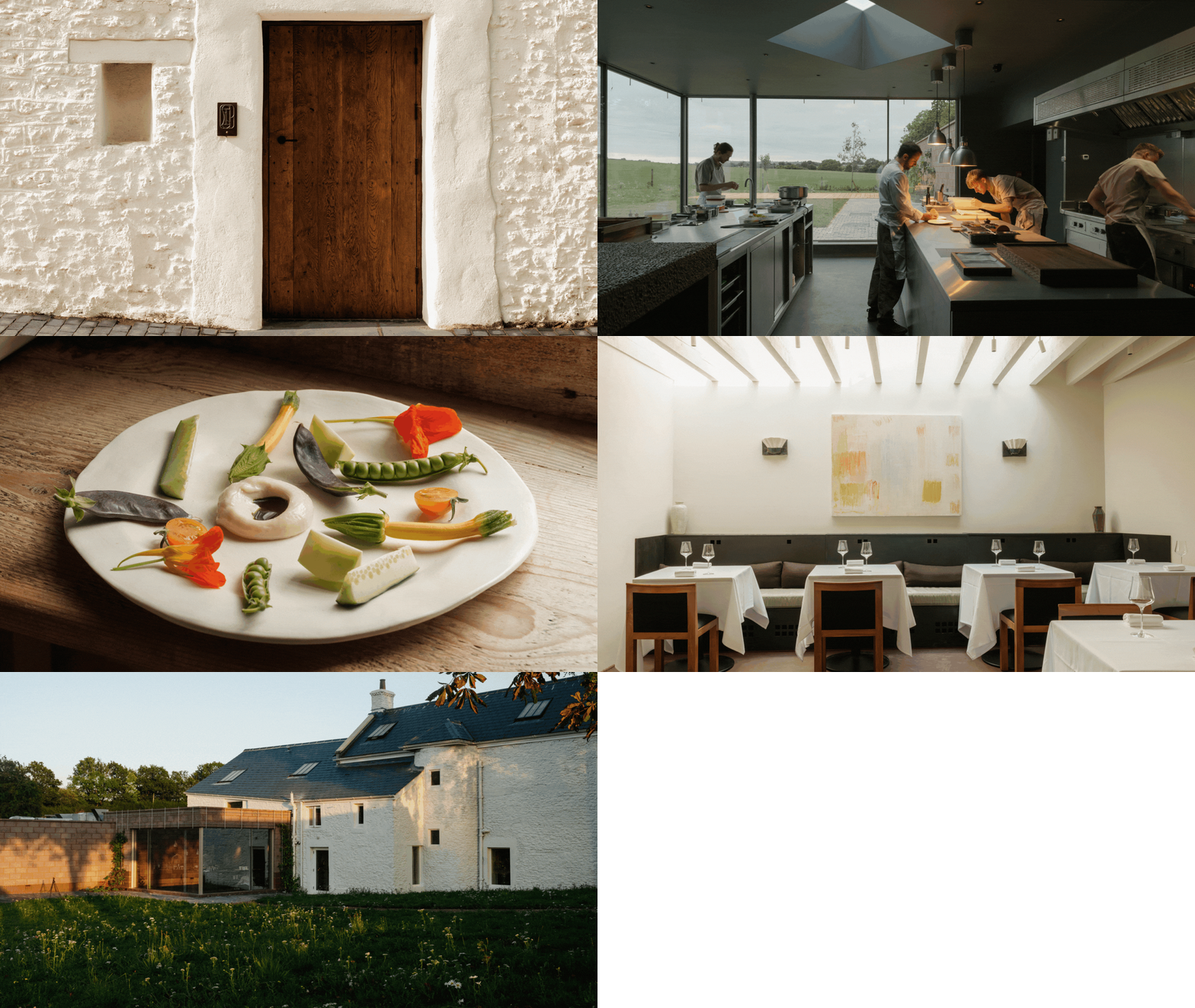
The white-washed brick façade of Osip, which takes over the site of 16th-century pub The Bull Inn.
One of the goals of the restoration "was to make Osip feel like it wasn't a pub," its chef patron recounts. Instead, "I wanted it to feel like an old farmhouse."
Sitting on one of the cream textile and chocolate-hued wood armchairs in the communal area adjacent to the entrance bar, the fire crackling in the background and an earthy, heartwarming Fig Leaf Negroni at hand, I wonder what it'd actually be like to live in a place like this.
Had Osip had sticky floors, drenched-in-booze interiors, and no-stop comings and goings, like so many old pubs, I doubt I would have said the same. But as I watch a couple sip their drinks and chat as they, too, wait to be taken into the main dining room, I think it's everyone's luck Merlin Labron-Johnson believed "it was time for the building to move on."
2. “Let the Sunshine In”

The first goal "was to open up the space and bring in as much natural light as possible," Merlin Labron-Johnson recounts. Bindloss Dawes's masterfully executed modernist glass extensions do just that.
Among the most eye-catching features of Bindloss Dawes's recasting of Osip is the 'glass box'-style architectural addition that houses its bold, brushed stainless steel and textured timber open kitchen and chef's table.
It is a daring stylistic choice that doesn't just balance the rustic aesthetic of the lobby's exposed wooden beams, wrought iron detailing, and distressed stone and brick walls, but also floods the Michelin-starred eatery with sunshine and uninterrupted, scenic views.
The first aim of the renovation "was to open up the space and bring in as much natural light as possible," Merlin Labron-Johnson recalls. "The old pub was incredibly dark and dingy, with low ceilings and very few windows, which didn't feel very Osip."

Possibly the coziest nook in the whole of Osip, the entrance lounge is the place to be for a pre-dinner aperitivo or a nightcap.
Image credit: Dave Watts. Architectural design: Bindloss Dawes. Interior design: Johnny Smith

It is a corner of the restaurant with rooms where the past of its location can be touched with hand, though you'll be equally drawn to its contemporary textural details.
Image credit: Dave Watts. Architectural design: Bindloss Dawes. Interior design: Johnny Smith
Filtering through and bouncing off Osip's porous surfaces like in a choreography, now light accompanies guests from when they wake up in their farm-chic suites and head down for breakfast to their afternoon drinks in the lounge and dinner time at the eatery, only to morph into twinkling reflections as the sun sets in the evening.
"Juxtaposing the very traditional house with the modernist glass extensions was something I was really excited about," Merlin Labron-Johnson explains. "I feel like it has worked well, as the contrast is striking without being conflicting."
This indoor-outdoor installation also enables Osip to mirror the nature the restaurant so faithfully borrows from — not just on the plate but even in its wider storytelling — evolving in shade and intensity and pacing its rhythm in seamless dialogue with the seasons.
3. Lean Into the “Contrast Between Old and New” — And Embrace the Quirks

Merlin Labron-Johnson's brigade at work in Osip's open kitchen. The restaurant's tasting menus change daily, with an emphasis on hyper-seasonal ingredients that heighten taste and minimize waste.
The interplay of light and dark isn't the only one unfolding at Osip; so is the one between old and new. While the eatery's kitchen, with its geometrical skylight, undoubtedly remains the most modern touch to this rural Somerset stay, whose flooring is made from locally sourced crimson earthenware clay, its bedrooms — inaugurated this summer — give country style the contemporary design treatment.
"Ultimately, the goal was to develop a beautifully charming, wonderfully comfortable, and supremely characterful space, blending nature with luxury to create something unique to Osip," Johnny Smith tells me of the accommodations, which welcome guests with a soundtrack of soothing classical music and a tray of freshly made Osip bakes: the sort of pampering attention everyone appreciates after a long day.

With the destination's overall ethos in mind, "we made a point of sourcing and using local, natural materials — live edge headboards and bedside tables made from wood felled within a 10-mile radius, and tumbled-edge limestone tiles in the bathrooms. We also visited antique markets across the southwest to source one-off pieces for each room, from bureaus to objet d'art," he recounts.

A glimpse inside my luxuriously comforting room at Osip.
The look and feel of the bedrooms were equally important. And so, "beds had to be incredibly comfortable, with no expense spared, showers hot, powerful, and complete with the most exquisite amenities — all of which are Maison Osip — while lighting had to be soft and warm," the designer adds.
A considered, uniform palette of white and warm tones unleashes "calm and a level of unfussiness", staying true to the restaurant and hotel's gentle nonchalance.
Meanwhile, a few selected, sophisticated details, like the sculptural matte porcelain bathtubs and the brass finishes alternating with the rooms' organic surfaces, exemplify the address's modern sensibility. The belief that "at Osip, less is better", and that precisely because of that, nothing should ever be left to chance.
4. Make the Result a “Product of Its Surroundings”, Not an Anomaly

Osip's crudités of farm vegetables in all of their natural vibrancy.
When, after a quick panisse and fermented carrot ́canapé bite in the lobby bar, it's time to move into the dining room, Osip's restaurant manager, Fethi Tarchoune, and in-house sommelier and cocktail expert, Andrea Marcon, hand me a list of ingredients which I am told "will define the culinary experience tonight" — from beetroot, mushroom, and parsnip to sea buckthorn, salt marsh lamb, corn, and brioche.
Over a slowly unraveling, 11-course meal paired with an exciting selection of European wines (plus a truly surprising Somerset Wilding Cider Yellow Perry), each further exalting the flavors they accompany, I realize what makes Merlin Labron-Johnson's life and work project so rightly worthwhile.
Seemingly 'simple' ingredients are elevated into lingering sensations under new, inventive forms I have, up until this moment, never tried before — steamed in vegetable 'teas'; layered in luscious seafood and hazelnut assemblements; flattened into paper-thin tacos topped with grated, dried venison heart.

One of my personal favorite artworks from Osip's dining room, painted by leading British artist Christopher Le Brun.
Some dishes, like the fried spring roll made of parsnip, black garlic, and togarashi, get you with their crunch. Others, notably the grilled Cornish lobster with pumpkin satay, Thai basil, and citrus, and the roasted corn husk ice cream with bergamot and bay leaf, offer a cocooning, foamy hug. This is a cuisine that borrows as much as it gives back to the environment it is anchored in, as before it is a business, Osip is a family.
"Osip has forged its own identity over the years, but primarily, it remains a product of its surroundings," Merlin Labron-Johnson says. "The way we cook and go about our day-to-day is very much rooted in this place."

Chilled courgette soup with gooseberry and spider crab and Courgette flower with crab mayonnaise and marigold, all beautifully served in Colette Woods's ceramic tableware.
Image credit: Dave Watts

Some of the seasonal treats currently available via Osip's own lifestyle retail platform, Maison Osip, including goods sure to spark joy this Christmas time.
Image credit: Dave Watts
Known for its apple orchards, artisan cheeses and breads, the rolling Mendip hills, and fertile farmlands, Somerset is the setting of a zero-kilometer food renaissance. No wonder Merlin Labron-Johnson's nuanced tasting menus taste so great.
Take Osip and plonk it down anywhere elsewhere, say, for example, in a city, and "it doesn't really make sense," the founder explains. "Our values are simple: grow our own food, look after our people, and embrace creativity and collaboration."

With a Michelin star and a green star for sustainable gastronomy already in the bag, the guest house's culinary offering is elaborate. Still, although "there is a level of intrigue to our cooking, we like to keep it simple," the chef patron warns.
"The aesthetic of our food mirrors the general design language: quality materials, presented simply, without too much fuss. We play with negative space — the 'new luxury' in the design world — but want the ingredients to always appear as the best representation of themselves."
5. Go Beyond the Expected — And Leave Room for Surprises to Unfold Along the Way

Derek Wilson's "Medium constructed sculpture on sycamore base" (2025), one of the pieces on view at Osip as part of its inaugural art residence display.
World-class gastronomy isn't the only thing to be constantly challenged and spotlighted at Osip. Earlier this autumn, the rising cultural destination unveiled A Gathering, the debut design exhibition of its artist-in-residence series.
Celebrating, like the wider calendar of events, the beauty and knowledge that lie in the handmade, the showcase (through March 2026) gathers ceramics, wood sculptures, and photographs from a cohort of creatives brought together by their "use of organic materials, response to seasonal rhythms, and a shared connection to place," crafted arts curator Jacqueline Moore, who will oversee the residency program in collaboration with Merlin Labron-Johnson, tells me.
In the meticulous process that went into these artists' creations, now installed across Osip's lobby and dining room, and their reliance on salvaged, local resources, she sees a metaphor for the chef's own approach; his flair for imaginative, painstakingly composed dish presentations.

Breakfast at Osip, or the reason why I long to go back.
Channeling the quiet power of native British wood and foraged materials, Mark Reddy's Remembered Rituals VI (2024) transforms the humble hand-carved spoon into a vessel of memory where routine, kinship, and the land's own history converge. Captured in black and white, England's forests turn into deeply enigmatic scenes before Jonty Sale's lens, prompting us to wonder whether, actually, there is more to the outdoors than the naked eye can see.
In Ken Eastman's hands, clay becomes both architecture and canvas. A slow-built form shaped through a painter's dense brushstrokes and a maker's sharp intuition, And so it was (2024) emerges from the kiln as a balanced fusion of sculpture, color, and introspection. Elsewhere, with his Medium constructed sculpture on sycamore base, Derek Wilson dismantles the familiar language of the vessel, reworking thrown components into abstract constructions that blur the line between the functional and the conceptual.

"The table is a place to gather, share, converse. This collaboration deepens the conversation around how one may encounter crafted artworks in a new context," Jacqueline Moore explains. A restaurant might not be the typical setting for an exhibition, but Osip is determined to defy expectations.
There is a sense of discovery to it: "once you enter, surprises await you as you make your way through the building," Merlin Labron-Johnson recounts. "I want the Osip experience to feel ethereal with a little bit of magic. If we achieve that, then I'm very happy."
Book your table or stay at Osip.
Not in the UK? Browse our curated edit of digital detox retreats to uncover a bucolic idyll near you.
