4 Things You'll Really Want to Avoid in Windy, Exposed Gardens — Experts Share What to Do Instead for a Space That Thrives
An exposed garden doesn't have to be a disaster, so long as you know how to design it — experts share exactly what you need to do in these types of areas


It's finally that time of year when we all start paying a bit more attention to our outside areas. But some gardens present more significant issues than others, which require a little bit of extra care and attention, as in the case of exposed gardens.
So, what exactly do I mean when referring to 'exposed gardens'? To put it simply, these are spaces that are more likely to experience harsher, more intense weather conditions. This can occur if your modern garden is positioned at the top of a hill, or another high point, or if it simply lacks the protection of surrounding trees and any other natural protectors. Without this layer of protection, your garden is more likely to be affected by harsher winds, which can lead to some significant complications you'll have to work around.
Without the natural windbreak supplied by trees and dense shrubbery, your garden will need to be resilient to stand up to the weather conditions, making your garden choices all the more important. Luckily, our experts share all the biggest mistakes they see in windy, exposed gardens, so that you know what to avoid when designing your outdoor space — along with their favorite tricks and tips for what to do instead.
1. Delicate Florals
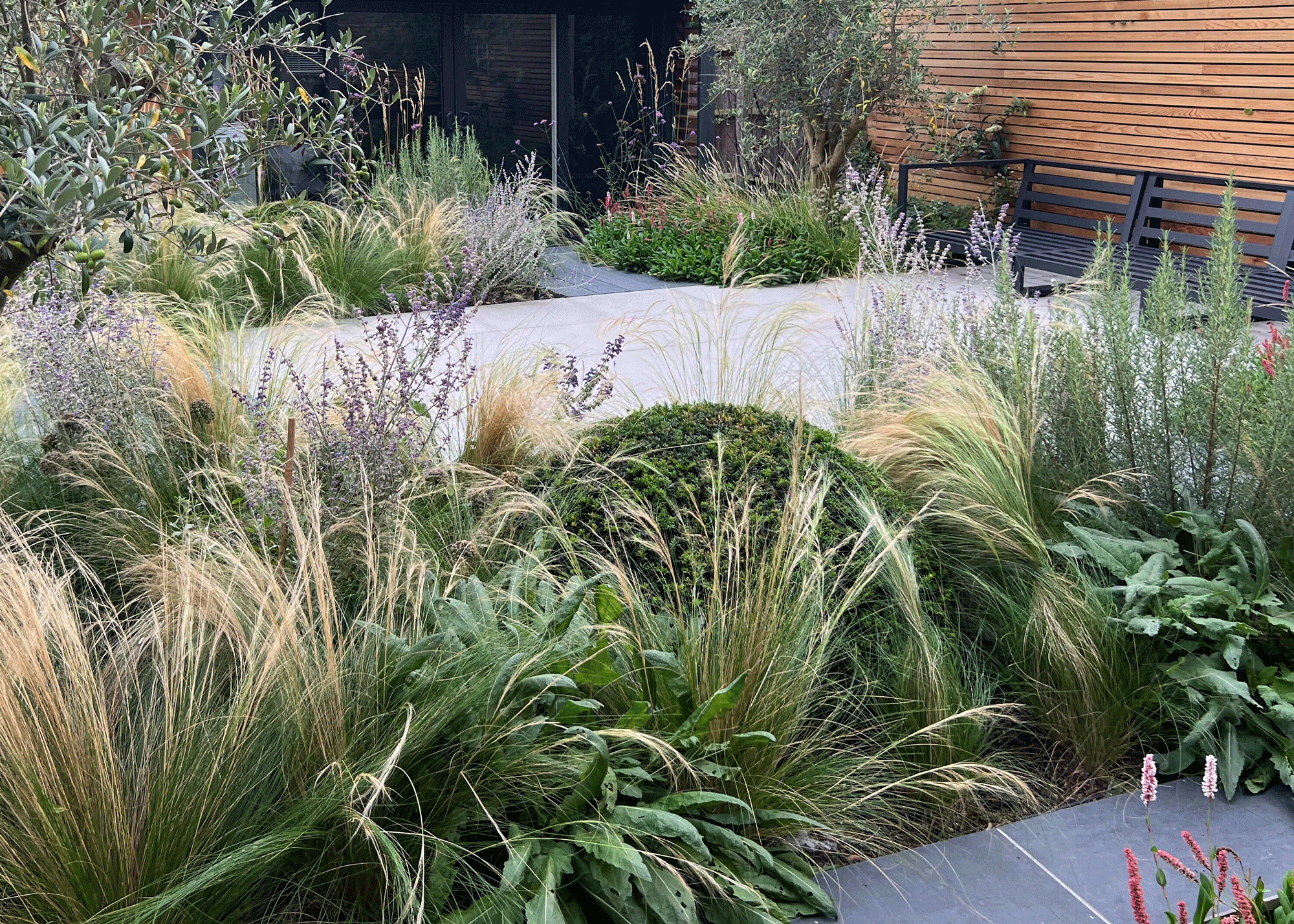
DO INSTEAD: "Instead, focus on resilient plant varieties that naturally tolerate wind and sun — think about plants that you’d see in a large exposed meadow (grasses galore, perennials such as coneflower, rudbeckia, achillea) or that thrive near the top of a mountain (juniper, sedum, more grasses!)," says Kat Aul Cervoni.
Some of the garden decisions you make will require a certain amount of sacrifice, it must be said. Because of the possibility of heavier, more intense winds, you may have to say goodbye to your dream of planting peonies in springtime and those other pretty, fluffy flowers that bloom in summer.
These flowers, while beautiful, are often too sensitive for exposed gardens. As gardening expert Chrissie Handley explains, "The main issue in a windy, exposed garden is your plant growth. Healthy growth and, especially, early growth, mean that plants need to be protected. In heavy winds, sensitive plants like dahlias, rhubarb, and sunflowers may struggle with snapped stems or can be wind-damaged beyond recovery."
These delicate stems require a certain amount of protection to thrive, and without that security, you'll be left with lackluster blooms. This is a problem that Kat Aul Cervoni, founder and principal of Staghorn NYC Landscape Design and The Cultivation by Kat, also identified. "I avoid plants with large, delicate foliage for flowers, as they’ll end up getting shredded by the wind (peonies, larger roses, hosta, colocasia, ligularia)," she explains.
As beautiful as these florals may be, they'll never be able to reach their full potential in an exposed garden, so it may be best to decorate with flowers in your interiors, instead.
Katherine holds a master’s degree in Landscape Design from Columbia University and began her career in horticulture through an internship at the New York Botanical Garden, where she developed a deep understanding of plant ecology and urban landscapes. Her work centers on crafting outdoor spaces that feel both elevated and deeply livable – gardens that function beautifully, celebrate the rhythms of nature, and offer moments of calm within the density of city life. Through her blog, The Cultivation, Kat shares her knowledge with an inviting, approachable voice that invites more people into the world of gardening –no matter their level of experience.
2. Large Evergreens

DO INSTEAD: Prioritize denser, smaller evergreen shrubs instead.
Similarly, Kat also warns against planting large, dramatic evergreens in particularly exposed gardens. "I also avoid evergreens with larger foliage as they tend to suffer the most during the winter in windy sites (e.g., skip laurels, rhododendrons)," says Kat.
While the best evergreen trees are frequently recommended as great additions to your garden, celebrated for their consistent, pleasing look and ability to provide extra privacy, in windy, exposed gardens, you'll struggle to get the same benefits.
Evergreens with large, dramatic foliage can look striking in Mediterranean gardens, but when consistently exposed to harsh winds, they can quickly take a turn for the worse, and are prone to wind damage, with the leaves often turning brown from 'wind-burn'.
3. Flimsy Planters

DO INSTEAD: " If you do want some planters, they need to be heavy, like terracotta or stone or weight the bottom of any plant pots by adding gravel (this helps with drainage for the plant too!)," says Chrissy.
When working with a windy, exposed garden, it's not just the type of plants you choose that matters — it's also what you choose to plant them in. And in these gardens, the heavier the planter style, the better.
As Kat explains, "It’s important to avoid using taller narrow planters in a windy site as they’ll constantly fall over, so instead, use ones that are slightly wider at the base and avoid tall, dense plantings that are easily caught by the wind."
Any planters made of plastic, thin metal, or other more lightweight materials are best avoided in exposed gardens, as they'll be prone to falling over, leaving some major messes for you to clear up.
This Cranford Planter from Garden Trading is a great option.
4. Lightweight Furniture

DO INSTEAD: Built-in furniture is particularly useful in exposed gardens, to remove any risk of your seating flying away.
The same logic applies to your garden furniture, too. "You should also avoid having any lightweight furniture and instead opt for heavier pieces, in particular ones that allow wind to pass through. Definitely avoid umbrellas," says Kat.
Any particularly lightweight, flimsy pieces are a complete no-go for windy gardens, unless you want your outdoor dining area blowing away. Although many plastic designs are more affordable, it's always best to invest slightly more in something weightier, so you don't risk losing your whole outdoor living room to a windy afternoon.
While umbrellas may feel like an essential in particularly sunny gardens, they too will most likely be lost to the sky as soon as a strong gust of wind whips past. Opt for more durable, permanent garden structures instead, for a more reliable shelter from the sun.

This lovely planter is made of Ficonstone, a mix of glass fiber, cement, and crushed stone, making for a sturdy, durable finish.

When decorating your exposed garden, concrete is a smart material to look out for, and it doesn't hurt that it looks great, too.

This modular sofa set is very much on trend, but it's sturdy, low-slung design also makes it ideal for windier gardens.

Although this is a metal variety, a wide, low plant pot is a pretty safe bet — especially if weighted down with some heavy gravel.

This lovely coffee table has a nice, wide base, making it more secure, and resistant to the wind.

This low, bowl-style ceramic planter has a lovely rustic feel to it, and would look lovely grouped with other, similar styles.
Knowing the best tips for keeping your garden protected from the elements is, of course, crucial when designing your space. But, we'd argue, being up to date with all the hottest garden trends is also up there. After all, you deserve a garden that is as beautiful as it is practical.
For more design inspiration for your garden and home, sign up for our newsletter, and it will land straight in your inbox.
