A Definitive Guide to the Very Best Bedding for Hot Weather — From Breathable Pillowcases to Lightweight Duvets
Because a sweaty night's sleep is an uncomfortable night's sleep


We have all experienced the woes of sleeping in the heat. Is anything really worse than tossing and turning through the night, swapping which leg is outside the covers, only to wake up in an uncomfortable sweat? The cozy bedding scheme you curated when the temperature was cooler suddenly couldn't be more wrong. So, let's talk about it: from pillowcases to duvet materials, what really is the best bedding for hot weather?
First and foremost, the best bedding materials for warmer temperatures tend to be lightweight ones that won't trap heat, provide good airflow, and keep you comfortable all night long. Think natural materials and removable layers. The priority here is to create airflow, so things like switching to a low-tog duvet and linen sheets are the quickest route to a more comfortable sleep in the heat.
Wool throw blankets and flannel sheets are both fabrics you want to avoid in your home in the summer — but don't think of switching your bedding scheme as a seasonal chore; think of it as a styling opportunity. Sourcing the best bedding for hot weather is a chance to curate a new aesthetic for the season. And below, I've asked experts at some of the best bedding brands for their top recommendations.
Sheets and Pillowcases for Hot Weather
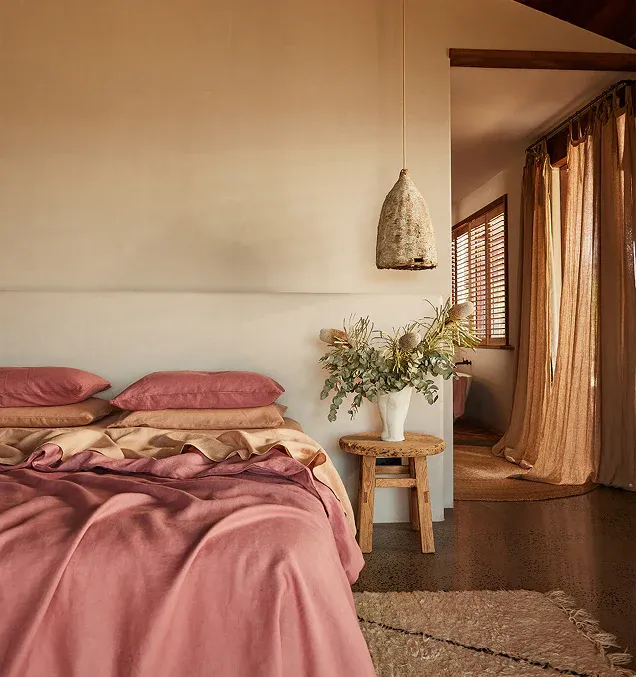
Linen bedding also provides a natural, lived-in look that works well with the summer season.
The consensus around the best sheets for hot weather is to stick with natural fibers, which, luckily, you'll be able to source anywhere you buy bedding. "Natural fabrics have temperature-regulating, breathable fibers that will help air flow through the bedding as you sleep," explains Matt Alpin, product developer at Cozy Earth. Whereas synthetic fibers like polyester trap heat and odors, especially on a summer night.
But what type of bedding should you look for specifically? Linen sheets are an ideal fabric for summer. "Made from the flax plant, linen's unique weave and long natural fibers allow air to flow through the fabric freely so heat can escape, keeping your body cool as you slumber," explains Jessica Hanley, founder of Piglet in Bed.
Linen is a highly absorbent material, so any sweat that builds up during the night is wicked away, leaving your sleep far less disturbed than synthetic alternatives. "Its lightweight structure means it won’t cling to your skin as a heavier material would," Jessica adds.
However, linen bedding alternatives such as cotton or bamboo are also great choices. Silk is another naturally temperature-regulating fabric that helps maintain an even sleeping environment, feeling cool against the skin without trapping warmth. Basically, always look for something lightweight and breathable to maximize air circulation.
"My favorite cooling bedding item is my Bamboo Viscose Sheet set," says Matt. "It genuinely helps keep me cool during hot summer nights." And cooling pillowcases should be treated the same — look for natural materials like bamboo and 100 percent cotton.


Duvets for Hot Weather

The goal is to source a duvet that is lightweight and breathable but still cozy.
Finding the right duvet for the summer heat can feel like an impossible task. Surely no duvet is best, right? But if you like the weight of a duvet over us as we sleep, but not waking up sweaty or tossing and turning, what's the fix?
As temperatures rise, always switch to a summer-weight duvet — something lightweight, breathable, and still cozy. When it comes to what TOG duvet you need, a low-TOG rating will be more cooling, while the higher the TOG rating, the warmer and more insulating it will be.
If you live in a particularly warm climate, anything between one and four TOG will be most comfortable in the heat, while something with a touch more TOG will be more versatile. For reference, Olivia Atkinson, head of home buying at The White Company, says, "Our lightest option for warm nights is a 4.5 TOG, but I'd also recommend the 7.5 TOG for a cool space."


Other Bedding for Hot Weather

Layers, light colors, and cool fabrics are the best recipe for bedding in hot weather.
Styling a summer bed is really up to interpretation — you want to include what is best for your sleeping environment and helps you sleep better. That said, there are a few ways to make a bed, both seasonally and year-round, that will help inform your decision.
Matt prefers to style a bed with a sheet set, quilt or under-blanket, "then a quilt or duvet cover for height no matter the season." While Olivia recommends making your bed with "a top sheet, then add a lightweight cotton blanket or bedspread, and finish with a throw or second bedspread at the foot of the bed, ready to pull up as the evening cools."
The key here is layers. Flexible layers mean comfort, whatever the temperature. And you can always add or remove pieces as you need.


Being a hot sleeper is one thing, but a hot sleep in the summer? It's bad news all around. That's why investing in clever but stylish bedding for hot weather is a must.
For more inspiration, be sure to subscribe to the Livingetc newsletter.
