5 Things I Learned About Material, Craft, and Sustainability at London Design Week in Shoreditch — And How It's Set to Shape Interiors in 2027
Design is getting personal, intentional, and more considered, and the latest designers and innovations further prove these notions

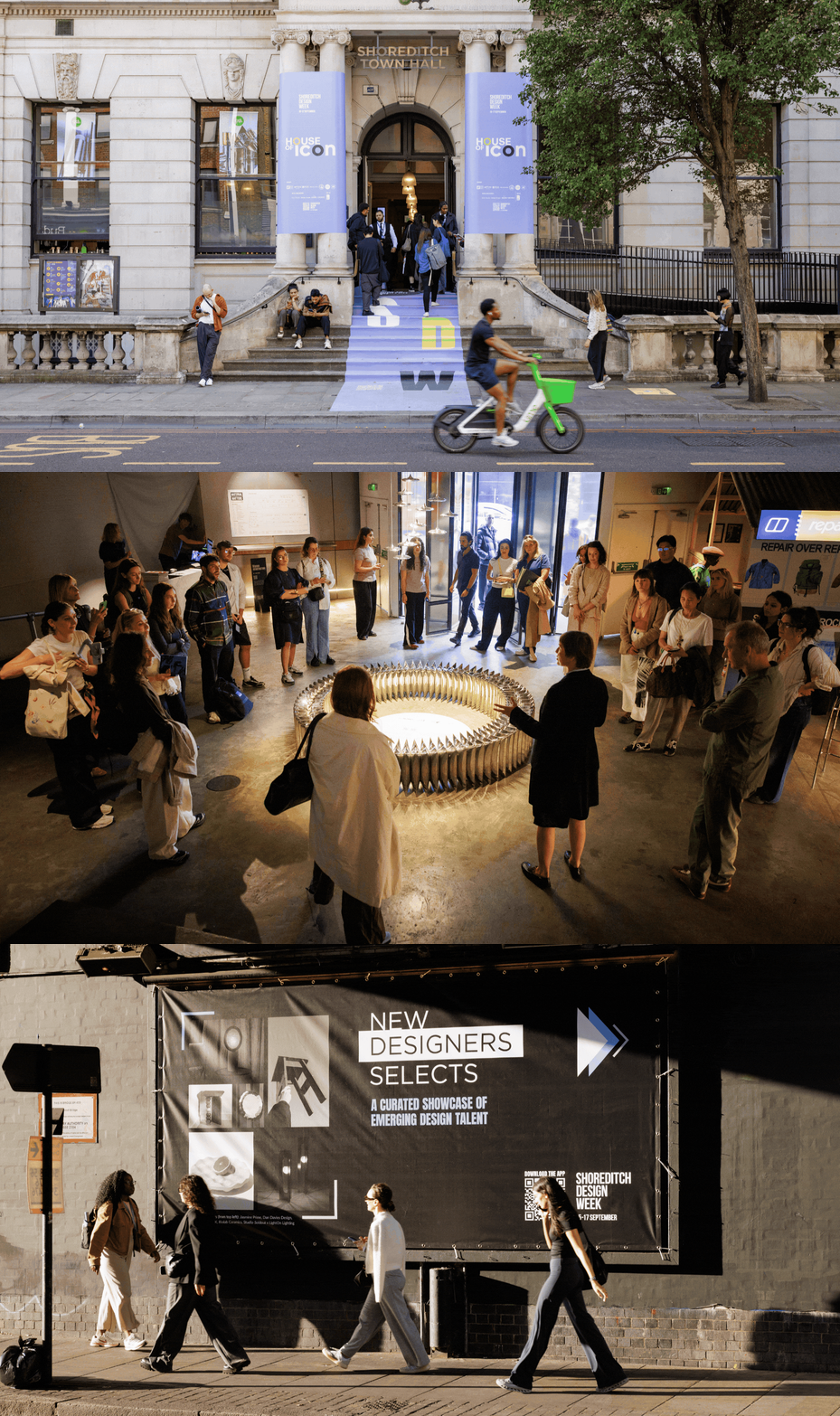
When design weeks around the world open the doors to exhibitions, showrooms, storefronts, and talks from all the best designers, it creates a certain buzz. It sparks inspiration across the interior design world, from materials and textures to noteworthy forms and brand-new collections. While I didn't have time to peruse all that London Design Festival had to offer, I did get to spend the day in one of its more innovative districts — Shoreditch — and let's just say, there was a lot to take in.
Two of the biggest exhibitions during Shoreditch Design Week are Materials Matter and the House of ICON showcases. As I wandered through the old London buildings housing these exhibitions, there were a few themes I noticed continually repeating: sustainability, materiality, and a clear sense of craftsmanship.
As trends continue to cycle and a new year of design lies on the horizon, events like this give us a strong glimpse of what the greatest minds in design are up to. This, in turn, helps inspire people like me and you when planning our next refresh, renovation, or home upgrade. To help, below are five thoughts, feelings, trend spottings, and musings I had while strolling the streets of Shoreditch Design Week.
1. The Simplest Materials Can Produce the Most Beautiful Forms

There are so many different colors and grains that make each cut of this wood stand out.
Image credit: Future, Olivia WOlfe

They even had a few stools and benches to show how simple, yet beautiful, these forms can be.
Image credit: Future, Olivia Wolfe
I started my day at the Wood for the Trees Exhibition, put on by the American Hardwood Export Council (AHEC) in collaboration with Mitre & Mondays and Benchmark. It was a homecoming of sorts. The exhibition explored how we can sustainably source timber from forests on the eastern coast of the United States (including the Appalachian Mountains, where I'm from) by rotating species and giving trees room to regenerate.
An interesting detail of the exhibit was that every piece on display was actually simple Number One Common wood — also known as 'cabinet grade.' This kind of wood sits below the top-tier timber that you would normally see in luxury design, yet it was still striking and beautifully crafted. The point being, with the right designs and approaches, we have materials and resources all around us that can be made into really fantastic furniture pieces.
Recent interior design trends point to a desire to reconnect with the natural world through color and texture, but the Wood for the Trees exhibition shows how we can introduce that feeling through more intentional design — beautiful timber furniture that also has a low carbon footprint.
2. Craft is More Important Than Ever


Moving along, my next stop was the House of ICON — a space for emerging designers to share their work. And let me just say: it was a wonderland for design lovers. There were boundary-pushing pieces around every corner. And while every piece truly knocked me off my feet, I can't say I was surprised to see a central theme of craftsmanship permeating the space.
In the face of AI, more analogue routines are becoming prioritized. Similarly, overly sleek, minimalistic furniture and decor are being swapped for pieces with overt craftsmanship. Think carved wood, fringed detailing, and the drawn-on decor trend.
At House of ICON, many pieces were inspired by personal experiences and cultures and crafted with materials and into shapes that give a one-of-one aesthetic. I left inspired and sure that the next couple of years in interior design will place more value on noticeable craftsmanship and human-centered design.
3. Subtle Texture is Set to Be the Biggest Trend

This sofa is a masterclass in subtle texture, elevating a neutral piece into something visually interesting.
Image credit: Future, Olivia Wolfe

These vases are so delicate and intricate that they almost feel simple again.
Image credit: Future, Olivia Wolfe

Here you can see how lighting interacts with subtle texture design to create depth.
Image credit: Future, Olivia Wolfe
Texture in design is definitely a contemporary fixation. This includes hairy furniture and fuzzy blankets, as well as the rise of leather alternatives and brushed aluminum. Texture is the base of good layering in design. And Shoreditch Design Week had texture in abundance.
However, the pieces that really caught my eye were the ones where texture felt slightly subtler. Sofas with tonal, textural patterns that blend in from far away but add visual interest when close up, and vases made of glass so delicate that it creates an inherent web-like texture. These iterations of texture design feel very nuanced — we all know and love texture, but this is a way to fine-tune your style.
4. Sustainability is on Everyone's Mind

The red, vegetable, leather-like material was one of my favorite innovations amongst the materials.
It should be obvious why sustainability is on our minds more these days. And in many ways, sustainable interior design is leading the charge. We want to make the pieces we bring into our homes (or build them out of) more eco-conscious, keeping them connected to and respectful of our planet, while still feeling beautiful. Well, Shoreditch Design Week definitely reassured me that designers are thinking about the environment ten-fold.
Almost every display throughout the House of ICON and Materials Matter galleries included innovative, eco-conscious materials, spanning everything from seaweed leathers to cement made from bacteria to pine resin blocks. It's slightly hard to imagine some of these, but every material was fabulously executed and had its own distinct character.
I would say these environmental material alternatives look 'just like the real thing' (and they do), but they are the real thing — this is the new way to blend good design with sustainable resources.
5. Nostalgia Can (and Should) Be Translated into Contemporary Design


And lastly, Shoreditch Design Week showed me that the design world is still feeling nostalgic. Whether it was design inspired by an artist's childhood or pieces influenced by design movements such as the mid-century modern style, nostalgia-driven creations were abundant. And this feels like the perfect way to round out the current craving for hyper-personal homes. What better way to show character than through nostalgic colors, fabrics, and motifs?
But how exactly did this manifest throughout Shoreditch Design Week? Well, one example was the team at Tamart, who shared that its entire collection was inspired by the life and designs of the founder's late parents, who dined with the likes of Miriam Makeba and created iconic 1960s furniture. The reimagined mid-century furniture is both nostalgic and contemporary, honoring past designs with present-day fashion.
I must say, I left the Shoreditch corner of London Design Festival with a revitalized spirit and plenty of inspiration. It was a chance to see all the best of ICYMI roundups and monthly musings up close and in person — and, of course, I'm here to keep you filled in.
For more inspiration while we patiently await next year's design week, be sure to subscribe to the Livingetc newsletter.
