Where to Buy a Sofa — The Big Guide to Which Brands Do What Well, According to Our (Hands-on) Editors, to Help Narrow Down Your Options
Because no matter how much you research the best places to buy a sofa, there's an ocean of choice out there. Here's how to cut through the noise and find your perfect match


I set myself a challenge at the start of 2025 — "I'm going to sit on every sofa brand, so I can really give the best recommendations", I told myself. When I actually started to research all of the options of where to buy a sofa, I soon realized it was a loftier goal than my schedule would allow for. This year I've sat on a lot of sofas, but I can't say all of them.
Still, between the Livingetc team, we've covered a lot of bases. We spend half our lives in showrooms, at events for brands, and at design fairs (where, after a long day of walking around in often uncomfortable shoes, a sofa brand's stand is an utter relief to spend time on). That basically means that of all those hundreds of brands out there trying to court you to buy a sofa, we know who does what best.
That might be in design, or championing the latest sofa trends; it might be in comfort, or it might be in special little details that make your sofa earn its keep in a whole different way. This list of brilliant sofa brands is not exhaustive, but it is a list that we can swear by, and includes everything from budget buys to where to buy a showstopping sofa if you've got money burning a hole in your pocket.
However, we'll be updating this guide regularly, adding more brands as we get to know them better, and spend time actually sitting on their sofas. I've already got appointments for 2026 in the diary, but if you've made it this far, I'm guessing you're in the market for a new sofa now. So, let's get it started, shall we?
The Best Sofa Brands, According to Editors
| Header Cell - Column 0 | Sleek and Contemporary |
Classic Styles Reinterpreted |
Something a Little Different |
Budget-Friendly Buys |
|---|---|---|---|---|
| Row 0 - Cell 0 | ||||
| Row 1 - Cell 0 | ||||
| Row 2 - Cell 0 | ||||
| Row 3 - Cell 0 | ||||
| Row 4 - Cell 0 | ||||
| Row 5 - Cell 0 | ||||
| Row 6 - Cell 0 | Row 6 - Cell 3 | |||
| Row 7 - Cell 0 | Row 7 - Cell 3 | |||
| Row 8 - Cell 0 | Row 8 - Cell 3 | |||
| Row 9 - Cell 0 | Row 9 - Cell 3 | Row 9 - Cell 4 | ||
| Row 10 - Cell 0 | Row 10 - Cell 3 | Row 10 - Cell 4 | ||
| Row 11 - Cell 0 | Row 11 - Cell 3 | Row 11 - Cell 4 | ||
| Row 12 - Cell 0 | Row 12 - Cell 3 | Row 12 - Cell 4 |
This is a pretty beefy list of options for where to buy a sofa, so to help you navigate, I've divided it up into a few sections.
Sleek and Contemporary: Think linear styles or trendy curved designs, using modern fabrics, with a little bit more of a minimalist flair.
Classic Styles Reinvented: Traditional sofa shapes fit for a 2025 home down to the details that elevate them and make them feel anything but old-fashioned.
Something a Bit Different: The brands beating to their own drum, offering sofa styles that you often won't see anywhere else.
Budget-Friendly Buys: If you're here to shop designer-style sofas on a shoestring, this is where I'd look first.
Andrew Martin

Andrew Martin's style of sofa has evolved over the years.
Andrew Martin is a firm fixture of the British design scene — its annual coffee table is a bible of all that is important in design. Over the years, I've been writing about interiors, and I've seen the brand evolve from a jovial, almost punky aesthetic (with Union Jack stars emblazoned on Chesterfield sofas) to a slightly off-the-wall take on the British classic style.
One of the brand’s biggest strengths is its flexibility. Andrew Martin builds over 95% of its sofa frames in the UK, and the company recently doubled its UK production capacity to meet rising demand. Its sofas offer a lifetime structural guarantee, showing real confidence in build quality. What’s more, many of their designs are fully customisable — you can choose from a rich library of fabrics (often bold, textured, globally inspired) or pick sizes that suit your space.
Style-wise, Andrew Martin sofas lean into character, with a strong sense of travel, history, and personality in its designs. The pieces vary from rugged-chic leather to more refined linen, and its silhouettes are often relaxed yet well-considered. There are models like the Rebel sofa, a studded Chesterfield, and then at the other end of the spectrum, the plumply cushioned linen Truman sectional. Truly something for everyone.
That said, the adventurousness comes at a premium. While not the most expensive luxury sofa brand, Andrew Martin’s sofas do sit in a higher price bracket, especially when custom fabrics or larger configurations are involved.
Showroom: There are two big showrooms in London - one on Tottenham Court Road and one in the Design Centre, Chelsea Harbour. The flagship on Tottenham Court Road has the most sofas, giving you the chance to try them out in person.

As modern as sectionals tend to be, this sofa design brings a more comfortable aesthetic with its layered, plump cushions.
Another Country

Another Country is a carbon neutral brand, and it's not the only green credentials it has.
I remember vividly when Another Country launched in 2010 — the rustic-meets-crafts aesthetic was very right for the moment, and it felt like the brand had always been, well, part of the furniture of the UK design scene. This was a time when we were coming out of recession, people were wanting to spend more on pieces that lasted, and harking back to the heritage of our nation (haute fish finger sandwiches and three-tiered cake stands were also on-trend). But unlike those cake stands, Another Country has endured, its seating reflecting a thoughtful, down-to-earth design philosophy: warm, natural, and deeply rooted in honest materials.
One of the brand’s biggest strengths is how it balances sustainability with craft. Another Country manufactures in both the UK and Portugal, using sustainably sourced timber and a mix of time-honored techniques and modern precision. Its production is made-to-order to minimize waste, and it is carbon neutral — a serious commitment to environmental responsibility.
Design-wise, the brand draws on a rich visual heritage: British country vernacular, Shaker simplicity, Scandinavian restraint, and Japanese woodcraft all feed into its aesthetic. The result is furniture that feels both familiar and refined — pieces that are beautifully simple, but never bland.
I've always admired the Sofa One with its solid oak frame, a webbed base for comfort, and loose upholstery made from natural materials like wool and feathers. Its classic proportions make it a practical and elegant two- or three-seater. The brand has also collaborated with other UK makers — Daniel Schofield's Another Sofa made headlines in the design press for its solid oak frame, coir and wool frame cover, and feather-filled cushions.
Beyond form, these sofas are built to last. The solid oak structure, paired with natural and durable upholstery, means they age gracefully rather than date quickly. Because they make to order, lead times can vary, so there might be a wait. But, for many, the wait feels justified given how much care goes into making each piece.
Showroom: The brand has a space in Marylebone, London, where you can see the quality of the craftsmanship up close — a factor it's hard to truly appreciate in images. There is also a charming barn showroom in Shaftesbury, Dorset.

The solid oak frame gives this sofa a solid presence, but the webbed base makes it super comfortable to sit on.
Arflex

The Marenco is one of Arflex's most iconic designs.
There are very few iconic sofas more iconic than the Marenco by Arflex. Its little winged tips of the arms are so strong and so recognizable that they were the star of the only Livingetc magazine cover to focus on a detail instead of a whole room, as I zeroed in on the corner of the sofa and the way it jutted out against a luxe stone wall.
Founded in 1947, one of Arflex’s biggest strengths is its historic commitment to material experimentation. Very early on, the brand worked with Marco Zanuso to apply new technical materials — foam and elastic webbing — to furniture production. Over the years, it has continued collaborating with leading designers (like Cini Boeri and Mario Marenco) to reinterpret those techniques in sculptural, yet usable forms. Production remains strongly rooted in Italy, strengthening its reputation for craftsmanship.
Stylistically, Arflex sofas often blend architectural clarity with comfortable organic forms. They’re not overly fussy — instead, they strike a balance between functional structure and enveloping softness. Take the Strips sofa designed by Cini Boeri. The modular Strips series feels like zip-up quilts over foam blocks, giving it strong, modular, flexible appeal and a sense of playful utility.
Then there is the Arcolor sofa designed by Jaime Hayon, a piece which brings in playful proportions, bold piping, and a modern aesthetic that stands out yet remains elegant. And I always enjoy sitting on the Tokio curved sofa with its curved profile that softens a room’s geometry while retaining a crafted, design-first feel.
Because Arflex designs are so rooted in mid-century innovation, they may not feel “trendy” in a fast-moving design market — but that’s very much part of their charm.
Showroom: There is no standalone Arflex showroom in the UK, but happily Chaplin's stocks most of the iconic Arflex designs.

Another of the Italian design brand's iconic designs, we've seen the 9000 sofa popping up in more and more schemes recently.
Arlo & Jacob

Arlo & Jacob's Felix Grande Sofa, seen here in Omega Mineral, is a standout for style.
All of Arlo and Jacob’s designs — the range extends beyond just sofas into armchairs, footstools, cushions, and side tables — are hand-crafted (specifically, by “one set of hands”) in Nottinghamshire in the UK. And while British manufacturing often means a higher price point, it doesn’t seem to be the case here necessarily: the starting price for a two-seater sofa is £1,295, which is certainly not exorbitant for a sofa.
There are 21 styles to choose from, and over 100 fabric options available, which provide ample room for customization. In terms of style, most feel typically traditional, bar the newer modular designs, Otti and Otto (especially if you wrap it in something cool like a lustrous, amber chenille fabric). Other immediate standouts, based on looks alone, are the Felix, Noah, Harriet, and the just-released collaboration with interior designer House Nine. Plus, I quite like the Bobbin Leg option, which comes in a number of finishes and feels very on trend right now.
But the detail that really caught my attention was the brand’s new offering: a bespoke service that offers customers the option for made-to-measure furniture.
While I personally haven’t had the chance to sit on an Arlo and Jacob sofa yet, I did notice that there is a choice of fill: feather or fiber-topped, which is a nice touch depending on your preference for ‘sink-ability’.
Showroom: Arlo and Jacob have showrooms all over the country, including in London, Bristol, Bath, Guildford, and St Albans. And this September, it opened its 14th store in Chiswick.
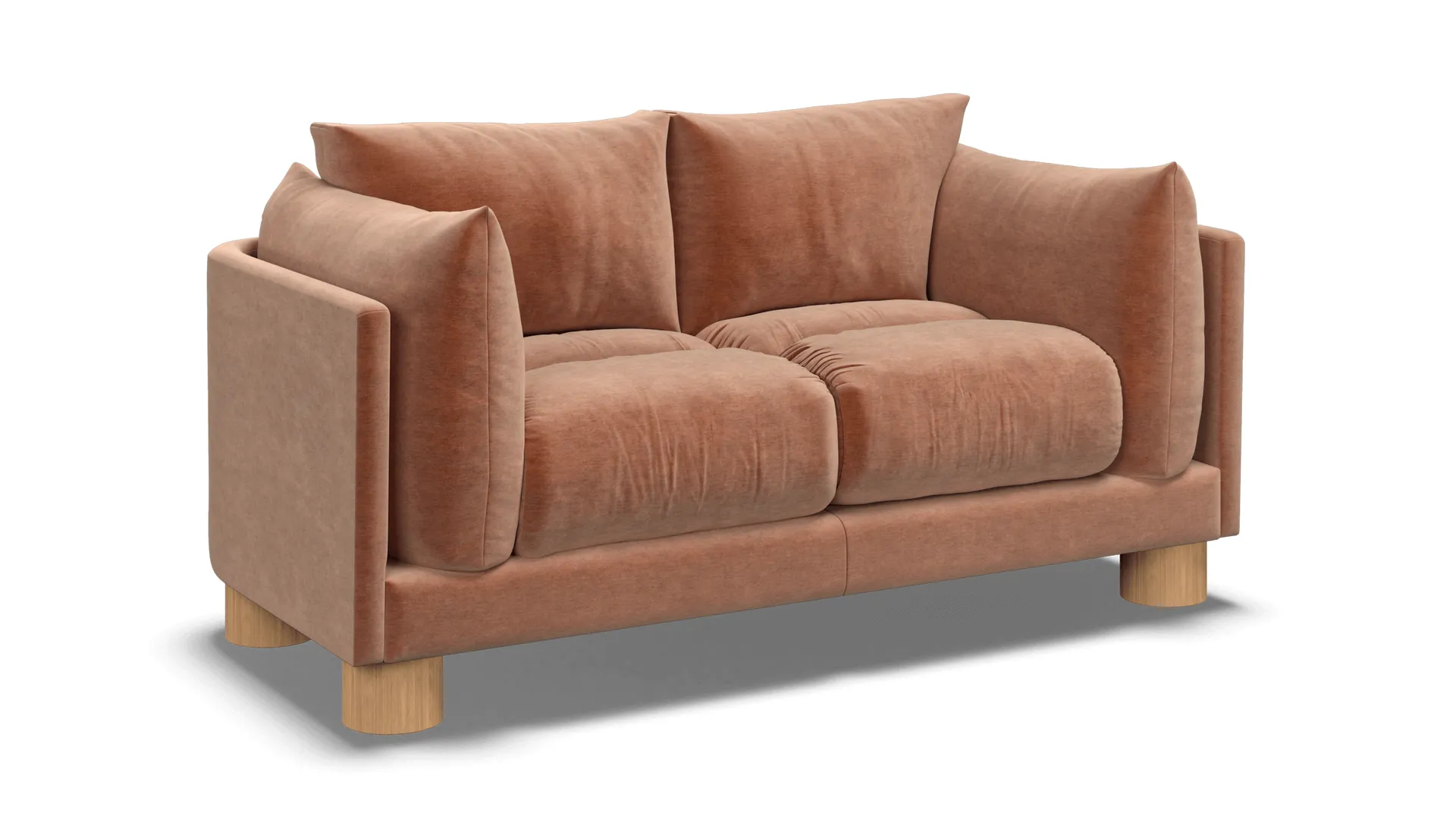
With plenty of sizes, fabrics, and finishes to choose from, the Felix sofa can fit all kinds of interiors.
B&B Italia

Possibly the most iconic sofa in the world?
There are few sofas more era-defining than B&B Italia's Camaleonda — in fact, I'd go so far as to say it's the sofa of the decade. It's been featured in Livingetc countless times in countless colors and in homes that have countless different aesthetics, but people love its enduring shape. Wide, low, ideal for sprawling on or having drinks with friends, it's smart and comfortable and totally right for the mood of right now — not bad for a piece that was originally designed in 1970 (and then reissued in 2020).
But that enduring, timeless classic is what B&B Italia specializes in. A highlight of my two annual trips to Milan each year, the vast showroom hosts super-large versions of modern classics like Patricia Urquiola's Tufty-Time, a couch so good it has been tweaked and remodelled for several anniversaries since its launch 20 years ago.
One of the major selling points is how B&B Italia marries technical manufacturing with craftsmanship. The company pioneered moulded polyurethane foam injected into precision-shaped frames — a method that gives its sofas fluid, sculptural forms without compromising durability. The frames and components are made in Italy, backed by rigorous quality control, and benefit from local artisan know-how.
Design-wise, B&B Italia sofas are iconic without feeling precious. Their aesthetic is contemporary, yet timeless — often sculptural, sometimes modular, but always grounded in elegance.
Investing in a B&B Italia sofa means accepting a lead time for bespoke or modular pieces, and the price point is firmly high-end. But the craftsmanship, design heritage, and customisable configurations make it worth it.
Showroom: To truly experience a B&B Italia sofa, visiting a showroom is key, and don't worry, you don't have to go to Milan. The brand has a large and show-stopping showroom in London's Brompton, and is also stocked at Chaplin's.

There's more to B&B Italia than just the Camaleonda. The Dambodue is a more classic, yet modern sofa shape.
Bontempi Casa

Bontempi Casa captures the typically streamlined Italian aesthetic.
During Salone del Mobile in Milan earlier this year, I practically collapsed onto a sofa on the Bontempi Casa stand. It had been a long day, I'd been on my feet and walked several thousand steps, and by the time we made it to see the brand's novelties, I was too overcome by how comfortable it all looked not to sink into its couches. Bontempi’s sofas feel like a refined, modern take on Italian living: elegant, clean, and constructed to last.
What really stands out is the brand’s production integrity and versatility. Bontempi Casa’s manufacturing chain is fully Italian, combining industrial-scale precision with artisan know-how. Bontempi Casa sofas offer a surprisingly wide range of configurations and customization: different fabrics or leathers, modular layouts, and a spectrum of metal or wood legs. The visual language leans toward architectural calm — soft, restrained geometry, balanced proportions, and a timeless minimalism.
Bontempi's Dakota sofa is a perfect example, available in both fabric and leather, with a clean, linear profile and generous depth — ideal for modern, uncluttered living rooms. Then the Franz sofa is a compact two- or three-seater with elegant proportions and a refined steel or wood base — perfect for smaller spaces that don’t want to sacrifice design. I've also always been particularly drawn to the Bonnie sofa, and its large, round pool at the end of one L-shaped side offering the perfect place to stretch out.
Showroom: To really appreciate a Bontempi Casa sofa — its fabric quality, construction, and modular potential — it’s worth visiting their UK‑based design retailers such as FCI London and Chaplin's, who both carry Bontempi Casa, allowing you to test pieces in person and explore the fabric and finish options.

The curved arm of this sofa lends it a particularly pleasing silhouette, that stands out against the brand's more linear designs.
Carl Hansen & Søn

The brand brings a Scandinavian sensibility to sofa style.
One of the best field trips I've ever been on was to the Carl Hansen & Søn factory in the middle of Denmark. I saw firsthand the chairs and sofas being handmade, and what that meant to have people hand-weaving those woven seats I previously just took for granted. And then I was taken to the home of Knud Erik Hansen, a country villa where every room featured a multitude of iconic CH designs. Of which there are many — the Wishbone chair being the most famous.
I got to sit on every sofa in situ, with the man whose grandfather or father either designed or commissioned it. The family‑run Danish furniture brand has been top of the game since 1908, blending timeless Danish modernism, exceptional craftsmanship and a quiet confidence in materials.
One of the brand’s biggest strengths is its commitment to genuine craftsmanship. Carl Hansen & Søn's focus is not just on producing icons but sustaining a legacy of skills — for example, it continues to apprentice cabinetmakers and upholsterers. It also leans into sustainability — much of its timber is FSC‑certified, and scraps are repurposed rather than wasted.
In design terms, Carl Hansen sofas often feature exposed solid wood frames, clean lines, and a harmonious balance between structure and softness. The brand reissues and keeps producing pieces it commissioned from legendary Danish designers — notably Hans J. Wegner, Ole Wanscher, Kaare Klint and more — to keep mid‑century design deeply relevant.
The classic CH163 Sofa is a three‑seater by Hans J. Wegner with a down-filled cushion and a warm, oiled wooden frame — a prime embodiment of comfort and craftsmanship. Wegner also designed the CH292 Sofa in 1962, pairing two soft, removable cushions with a sculptural FSC-certified oak frame. I also love the jauntiness of the Colonial sofa, designed by Ole Wanscher, reintroduced with the brand’s signature wood craftsmanship.
Because of the level of craft, material quality, and Scandinavian design heritage, Carl Hansen sofas are a high-investment purchase — but they carry the kind of longevity and design integrity that makes them future heirlooms.
Showroom: If you can't make it to the flagship showroom in Copenhagen, don't worry! London's Pimlico has a very good Carl Hansen showroom, while Heal's sells many of the most iconic pieces.

Designed by Rikke Frost for Carl Hansen, this sofa represents a softer, more cushioned offering from the brand, while still retaining timber at the heart of the design.
Ercol

Ercol is behind some of the most distinctive mid-century furniture.
I recently took a deep dive into the classic Ercol Butterfly chair, interviewing the brand's current chairman, Henry Tadro,s about how it was designed by his grandfather. In speaking to him, I learned a lot about the brand history, about how Ercol has been making furniture in Britain since 1920, about how it used to be quite heavy, dark wood before it became the leader of the mid-century design blonde wood aesthetic we know today. But in speaking with Henr,y I was also reminded of how much I love Ercol sofas, how their little wooden legs and plump seat cushions are truly timeless pieces of design.
One of Ercol’s biggest strengths is its manufacturing philosophy. Its factory is based in Princes Risborough, Buckinghamshire, where traditional wood‑working craft meets modern technology.
On the sustainability front, Ercol is impressively forward-thinking. It sources hardwoods like ash and oak responsibly, holds Grown in Britain and FSC certifications, and runs a biomass boiler in its factory powered by its own wood waste. Ercol also offers a “reCover” service, letting you reupholster older sofas, which helps prolong their life rather than replace them.
In terms of design, Ercol sofas feel warm, functional, and beautifully restrained. They lean into mid-century influences without being fussy, often combining exposed solid wood frames with soft, clean upholstery. The Studio couch is one I have admired for years — it was a mainstay of the Southbank Centre Shop next to the Royal Festival Hall. Then there is the Conzena, a dinky model ideal for smaller spaces or apartments.
Because of its commitment to real wood craftsmanship, high-quality upholstery, and longevity, Ercol sofas are a smart investment — not just throwaway pieces. That said, they don’t feel overly precious or ultra-luxury: more dependable design than a big statement.
Showroom: Ercol opened a big new showroom on the King's Road last year, a perfect place to try every design before you buy. There are several more stores up and down the country, and the brand is also stocked at Heal's.

I love the balance between the slim profile and comfortable cushioning, with a tweedy fabric.
Gallotti&Radice

The brand's Stami sofa, designed by Studiopepe, is a good representation of its playful, modern style.
It's hard to believe that when Gallotti&Radice began 70 years ago, its focus was solely on glass, as it's now a wide-ranging design brand with an emphasis on furniture and fabric, too. I've been lucky enough to immerse myself in its products, visiting the Milanese and London showrooms many times, even spending an evening in the brand's special apartment in Milan, where every piece, from the dining table to the couch, is from its catalogue. It was, of course, very chic, very elegant, and very welcoming to be around.
In terms of design, Gallotti&Radice sofas sit at the intersection of modern architecture and soft form. Modular and sculptural, they’re made for spaces that appreciate calm statement pieces rather than loud ornamentation. Its Stami sofa, for example, is made of gently sinuous curves and an elegant base in stained ash, its pincer-like legs both sharply stylish and super-smart.
Another favorite of mine is the Evolis sofa, which launched this year, and which Silvia Gallotti and I reclined on as we chatted during London Design Week in September. It's ergonomic and defies expectations, a statement piece that doesn't shout but makes a room feel like home. Also worth a mention is the Cloud Sofa with its low, generous profile and layered high-resilience foam. Designed by Massimo Castagna, it feels architectural but deeply comfortable. Upholstery options in both premium fabrics and leathers.
Because of the level of design ambition and craft, Gallotti&Radice sofas are a serious investment. But the payoff is in their lasting elegance, tailored construction, and ability to become a defining piece in a space.
Showroom: To fully appreciate a Gallotti & Radice sofa — the material finishes, upholstery, frame options — visiting their London showroom in Design Centre, Chelsea Harbour is a must. Or, if you're in Milan, the showroom there, designed by Studiopepe in a fluid, sensory space where you can engage with both the craftsmanship and the curated material palette up close.

There's something about the shape of this sofa, and its ridged design, that catches the light beautifully, ensuring it always looks great.
Graham & Green

Graham & Green's designs naturally lean bohemian in style, so its a place to head if you love this style.
British brand Graham & Green was one of the very first furniture retailers I ever wrote about. One of my early assignments in my first job was to go to the Westbourne Grove store, meet the founders, and write about why their Moroccan-style pouffes were such a key design trend of the moment.
Graham and Green has always been slightly bohemian, and has been family-run since 1974, giving its sofa collection a warm, well-established footing. Its pieces look like things you may have found on your travels, from some wonderful souk in a global market, unspecifically exotic and wonderful and storied in the brand's own way.
One of the brand’s biggest strengths is its dual offering: ready-made, quick delivery sofas that arrive in a couple of weeks, and made-to-order options, which let you choose size, shape, and fabric. The made-to-order range is handcrafted in the UK and Europe by skilled artisans, using materials such as solid mango or oak wood frames, feather-filled cushions, and a curated selection of fabrics — from linen to sumptuous velvets.
In terms of style, the sofas here feel globally inspired but grounded in classic proportions. There’s a relaxed, modern sensibility — sofas are often deep, with generous scatter cushions, loose covers, and a timeless quality that appeals to both vintage lovers and more contemporary design fans. For example, the Jasmine sofa could be dressed up or down — part of a pared-back minimaluxe scheme or a squashy family favorite. The Juno sofa, however, is more unflinchingly contemporary, its padding being a twist on a retro, 1970s vibe.
The price points here are good — it's easy to spend less than £1,000 and still come away with a standout piece that visitors will undoubtedly exclaim over.
Showroom: To get a real feel for Graham & Green sofas — the fabric weight, the cushion softness, the frame — visiting a showroom or its outlet in the UK is helpful. There are two in north London (one in Paddington, one in Primrose Hill), one in Bath and an outlet in Trowbridge.

This slouchy, relaxed linen sofa brings an instant vibe to a living room, and one that's hard to find in other sofa retailers.
Habitat

Habitat has some surprising finds among its sofa range, especially in the made to order section.
While Habitat is certainly a legacy brand (it was probably the store, in my childhood, that gave me what has become an all-consuming obsession with interiors, after all), it’s worth noting that this brand has been through some changes over time. Part of the same group as Sainsburys and Argos, Habitat hasn’t lost its design DNA, the same mid-century cool style that Terence Conran instilled in the brand when it launched back in the 1960s, but today’s Habitat is a lot more affordable.
Its sofa offering covers a lot of ground — you’ll find those budget, ‘first home’ style sofas with more of a sense of style than the average, all the way to Habitat’s made-to-order sofas, which sit at the more luxurious end of the scale. Some of my favorites include the Lars sofa, which has a cool modern silhouette; the Wynn sofa with its slouchy side cushions; and the Sacha for a comfortable take on the curved couch.
Have I actually managed to sit on any of them? No, not yet. Habitat’s in-store offering (within larger Sainsbury’s) is largely limited to smaller home decor and lighting, and while I’ll find one way or another to test some soon, they do offer a handy little service for anyone who wants a little more context than what they see online.
Showroom: The live chat service basically connects you with someone in Habitat’s private showroom (you can see them, but they can’t see you, so no worries about brushing your hair that day), and you can ask to see sofas close-up, see how soft they actually look in person, and how the mechanisms of things like sofa beds work.

I'm really into the simple silhouette of this sofa, but the curved edges of the arm give it a slightly more designer feel.
Heal's

The iconic Tottenham Court Road has a wide sofa offering.
Heal's has a very special place in my heart. It's where, as a junior on the interiors desk of a glossy magazine, I'd go on my lunch break — a broad showcase of all that was important, good, and well-made in design. The store still resonates in the same way today, with its collaborations with stellar designers like Russell Pinch, Lee Broom, and Matthew Hilton making it a firmament of the British scene.
Founded in 1810, its aesthetic in living memory has always leaned mid-century, with lots of wood, slim legs, and an emphasis on comfortable, unfussy shapes. But the brand is about more than just looks. One of Heal’s strongest selling points is its build quality, offering a lifetime guarantee on its sofa frames, which speaks volumes about its confidence in its designs. Its fabric-upholstered models are made in the UK, while its leather designs are crafted in Italy, home of the highest-quality materials.
Customization is also a strong suit. Through Heal’s 'Made for You' service, buyers can pick from an extensive fabric library and tailor sofas to their own layout and style. It’s not entirely bespoke, but you get a lot of flexibility without going fully custom.
From Heal's own range, the Tortona sofa is modern classic, available in two-, three- or four-seater sizes and just made for lounging on with the whole family. Elsewhere, you'll find hero pieces from other brands, like Ligne Roset's beloved Togo.
In short, Heal’s sofas are a refined, design-led choice for those who value heritage, craft, and quality materials. If you’re after something that feels both timeless and tailored, it's definitely worth a look.
Showroom: The flagship Heal's store on London's Tottenham Court Road is an iconic place — doubly so since it took over the old Habitat store next door. But there are six other Heal's stores up and down the country — notably, a brand new space has just opened in Bath.

A hint of Heal's mid-century leanings, but era-agnostic enough to fit in any (well-designed) living room.
IKEA

IKEA's STOCKHOLM is a more elevated offering from the accessible design brand.
When it comes to furniture, IKEA is where most people start. And it makes sense; the designs are functional, the prices are affordable, and the pared-back style appeals to most. While you won’t find Italian leather and hand-crafted British design in its sofa range, you will often find washable covers, adjustable layouts, hidden storage (and even beds), hardwearing materials, and all that, conveniently ready to take home the same day in a flat-packed box. (Great for squeezing down narrow hallways.)
I personally owned an IKEA sofa before moving to London. It was from the 2017 Stockholm collection — the brand’s most elevated collection housing many of the best IKEA products. It had a super deep seat, soft velour covers, and loose throw pillows as its backrest. Hand on heart, it was the most comfortable sofa I’ve owned, and apart from the fabric fading a bit from sun damage and the pillows constantly needing to be plumped, I still regret selling it.
Admittedly, it was from the brand’s premium collection, so it was considerably more expensive than most of its other styles (which start from £115 for a two-seater). I’ve sat on quite a few and find them to be quite firm. I was also invited to preview IKEA’s 2025 Stockholm collection earlier this year, which included two new sofa designs — both were beautiful, but also much firmer than I’d typically go for, especially the modular design, which was my preference.
That said, if you’re looking for a ‘short-term sofa’ — perhaps you’re renting, it’s more for ‘show’ than sitting, you’re after a sofa bed specifically, or you’re just not quite ready to invest yet — IKEA is definitely worth considering when buying a sofa. Plus, third-party brands like Bemz specialize in customizing IKEA sofas, with stylish slipcovers (some a collaboration with interior designers), so even if it isn’t the most comfortable, it can still look good for a really reasonable price.
And once you’re done with it, and provided it’s still in good condition, IKEA has a buy-back scheme that prevents furniture from ending up in landfill, and gives someone else the opportunity to buy it secondhand for a discounted price.
Showroom: There are IKEA stores located all over the country; you can find your closest showroom and plan your visit online. And while the stores are typically quite large, stocking IKEA’s complete collection, the sofas are conveniently grouped together, so you can try a few styles before you buy.

If you're after style, the undeniable star right now is this curvaceous design from the Stockholm 2025 collection.
John Lewis

John Lewis' sofa offering ranges from sleek and modern, to a cool take on the classics.
The well-known department store might be one of the first places you think to look for where to buy a sofa — I know it is for me. I’ve owned one John Lewis sofa in my life, and while I eventually traded it in for a newer model, it’s still going strong some six years later, living out its life at my mother-in-law’s house. The cushions? Still plump. The fabric? Survived dogs, followed by grandkids. That’s my firsthand experience with the longevity of the brand’s sofas.
However, I recently also took myself to a John Lewis store to test out the current raft of sofa designs, measuring against not just comfort, but IRL style, too. After all, website listings don’t always compare to the real thing. You can read my review of the best John Lewis sofas on Livingetc already, but, as with most brands, there are some hits and misses with comfort, and how fabrics specifically read in real life. There were some that were absolute winners, including the Flow and the Tokyo, and I’ve already suggested to friends who are couch shopping. But, there were also some where the textile felt a bit stiff or coarse, or I could tell I’d be forever plumping cushions. The good thing is that the availability of John Lewis showrooms makes it the place you’re likely to go check them out before you commit to buy.
Showroom: There are 35 John Lewis stores across the country. I had some varying experiences. At the Oxford Street store, it was a more hands-off shopping experience, with fewer staff around to help guide me in my selections, but having visited a specific John Lewis Home store in Ipswich, the staff couldn’t have been more helpful in guiding me through the styles and options for fabrics. It sort of depends on what your preference is in how you shop.

Modern, cool, and having sat on it, surprisingly comfortable for something so structured.
King Living

The award-winning 1977 modular sofa has remained relatively unchanged since the 70s, and it's not hard to see why.
As an Australian, I am very familiar with King Living sofas. I grew up on them (literally), and it was the first place I went when I moved out of home, although I couldn't quite afford one at the time. King Living owns and operates its factories, which means customization is "endless," and more importantly, you can get replacements for small, individual parts over the lifetime of your sofa if you ever need.
I was recently invited into the King Living showroom on Tottenham Court Road, and got to test-drive some of the best-selling styles again — including the Jasper, Zaza, Delta Coast, and my personal favorite, the iconic 1977 (which is surprisingly well-priced, starting at just £1,447 for a two-seater).
While I've always considered the brand to have quite classic styles, I was quite taken aback at some of the more modern silhouettes I saw: in particular, the Fleur with its clever flip-up backrest, the cloud-like haven with its adjustable armrests, the seemingly floating Aura Island, and the supersized, dive-into-me Kato.
And then there were the outdoor sofas (as an Australian brand, I should have known). The "drain through" 1977 Outdoor Sofa doesn't look like it should be left outside, but is designed to be, while the weighted backrests on the Plateau Outdoor Sofa and Sun Lounge can be picked up and rearranged depending on how you want to use them — simple, but simply genius.
Colors are all inspired by the Australian landscape, but there are hundreds of fabrics to choose from, including untreated, through-dyed leathers (which means scratches are less noticeable). The covers are all zip and velcro-designed, so you can remove and wash them easily, and the frames are made from steel and should last around 25 years.
For anyone interested in smart sofas, King Living has a range of 'add-on' modular accessories that really set the brand apart for me, including lamps and swivel tables with built-in charging capabilities, designed to be seamlessly integrated into pockets and existing brackets on most of the sofas.
Showroom: King Living has three showrooms across London, including in Kingston upon Thames, Westfield, and the Tottenham Court Road space I visited, which showcased so many of the designs all in one place, along with all the different fabrics, and other products ranges, including rugs, and dining and bedroom furniture.

If you've got the space, the cloud-like Haven is completely modular and has adjustable armrests you can tilt to your specific liking.
LAGO

LAGO's air sofa is a modular design that almost looks as though its floating.
As part of this year's Milan Design Week in April, I visited the new Milanese LAGO showroom — and was blown away. Modern, rounded shapes, furniture beautifully made in Italy, a refined study in modular elegance and thoughtful versatility.
One of the brand’s biggest selling points is its compositional freedom. LAGO’s sofas are designed to be reconfigured — seats, backs, and armrests can be rearranged thanks to a patented coupling system, so your layout can evolve with you. The frames are made with aluminium, keeping things lightweight yet rigid, and modules can be lifted from the patented hook-and-release mechanism to adapt or move later. Even the supports feel nearly invisible: you can choose from extra-clear tempered glass legs for that feeling of a floating sofa, or elegant metal finishes for a more grounded presence.
In terms of styles, LAGO offers a diverse but coherent collection — clean lines, soft curves, and a modern, almost sculptural sensibility. The Air Sofa is perhaps LAGO’s signature — modular, transformable and carefully crafted by Daniele Lago. You can pick the seat depth, backrest height, and upholstery, then rebuild it into different configurations: three armchairs, two sofas, or a chaise longue.
The Sand Sofa brings soft, rounded shapes and an airy lightness. Its freestanding backrests are weighted so they don’t topple, meaning you can reposition them to suit your mood or space. And the Happening Sofa, designed by Mauro Lipparini, leans into a generous, inviting silhouette. It has upholstery with tailored tucks and a filling of goose-down for real softness.
All of this flexibility and design craftsmanship doesn’t come cheap — LAGO sofas are firmly in the premium design category. But because they’re modular, long-lasting, and backed by thoughtful engineering, they tend to feel like an investment that will adapt rather than date.
Showroom: To really appreciate a LAGO sofa, visiting a showroom is essential. Space Modern in Amersham is your best bet in the UK, as here you can see material swatches, test different modules, and use LAGO’s configurator in person to build and visualise your ideal layout.
Laskasas

The simple fact that Laskasas sofas are made in Portugal is enough to make me instantly associate the brand with quality. Don’t worry, though — the decision to include it in this list is based on much more than that.
But I wasn’t wrong. The construction of these sofas is a strong selling point: solid, sustainably sourced and reinforced wooden frames, flame-retardant polyurethane foam (sourced specifically for the UK market), and upholstery from across Europe. Every aspect of its sofas is customizable, too — fabrics (both textures and colors), finishes (wood veneer, metal accents, and others), sizes, and configurable layouts. That level of customization makes it harder to pinpoint exactly where to price these sofas in the market, though, but you can expect this brand to be an investment. The return on that, though, is getting to tweak your design to be exactly what you want and need, a big focus for the brand.
In terms of style, current best-sellers include the Wellington sofa, a curved style with a strong Art Deco sensibility, the Foster sofa, with built-in leather pockets for added functionality, and my personal favorite, the low-slung Amália sofa, a newer cloud-like design inspired by Japanese futons and, interestingly, Portugal’s musical heritage.
Showroom: To test-drive a Laskasas sofa for yourself, you can find the brand represented at several third-party UK furniture stores, including FCI London, Kartar & Seibo, Uber Interiors, and Touched Interiors.

Laskasas also have a range of highly design-forward outdoor sofas, like this one, that shouldn't be overlooked.
Ligne Roset

Often imitated, never rivaled, Ligne Roset's Togo is a design classic.
The original Livingetc design staple was and has always been the Togo sofa, a much-coveted modern classic seen in many magazine issues across the years. We've written about it, Ligne Roset's iconic creation, countless times, its low-slung foam design by Michel Ducaroy with the signature pleated quilting instantly evocative of 1970s sculpture.
But in fact, there is so much more to the French brand Ligne Roset's offering. One of its greatest strengths is its commitment to in-house production. Upholstery, foam cutting, quilting — much of it happens in its factories in the Rhône-Ain area, where artisans still play a central role. The brand also offers serious customisation: its modular sofas come in dozens of fabric and leather options, and customers can build configurations to suit their space perfectly. Lead times are reasonable for this level of craftsmanship — around 10–14 weeks — partly because manufacturing remains rooted in France.
Ligne Roset also leans into innovation. Its recent Kobold sofa, designed by Erwan Bouroullec, is now available with Reishi™, a new biomaterial based on mycelium — showing that the brand is serious about sustainable design.
When it comes to style, Ligne Roset is best known for designs that feel both retro and of-the-moment: sculptural, often modular, and always thoughtfully proportioned. A prime example is another Bouroullec piece, the Ligne Roset Ploum High‑Back Sofa offers enveloping comfort with its high, softly arching back and richly textured upholstery. The brand's stands at Maison et Objet in Paris each January have always been a highlight of my trip - modern shapes and bright colours make it a noteworthy place to stop by.
Showroom: To really appreciate a Ligne Roset sofa, visiting a showroom is essential. You’ll find its UK presence via several design-led retailers like Heal's and its own flagship showrooms, particularly in London's West End.

There's more to Ligne Roset than just the Togo — the Uncover sofa is another of the brand's best-loved designs.
Loaf

Loaf's aesthetic is always plump and comfortable when it comes to its sofas.
I live near a Loaf store and can vouch for the fact that every time I walk past its windows, I have to fight the urge to run inside and leap onto one of the sofas. If you’re after a squishy, sink-in-me style of sofa, Loaf should be on your list. Comfort is at the brand’s core.
With workshops across the UK, a high level of customization is available — from 140 fabrics (most of which are stain-resistant Clever Fabrics) to a range of styles, including modular designs. Frames are made from responsibly sourced hardwood, but most interestingly, the springs are “individually tied by hand for strength, support, and the perfect amount of give.”
That, along with the feather, fiber, and foam-filled cushions, is what gives Loaf’s sofas that signature slouch. A detail I particularly appreciate is the air pockets in the seat cushions of the best-selling Slow Riser sofa, which help it bounce back into shape after use; you want it to look slouchy, not squished.
Prices start at just £1,195 for the Queenie sofa in the Thatch House fabric, which I found surprisingly affordable considering the brand’s popularity (but perhaps that’s part of the reason why).
Showroom: Loaf has 11 stores across the UK (with four in London), spanning from Bristol up to Edinburgh. But, they’re not showrooms, they’re “Shacks”. Running with the theme of comfort, each space is designed to make customers feel comfortable — one is even fitted with a movie lounge, complete with full cinema setup, a big Cuddlemuffin Corner Sofa, family-friendly movies, and popcorn to snack on as you sit back and relax.

If you're after a soft, sink-in-me sofa, head straight to Loaf — sofa beds included!
Love Your Home

If customization is high on your priority list, Love Your Home can help.
I recently visited Love Your Home’s new showroom in London’s Wandsworth, located inside a stunning three-storey 19th-century chapel (I can recommend making the trip). What I found most unique about the brand was that it doesn’t have ‘off-the-shelf’ sofas. Instead, customers are invited to choose a size, shape, and fabric (or even supply their own — very cool), to create their own unique design, with prices starting from £1,745.
What you’re guaranteed to get is an FSC-certified beechwood frame, which is glued, dowelled, and screwed (rather than being nailed and stapled), which apparently enhances its structural integrity. The sofa seats are foam pads wrapped in feather-and-down cells — personally, I found most I sat on on the firmer side (the Florence was the softest) — while the backrests feature serpentine springs and sofa foam upholstery, and were much squishier.
On the sustainability front, the touch I liked most was the use of reusable sofa bags made with recycled leather corner pads, which protect the sofas in transit. A small, but thoughtful detail that saves on oodles of cardboard and plastic wrap.
In terms of design, it feels remiss not to mention that Livingetc has collaborated with Love Your Home in the past on a sofa, the Hepworth. It was one of my top picks, alongside the classic silhouette of the Ottalie with a slipcover, and the built-in bolster detail on the Jake and Hector that can be tilted forward for extra support. Clever, huh?
Showroom: Apart from the new Wandsworth location, Love Your Home also has a showroom in a 17th-century barn space in the Surrey Hills.

There are plenty of ways to customize a style like the Ottalie sofa to make it either feel more modern or traditional.
Natuzzi

Natuzzi's Mindful project is its most advanced sofa design yet.
Italian sofa brand Natuzzi is perhaps best known for its luxury, stylish reclining sofas — and for good reason. On a recent trip to its Tottenham Court Road UK flagship, I often couldn't tell which sofas reclined and which didn't, and when there's a world of less-than-aesthetic reclining sofas out there, this isn't to be overlooked. However, I think Natuzzi should also be a household name for its approach to introducing technology to its sofas in interesting and novel ways, but all in the name of making its design as comfortable as possible.
It refers to its sofa designs as 'projects', as there's a lot of thought that goes into each piece beyond merely the aesthetics. For example, I recently tested out 'The Mindful 365 Project', a curvaceous recliner that introduces a new technology. It includes the brand's Zero Gravity position, which I'd already tested, that elevates your feet to the same level as your heart, helping your circulation, but its new 'micromobility' setting is another new concept to explore. Basically, the recliner moves imperceptibly while you sit on it, meaning your body is constantly moving. The idea is that you won't start to shift uncomfortably in your seat, no matter how long you've sat down for. It's trained on AI models, so this very well might be the smartest sofa in the world.
There are a lot of models in the range, but the aesthetic is largely cohesive. Natuzzi has that Italian sleekness, but combined with sofas that actually look (and are) comfortable to sit on. My favorites in store? Probably the Snail Project, with its movable backrest, which means you can do super slouchy or more upright as required, but I also adored the Herman for its classic good looks, pairing sleekness with a casual slouchiness.
Showrooms: You can find Natuzzi Italia and Natuzzi Edition stores across the UK where you can get practical demonstrations of its technology, and see just how comfortable its recliners (and non-recliners actually) are.

The Snail Project, with its moving backrest that allows you to sit upright or slouched, is one of my personal favorite Natuzzi designs.
Neptune

With its sleek, linear silhouette, Neptune's Eliza sofa can fit in pretty much an interior.
Neptune, as a brand, is about enduring design — that extends to both the style and quality of its sofas (which all come with a lifetime guarantee). In terms of aesthetics, it leans more towards a classical style, which is a considered decision from the brand. “We choose timelessness over trends because we want you to stay in love with what you buy,” the brand says. (Though plenty of customization is available, too.)
That’s also not to say you won’t find a silhouette to suit a more modern home. The Long Island, one of the brand’s best-sellers, is loved for its laidback style, removable linen slipcovers, deep seat, and mix of feather, fiber, and foam-filled cushions, which create a more relaxed silhouette. For what it's worth, I visited Neptune's Wimbledon showroom recently, and it’s my personal favorite.
Alternatively, Eliza, one of the newer models, feels slightly more linear and structured. I particularly like the single-seat cushioning — a small but impactful detail that makes it feel cleaner and more contemporary. The style is so popular that the brand has added a matching armchair to the collection, too.
Production is split across the brand’s headquarters in Wiltshire and a factory in China. Each piece is hand-assembled — frames from a mix of tulipwood and durable plywood for added stability, seat cushions from foam, webbing, and Serpentine springs (known to reduce sagging over extended periods), and the cushions have a “hybrid filling” designed by the brand, a resilient fibre wrapped in feathers, which gives you that same sink-in feeling, without the constant need to plump them.
The brand is so confident in the quality of its sofas (and entire furniture range) that it offers a service known as Neptune Renewed, where floor stock and customer returns are refurbished in the workshop and sold for a discounted price — but still with the same lifetime guarantee.
Showroom: To try a Neptune sofa out, you can visit one of 28 showrooms across the UK, each designed to feel like a home, and showcases the brand’s full range, including furniture, kitchens, and home accessories. It also has plans to expand further across Europe.

Available as an armchair all the way up to a six-seater corner sofa, the Long Island carries a certain Belgian-chic style that feels effortlessly cool.
Next

Next has such a wide ranging variety of styles, you'll often find a surprisingly trendy sofa in the mix.
It’s very easy to think of Next as having a middle-of-the-road sofa offering — and yes, if that’s what you’re after, you’ll undoubtedly find a lot of simple, classic designs, whether you visit Next online or head to one of its home stores. However, please don’t discount it from your sofa search on that alone — when you spend the time to look, you’ll actually find some pretty design-forward gems in amongst it. It has such a broad range that there is almost something for everyone.
I’ve never owned a sofa from Next myself, but I have had an accent chair from the brand before — a Gubi Pacha-esque boucle swivel chair I picked up as an ex-display model that really looks the part, and is actually very comfortable.
Of course, when it comes to comfort, each sofa is different, so I headed to my local Next store to test some out. Some highlights included the Noa Deep, which is generously-sized and had a very relaxed sit to it, in spite of how plump the cushions look. It’s a great style in that it feels quite classic, but has a contemporary edge to it.
A lot of the time with Next sofas, it comes down to your fabric choice to how they read, and there are a lot of options. Chenille, velvet, linen, boucle, just for starters, so working out the right combination of shape meets material is the key element. The Snuggle Grand and Campbell feel right for a Livingetc reader shape-wise, so start there, but I also like the Erin for a more laidback cocktail couch look, especially in the chenille.
Showrooms: There are 21 Next Home showrooms in England, largely in the south, with the most Northernly being just outside of Birmingham alongside Peterborough.

If you ask me, this boucle sofa looks far more expensive than its £950 price tag.
OKA

OKA's very specific style perspective makes it a much-loved source for sofas.
There is so much personality to be found at OKA — I often find myself recommending it to friends who ask me for the best place to buy mirrors or lamps or coffee tables. It has a pleasing quirkiness of spirit, a love of an unexpected pattern or a surprisingly shapely edge, and it spans the divide between heritage British shapes and modern eccentricity to perfection.
One of the brand’s biggest strengths is its craftsmanship: OKA’s made-to-order seating, like the pleasantly pom-pom'd Tarma sofa is handcrafted in the UK using sustainably sourced hardwoods. The frames are sprung, and seat cushions typically combine high-density foam with soft fillings, striking a balance between structure and sink-in comfort. With more than 40 fabric options — including washed linen, velvet, bouclé, and boiled wool — plus leg finishes to pick from, the customisation feels premium without being overwhelming.
In terms of aesthetics, OKA sofas lean into their trad roots. There’s a timelessness to the profiles, but also the kind of quietly eclectic detailing that makes each piece feel like it has a story. The Coleridge sofa would be just as at home in a grand country home or comfortable urban Victorian terrace, while having sat in the Radcliffe I can confirm that it's the perfect cocoon to hunker down and watch television on, while also managing to be high-backed and smart enough to host cocktails on, too.
Of course, the level of craftsmanship and bespoke finish comes at a price: OKA sofas sit firmly in the premium bracket. Yet, the investment isn’t just in a sofa — it’s in a piece of furniture that feels curated, global, and built to last.
Showroom: To see OKA sofas in person, their are 14 stores up and down the UK. The flagship in Brompton, flanked by dual aspect windows and flooded with daylight, is a must-visit. Its Broadway showroom in Worcestershire is also beautifully laid out across a former Georgian townhouse, giving you a real feel for how the sofas might live in a real home.

A simple design made charmingly quirky with one of OKA's signature decorative details.
Porada

Porada's sofas often feature a flash of the brand's signature walnut.
I have thought many times that if I had to decorate my entire home with furniture from only one brand then it would be Porada. It's the signature blend of smooth Canaletta walnut, deep boucle, rounded shapes and the fact that I've met the family who head up the brand and many of the designers who collaborate with them. There is a friendliness to all its pieces that shines through, helping to create rooms that envelop you and make you feel like the very best version of yourself.
One of Porada’s standout strengths is its deep commitment to materials. The company is based in Cabiate, near Lake Como, and it crafts its pieces in Italy using solid woods — as well as that wonderful walnut there is also plenty of ash and oak — with genuine artisanal care. Its mastery of woodworking comes from decades of experience, and Porada works with respected designers liek David Dolcini and Staffan Tollgard to produce furniture that’s minimal yet richly detailed.
Another compelling aspect is Porada’s balanced design philosophy: form meets function, without sacrificing elegance. Its sofas often combine sculptural wooden or metal frames with generous upholstery. Each piece feels like a considered composition, where the solid structure doesn’t overwhelm — instead, it frames soft, welcoming seating. Sustainability is also baked into its processes. Porada sources wood responsibly (including owning forest land in the south of France), dries timber naturally, and applies environmentally conscious finishes.
The Abacus Sofa is a clean-lined and architectural piece, pairing a slender solid-wood base with refined upholstery, giving a beautifully balanced silhouette. I also love the pleasing chunkiness of the Koji sofa, which is deceptively simple and plumply inviting. But my favourite is the Ronny, with those smooth Canaletta walnut arms contrasting the deep, thick seat cushions.
In terms of investment, Porada sofas are firmly premium. Its use of high-quality materials, expert craftsmanship, and design credentials means they’re built to last — and to age gracefully.
Showroom: The brand has just moved into a new, massive showroom space in the Design Centre, Chelsea Harbour, a luxe and airy place where sofas are styled in room sets so you can fully appreciate how they'd work in real life. There is also a concession in Harrod's and Heal's stocks some key pieces.
Roche Bobois

Roche Bobois colorful Mah Jong sofa is one of its most iconic designs.
You'll be familiar with Roche Bobois's Mah Jong sofa — it's been a covetable piece of well-cushioned, low-slung and recognizable design for longer than I've been alive. And since I've been writing about design, it's been reinvented through collaborations with designers like Jean Paul Gaultier, keeping it on the radar. The choice of designer makes sense — Roche Bobois also has its roots in Parisian design and its reputation for daring, artistic furniture makes its sofas feel like more than just seating. Its sofas are a potent mix of creative ambition, craftsmanship, and serious customisation.
One of the strongest selling points for Roche Bobois is its international design pedigree. As well as Gaultier, the company has collaborated with high-profile designers from Marcel Wanders to Kenzo Takada, Missoni and Sacha Lakic. These partnerships mean Roche Bobois sofas often feel like sculptural art pieces rather than ordinary furniture. Yet despite the creativity, there’s a real commitment to quality, colour and comfort.
Another huge advantage is customisation. Many of Roche Bobois’s sofas are modular, allowing you to configure them in a way that suits your space. Take the Lagune sofa: designed by Philippe Bouix, it features a lift-up back mechanism so you can adjust for lounging or sitting, and there’s even a floating side table option. The Conversation sofa (also by Bouix) gives you freedom with how you arrange the back cushions: you can rearrange them to support different seating positions or lounging configurations.
In terms of style, Roche Bobois leans into its “French art de vivre” tradition — but with boldness. Think playful modular forms, rich upholstery choices, and plenty of design storytelling.
Showroom: To experience a Roche Bobois sofa properly, visiting one of its showrooms is essential. The brand has a global network — there are six showrooms around London, including one in Harrods. At any of these, you can explore the full breadth of configurations, feel the fabrics, and try out different modules in real-life settings.

Another of Roche Bobois' iconic sofas that you probably know by sight, even if not by name.
S•CAB

This sofa made a particularly big impression on executive editor Pip at Milan Design Week this year.
The very fact that S•CAB has been making seating in Italy since 1957 gives its sofas an immediate grounding in heritage and craftsmanship. But in truth, S•CAB offers sofas that are simultaneously elegant, functional, and strikingly contemporary. At this year's Salone del Mobile in Milan, I was particularly impressed by a teal and scarlet-striped fabric used to upholster its seating, that couldn't have felt more 'now' if it tried.
One of the brand’s major selling points is its in-house Italian production. S•CAB operates three factories in Brescia where it handles everything from metalworking to thermoplastic moulding. Originally known for its pioneering work with thermoplastics, the company now works with steel, wood and fabrics to broaden its appeal to both residential and contract markets.
Sustainability is woven into its design too. Recent collections emphasise circularity: for example, the Brezza Relax sofa (designed by Alessandro Stabile) features cushions that attach to the frame without glue, Velcro, or buttons — making them fully removable and replaceable. The brand is also increasingly using recycled materials in its fabrics.
In terms of style, S•CAB’s sofas strike a balance between minimalism and playful innovation. Its modular systems allow for great flexibility, and design touches often feel thoughtfully engineered. S•CAB's FLAP Modular Sofa, created by Meneghello Paolelli, features a sleek tubular steel frame and backrests that mimic aircraft flaps — they rotate up to 15 degrees for personalised comfort. Then the Lisa Sofa Club, with its sled-metal frame and woven PVC backrest brings a refined, elegant feel to both indoor and outdoor living.
Showroom: To really appreciate S•CAB sofas — their fabrics, modularity, and build quality — a visit to their Coccaglio headquarters showroom is worthwhile. The showroom, designed by architect Luca Piatti, celebrates the company’s industrial heritage while giving a real feel for the full breadth of S•CAB’s residential and outdoor seating options.
Sofa.com

Sofa.com isn't just online, it has IRL retailers for you to test out their sofas, too.
The team at Sofa.com tells me that their customers aren't afraid of color. I guess that's helped by the fact that the brand offers over 100 premium, colorful upholstery options, including 100% cottons, undyed linens, rich cashmere velvets, and leathers. The bold imagery for the brand's recently launched Sloane Modular sofa even convinced me that purple sofas have made a comeback. And they offer up to six free fabric samples, too, so you can test them in your space.
If durability is a key consideration for you, Sofa.com's Aquaclean fabric range is specially engineered to resist stains and spills (and also looks good). It also, interestingly, has a treated hygiene barrier, called Safe Front, which reduces "the activity of enveloped bacteria and viruses by more than 91%" — great for families.
The brand's top-performing category is actually its sofa bed offering, particularly the Bluebell style. But don't be turned off thinking it only caters to this more traditional aesthetic — I was recently invited to preview the new range (which is much more than just sofas!) along with some exciting prototypes set to launch next year. I can confidently confirm there are some incredibly contemporary designs on the way, including mirrors, desks, stools, and bedside tables, all featuring unique upholstered finishes. The armchairs, in particular, doubled as sculpture (but were actually comfortable), while the Anders Bench (which could be used in a hallway, bedroom, living room, or dining room) was the most stylish storage idea I think I've ever seen (it was upholstered in Kelly Wearstler fabric, of course).
Made in the brand's dedicated factory in Poznań, Poland, the sofas are made-to-order, and the solid hardwood frames are backed by a lifetime guarantee. Delivery costs £119, but that's a white-glove service.
Many of the covers are removable, which means you can refresh the look without having to replace the entire thing, and while the brand's range of fabrics is extensive and made by the likes of Ralph Lauren, Romo, Nina Campbell, Kola, and Colefax & Fowler, there is also an option to customize your sofa with custom fabrics, tweak the sofa legs, or personalize your cushions.
Showroom: While Sofa.com sounds like an online retailer, it does have showrooms across the UK, including in Bankside and Chelsea in London, as well as in Bath, Glasgow, Guildford, Nottingham, York, and Castleford.
You can also find concessions in a range of Frasers and Flannels stores in destinations including Belfast, Manchester, Plymouth, Leeds, Maidstone, and Wolverhampton.

Channeling the coziness of cinema rooms, the Sloane modular sofa has serious sink-in-me style.
Sofas & Stuff

Editor Hugh was particularly taken by the Turnberry sofa, upholstered here in Sussex Stripe.
If bold patterns and prints are your style, Sofas & Stuff should be high on your list. The brand celebrates personalization, with thousands — not an exaggeration — of fabrics to choose from, including exclusive collaborations with the RHS and V&A. Apart from that, there is a range of linens, velvets, stain-resistant fabrics, patterns, stripes, florals, bright colors, and neutrals available.
Sofas start from just under £2,000, with prices varying depending on customizations. While many lean quite traditional, the Stockbridge is a popular contemporary style (particularly its corner configuration), though I personally quite like the Big Softie with Sloped Arms (and I’d wrap it in the Olive Toile print from the RHS Botanicals collection). The brand is also currently developing two new sofa shapes with a modern aesthetic in mind, so keep an eye out for that.
If sustainability is important to you (and, let’s be honest, it should be), you might also like to know that each of Sofas & Stuff’s sofas is handmade-to-order in its workshop in Preston, Lancashire, from kiln-dried birchwood (which prevents warping), sourced from FSC-certified forests. By keeping production completely in-house and making sofas to order, it not only helps minimize waste but also supports traditional British craftsmanship.
Showroom: Sofas & Stuff has 25 showrooms across the UK, where you can try before you buy, and has most recently opened a store in Richmond.

While a lot lean quite traditional, the straight lines of the Aldeburgh sofa give it a contemporary edge.
Sofology

The brand has some wow-factor modern sofas that mean its not a place to overlook.
The first thing I think of when I think of Sofology is smart sofas. But before you scroll on, these aren't the same tech-ed up seats you might be thinking of. No, aesthetically they're modern, curved, come in a range of colors and fabrics, and cleverly conceal features like integrated USB and USB-C slots, snap-down side tables, reclining seats, speakers, and even a bar fridge if that takes your fancy. There's even a smart console table you can add to some styles that has cooling cup holders and hidden reading lights.
In terms of the best styles to shop, I have to mention that the brand's Lunar sofa was awarded 'Best Sofa' at the Livingetc Style Awards this year — a testament to its design-led approach. But really, the aesthetic is wide-reaching. I was recently invited to a preview of the brand's SS26 range, and discovered that thanks to the level of customization available, it's easy to find something that suits your style, whether it leans more towards heritage, contemporary, muted, or even glam (chenille is one of the most popular fabrics right now, and there are styles with gold hardware).
As part of its range, Sofology also stocks sofa beds, a specific range of recliners, as well as armchairs and footstools, all designed to complement the sofas. If you want to know my personal preference, I really wish I had the space for a large wrap-around corner Waldorf, but thankfully, the style also comes as a swivel armchair, so I might have to settle for that.
Showroom: Sofology has 58 showrooms across the UK, and most recently opened a new one in Carlisle. The team encourages customers to come and try the sofas in person — even if it takes hours. It's a big investment, after all. In saying that, I thought it was worth noting that the starting price for a Sofology sofa online is £549 and £799 on the shopfloor.

Available in 29 colors and 30 sizes and configurations (plus with hidden reclining), it's no wonder The Serene is a best-seller.
Soho Home

Soho Home is known for its charmingly retro, yet elevated aesthetic.
The Soho House aesthetic has been era-defining — it has shaped what I've been writing about for the past 15 years. The private members' club's take on squashy sofas, rich tones, sumptuous shapes and a touch of glam has probably been the single most influential look of this century, informing designers and design trends. So when it launched Soho Home (originally as a place to buy pieces seen in the houses and now as a one-stop shop for anything that fits the vibe), it was an instant game changer. I had my wedding list there, and it's not uncommon for any of the homes we get submitted to Livingetc for publication to have more than one Soho Home piece in it.
One of the reasons we all love the brand — and not just for its beguiling mid-century-meets-Milan blend is that Soho Home sofas are designed with longevity in mind. They're built on solid hardwood frames with generous, deeply cushioned seats made from high-resilience foam and feather blends, giving that signature sink-in comfort the Houses are known for.
What really sets the brand apart, though, is the focus on tactile richness. Fabrics lean heavily into linens, velvets and textured weaves, while many designs are available in a curated palette of earthy, warm neutrals. While customization isn’t as extensive as fully bespoke makers, Soho Home offers enough fabric options and modular configurations — particularly in its larger sectional styles — for most homeowners to tailor a sofa to their space. Prices sit firmly in the premium bracket, but it’s the kind of investment that delivers a very specific aesthetic: understated refinement that generally looks more expensive than it actually is.
In terms of standout styles, the Caleb is a modern classic, with its soft, rounded silhouette and low, indulgent seat depth. The Ashford remains a favourite for those wanting something a little more structured, with its slim arms and tailored upholstery giving a smart, contemporary profile. And the Conell — wide, enveloping, and curved — taps into the ongoing trend for cloud-like sofas that cocoon you.
Showroom: To test-drive a Soho Home sofa, the brand’s flagship showroom in King's Road, London is the best place to get the full experience, but selected pieces are also on display at Soho Farmhouse in the Cotswolds and at the slightly smaller Soho Home Westbourne Grove.

Soho Home's latest obsession is burl, and it's clever integrated into this characterful sofa design.
Swyft

Swyft's range of sofas has grown over the years to be more comprehensive in styles.
When the idea of the ‘sofa in a box’ arrived on the scene, a couple of online stores dedicated to the idea of flatpack sofas sprang up, but of all of them, Swyft, I believe, is the only one that’s still going. Yes, other retailers joined the trend with their own dismantable sofas, but Swyft transcended the idea by offering designs that went beyond the basic, and actually were more about style than just how easy they were to fit through your front door.
I’ve actually had a Swyft Model 03 for around 4 years now, the brand’s boxy and low modular sofa, and I’ll say two things about it. 1. Swyft’s sofas tend to sit on the firmer side of things (they’re foam, so even when it’s more of a sink-in-able memory foam style cushion, it’s not light and fluffy like a feather infill), but everyone who has ever come around to my house has told me it’s way more comfortable than it looks. 2. The easyclean fabric really is easy to clean, and even with two dogs, the sofa still looks pretty brand new after all this time, though I’ve only tested the linen, not the velvet.
In terms of style, let me be clear — these aren’t exactly groundbreaking in their design. They’re shapes you’ll recognize, but elevated beyond the basic with more thoughtful details. They appeal to a broad church, let’s say.
Showroom: If you want to try before you buy, Swyft just opened its first store in Angel, Islington, but also has models on display in a number of third-party retail spaces, including smaller design shops as well as plenty of larger John Lewis stores.

The brand's latest launch takes its sofas in a more elegant and elevated direction, with a less mid-century leaning.
FAQs
What Is a Reasonable Price to Spend on a Sofa?
If you spend a third of your life in bed, there's a high chance you spend the other two-thirds on the sofa. All that's to say, it's worth spending money on your sofa.
"Used daily and the central point for families to gather, it is of utmost importance to invest in a sofa that is not only the right size and shape for your home, but crafted with quality materials and attention to detail," says the team at Sofa.com.
For a quality sofa with a solid frame and high-quality filling (more on that below), you can expect to pay anywhere from £1,500-£2,000. This obviously goes up the more you invest in fabrics, construction, and craftsmanship.
What Is the Best Filling for a Sofa?
The best filling for a sofa all depends on the look and feel you want. Most brands these days offer a blend, which gives you the best of both worlds, but to break it down in simple terms, there's:
- Foam only: this will provide "structure, support, and long-term durability that will maintain its shape, even with long-term use," explains the team at Laskasas. It's the most reliable sofa filling, adds King Living's design mentor, Chris Cooke.
- Feather only: "For a more relaxed look, feather and fibre blends can be layered into the top cushions," says Chris. "This gives the sink in softness without sacrificing the support beneath."
- Foam and feather blend: "The combination of foam cores for stability with feather overlays for softness ensures the perfect balance between ergonomic support and luxurious comfort," the team at Laskasas add.
What Is the Best Fabric for a Sofa?
When it comes to the best fabrics for sofas, you probably guessed it: it's high-performance, low-maintenance sofa fabrics.
Specifically speaking, Chris Cooke says King Living's chenille and bouclé fabrics, Richmond, Baxter, and Leura, are excellent for busy homes, as they're machine washable and balance texture and durability perfectly. "If you lean toward refined softness," he adds, "woven or linen blends create beautifully tactility, but benefit from more considered care."
It ultimately should come down to your lifestyle, adds the team at Sofa.com. "Cottons offer a softness and breathability that create a cozy and relaxed feel in your home. Linen adds a natural, softening effect to both your sofa and the overall atmosphere of your space," and, "For practicality, polyester blend fabrics hold color well and work hard to resist the hustle and bustle of busier households."
Sofa.com also has its innovative Aquaclean fabric range, which features built-in fibers that help resist stains and water. "Its Safe Front technology also helps defend against enveloped viruses and bacteria without harmful substances, making it the perfect fabric for households with children or pets," they explain.
How Long Should a Sofa Last?
A well-designed, well-made, and well-cared-for sofa should easily last you a decade.
A lot comes down to the quality of the frame. Chris Cooke, a design mentor at King Living, explains that, "If the foundation is weak, no amount of reupholstering will rescue it. That's why the King Living 25-year steel frame warranty is significant." Made from fully welded steel, not timber, it resists sagging and warping over time.
And then there's the care factor. Regularly rotating cushions, gently vacuuming, and occasionally wet-cleaning the fabric will help extend its lifetime. Similarly, it's worth investing early on, the team at Sofa.com tells us, with durable fabrics, removable covers, or innovative textiles that minimize the impact of spills and stains.
Once you've chosen your style, the next step is working out what size sofa you need for your living room, and for that, there are a few things to consider, including the all-too-often forgotten measurement: your doorway.
