Why Are Chefs Scared of Patterned Plates? How London's Most Creative Restaurants Prove There's Life Beyond Plain White Porcelain
We asked two of the Big Smoke's most beloved culinarians, and they confirmed: it's time to shake things up in and outside of the kitchen

Minimal white porcelain plates are both a long-standing staple and an unwritten rule of fine dining restaurants. Lending their neutral 'gallery wall' to dishes rich in texture, color, and flavor, they are known to allow taste to, quite literally, 'pop' against the plain background. With roots stretching back to European aristocracy, even centuries later, these timeless tableware picks are still preferred by many Michelin-star eateries and beloved osterias alike for combining industrial durability and stain resistance with the understated elegance of fine bone china.
Only recently, though, things have begun to change, at least here in London, where more and more chefs have been lured by the patterned, the tactile, and the colorful as an equally strategic way to present and exalt the sensory essence of their pièces de résistance. And so it's out with the conventional, and in with the ornate. But mind you: you'll still need to nail the right mix, or so think the experts.
There are no real rules to get it right, if not to lean into your appetite. "It always starts with the food," renowned Spanish chef, restaurateur, and cookbook author José Pizarro, who has already shared his cooking must-haves for our series Chef's Essentials, tells me in an email exchange. "Sometimes a white plate is perfect because the ingredients and colors do all the work. Other times, a beautiful ceramic or terracotta inclusion, a little color, or texture can completely change how a dish feels. Really, I look at the individual recipe and think, 'where is this going to look most delicious?'"
"It All Starts With the Food": How Tableware Completes Your Favorite Dishes

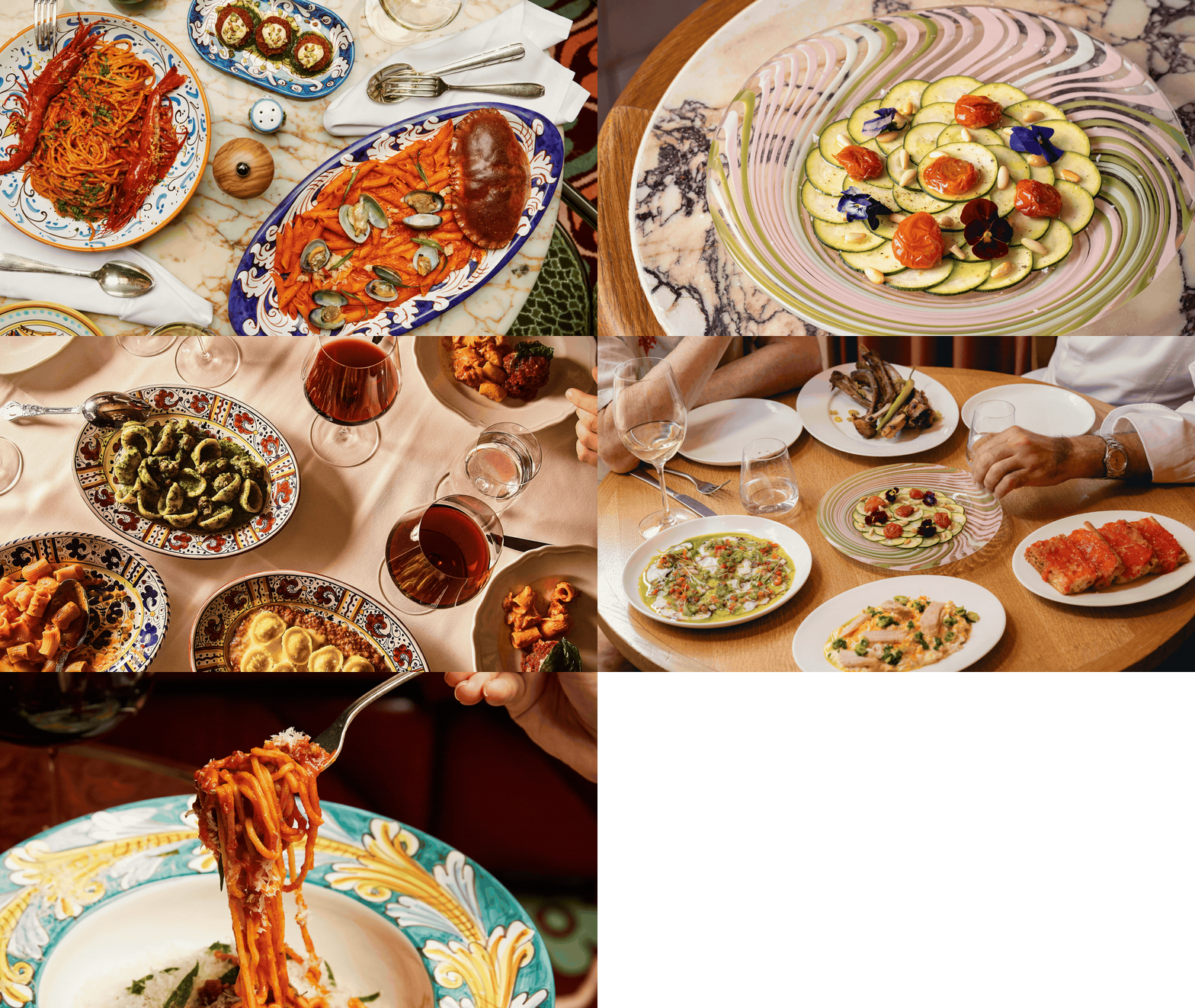
The vividly decorated ceramic tableware of hospitality group Big Mamma echoes the vibrancy and warmth of family time spent in Italy, gathering around the dining table.
If Pizarro's choice is informed by a dish's substance and aims to match the flavor profile of the tapas and hearty mains that have made his London locations some of the buzziest in the British capital, other establishments, like NYC cult 'red sauce' Italian Carbone London, drive on atmosphere. Viral for its retro-inspired, flamboyant energy and its A-list fanbase, the address, which launched in the city last year, builds on its 'more is more' approach to luscious pastas, melt-in-your-mouth crudo, and flaming flambés with its collection of vibrantly tinted, floral-design ceramic plates. While at Carbone London the patterns marry the wrap-around spectacle of a Ken Fulk-designed dining room clad in plush red fabrics and dotted with golden lights and original artworks, elsewhere in the city, those same ceramics are chosen as a nod to humbly delicious origins.
"As a chef, I've always believed the plate itself can be so much more than just a quiet backdrop," shares Filippo La Gattuta, executive chef at Big Mamma UK, the prolific portfolio behind dazzling Italian restaurants including Circolo Popolare, Carlotta, Gloria Shoreditch, and Barbarella, with a brand new location, Edmondo, set to launch next month. Every address from the group serves up its homemade pastas, triumphs of seasonal vegetables, and comforting nibbles in striking crockery proudly handmade and painted by local artisans in southern Italy.
"To me, these vibrant plates just naturally belong with the ingredients we pour our hearts into," the chef adds. "Back home, a juicy mozzarella di bufala would be served up on a brightly painted plate right at the family table. Why shouldn't we share that exact same, authentic joy with our guests? Using these stunning ceramics lets us dish up a true 360-degree experience, bringing the warm, beating heart of Italy right into our dining rooms, even when we're thousands of miles away."
"The Right Plate Makes It Possible for a Meal to Become a Memory": Why Food and Emotion Go Hand in Hand

Earlier this year, acclaimed glass artist Peter Layton joined forces with celebrity chef José Pizarro on an exclusive collection of 30 limited-edition glass platters. The result is rather hypnotic.
The biggest argument against patterned and colorful plates tends to be that, even subconsciously, they can take the spotlight away from the actual meal. Even then, neither La Gattuta nor Pizarro have specific no-go motifs: instead, the choice always falls on plates that allow both their surface and the ingredients to convey emotion to the diners. To say it in the words of the Big Mamma executive chef, "the right plate makes it possible for a meal to become a memory." It is no coincidence, then, that childhood memories influence their preferences and vision of a perfectly plated feast.
"Growing up in Spain, the table was never perfectly matched. There were white plates, terracotta dishes, patterned bowls, bread, bottles, glasses, and food everywhere in the middle, and everybody reaching across the table," Pizarro recalls. His Spanish upbringing is what makes him look at terracotta dishware with special affection. "In Spain, we have cooked and served food in barro for generations. There is something incredibly honest about it: it comes from the earth, it is practical, and it gets more beautiful with use. I want my restaurants to have that generosity and informality."
Big Mamma's La Gattuta feels similarly about the traditional Italian majolica ceramic dishware that serves as the protagonist, along, of course, with food, at all of the portfolio's addresses. Among those designs, recently made available to purchase online via the group's e-shop and largely crafted in family-run workshops in the Umbria region, a few stand out: "whether in classic red or blue, the Gallo (rooster) brings a real sense of the Umbrian countryside to the table, acting as a traditional folklore symbol of good luck and protection. I also love our astrology-themed plates, featuring signs like Capricorno or Gemelli, as they add such a fun, conversational spark to the meal that taps right into our Italian passion."
Why It's Time to Embrace the Patterned Plate — And Bring Joy to the Table

The salame and bread and focaccia selection of Carbone London makes for a colorful composition styled in ornate ceramic tableware.
What do patterned plates bring to the table, then? Far from distracting the eye, these irreverent pieces layer flavor with history and atmosphere, transforming a simple dinner into an immersive, multi-sensory story. They serve as an active canvas for emotion, proving that eccentric tableware can amplify the visual and cultural essence of a dish just as much as a secret ingredient. As Filippo La Gattuta highlights, "a lively, colorful plate doesn't distract from the food, it amplifies the energy of the recipe and tells the beautiful story of the culture it comes from."
In a world that often defaults to safe, sterile minimalism, our dining spaces crave a return to character, generosity, and authentic craftsmanship; a return to offline taste. Striking the right balance may require a bit of intuition so you don't have "everything shouting at once," allowing the vessel and the food to harmoniously elevate each other. Still, it is well worth the trial and error. "A table doesn't need to match perfectly to be beautiful. In fact, I often prefer it when it doesn't," concludes Pizarro. If you haven't done it yet, dare to be less traditional and bolder with your tableware: it might just be the incipit to a night to remember.
Get Inspired by Our Plates Edit
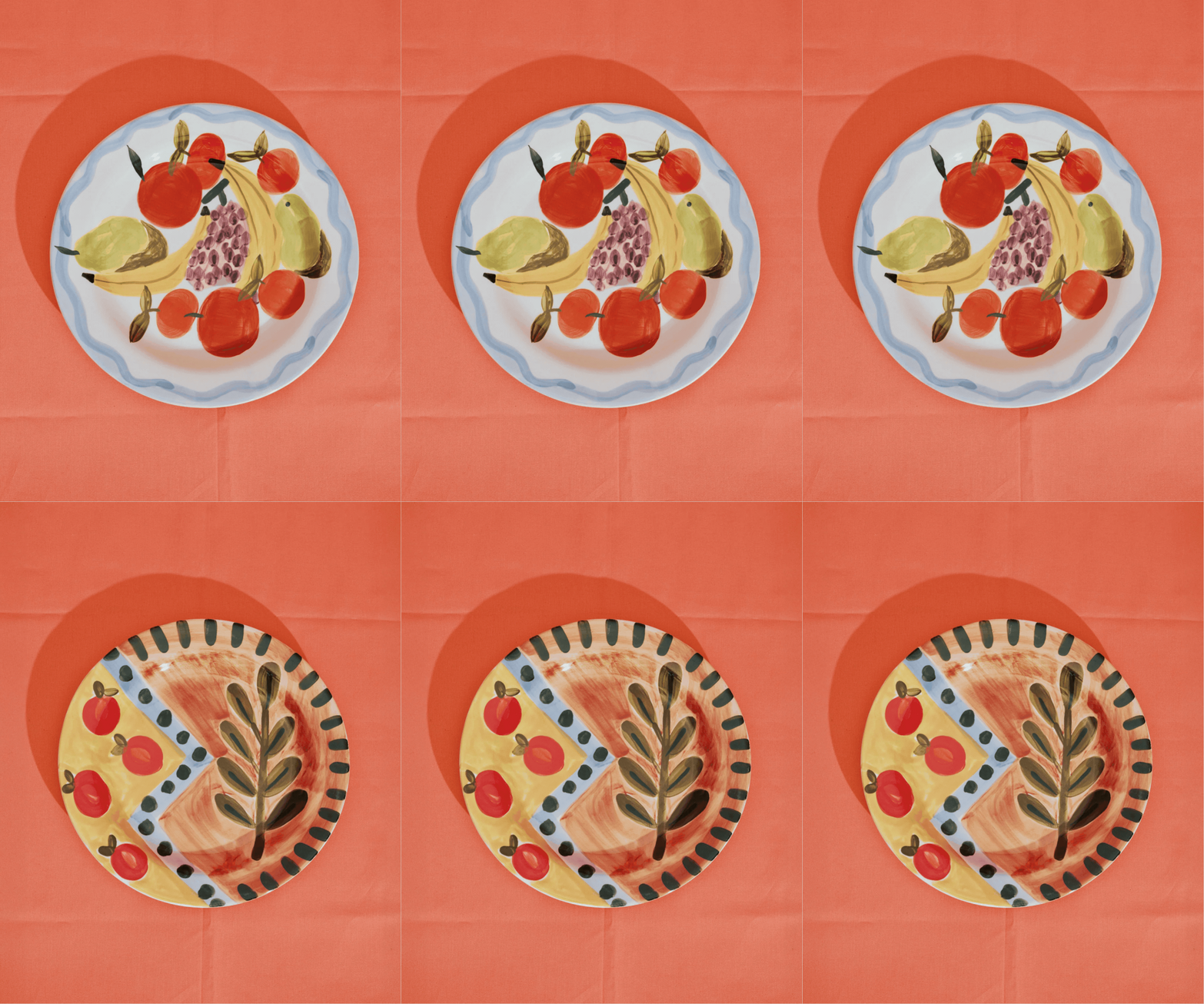

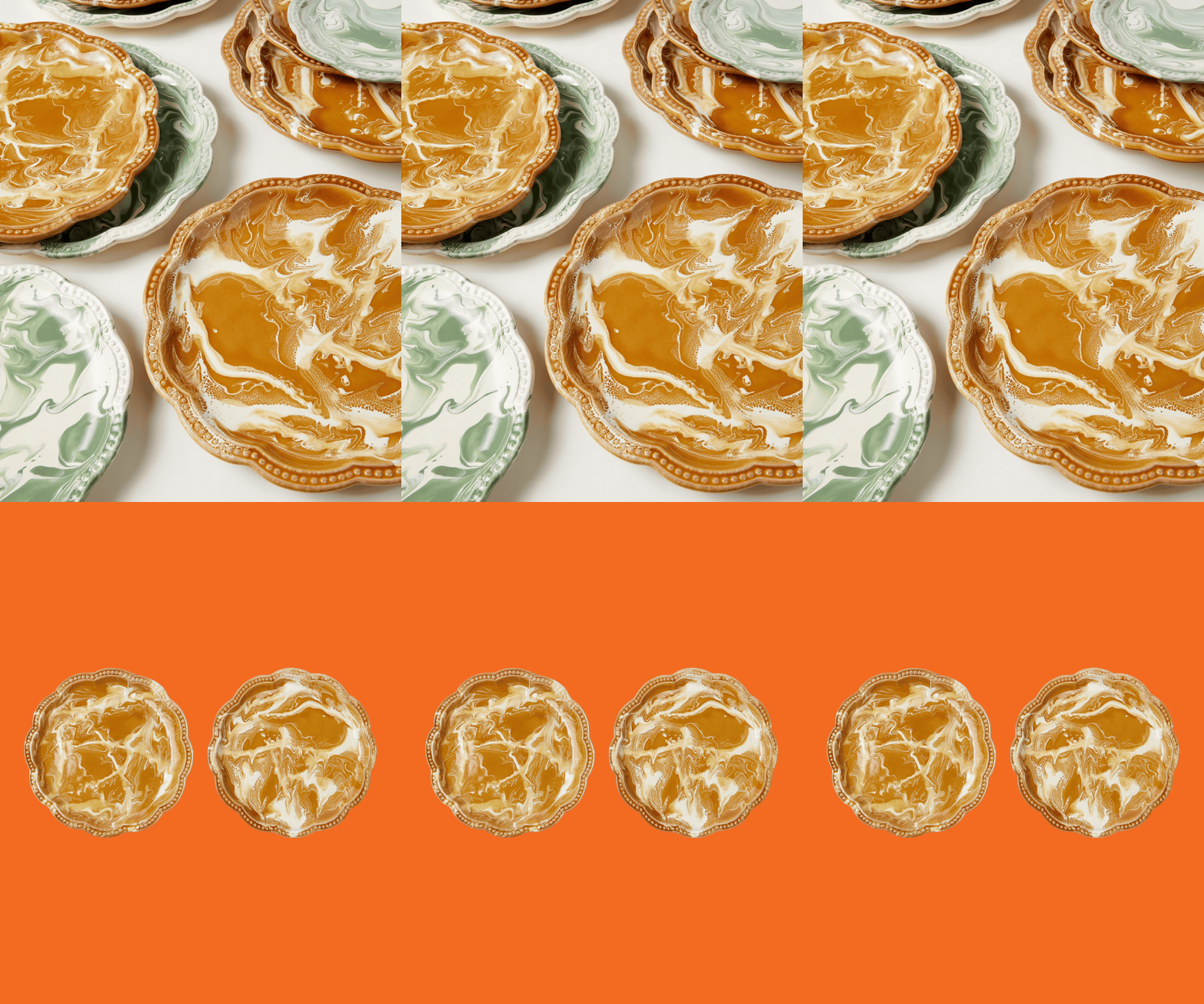

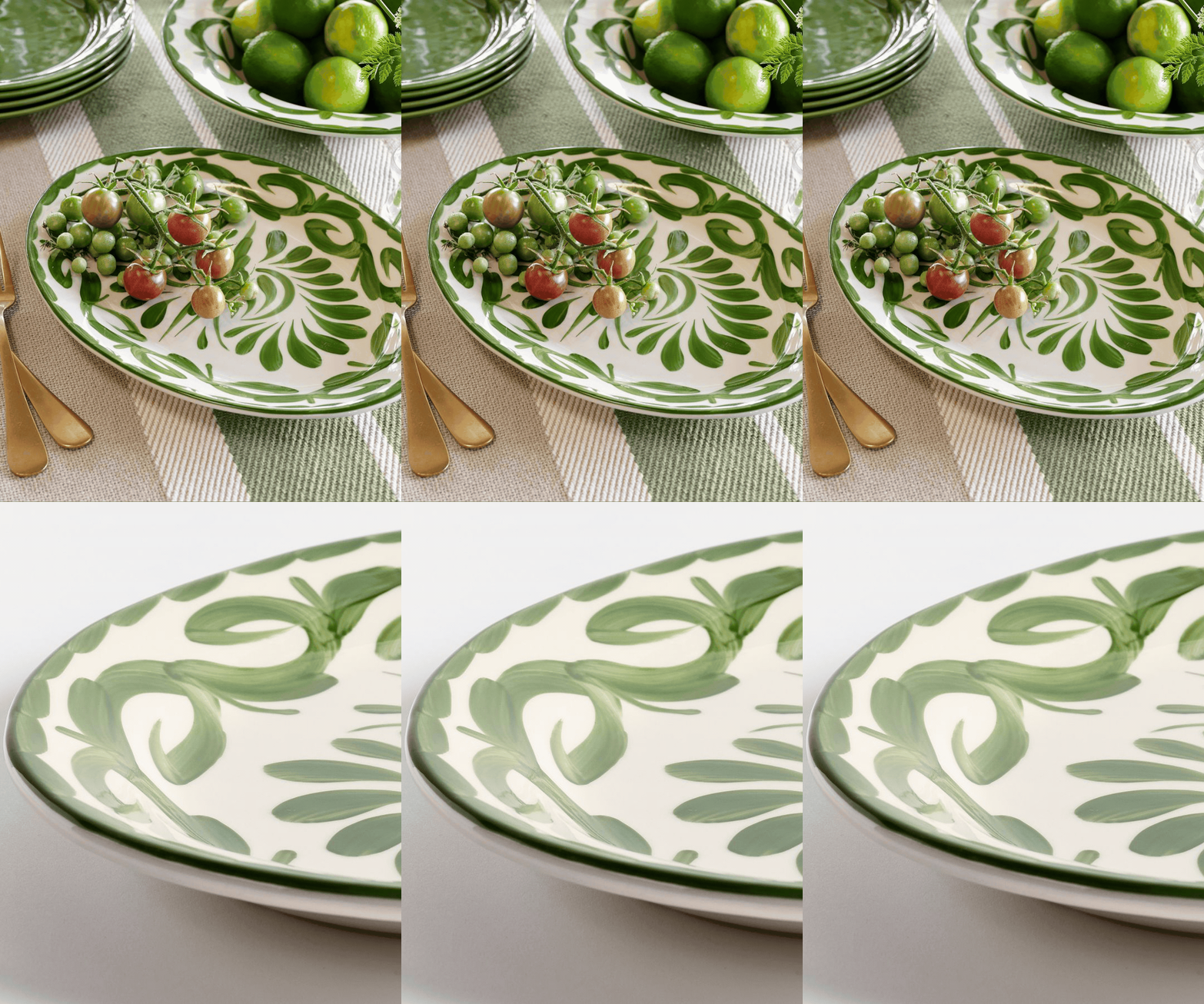

For more culinarian-backed picks, revisit the archive of our Chef's Essentials series, or become a pro restaurant connoisseurs with our guide to the 5 things restaurateurs secretely judge restaurants on.
