SERAX's Coolest Tableware Collection Is Made of Cardboard — Well, Almost
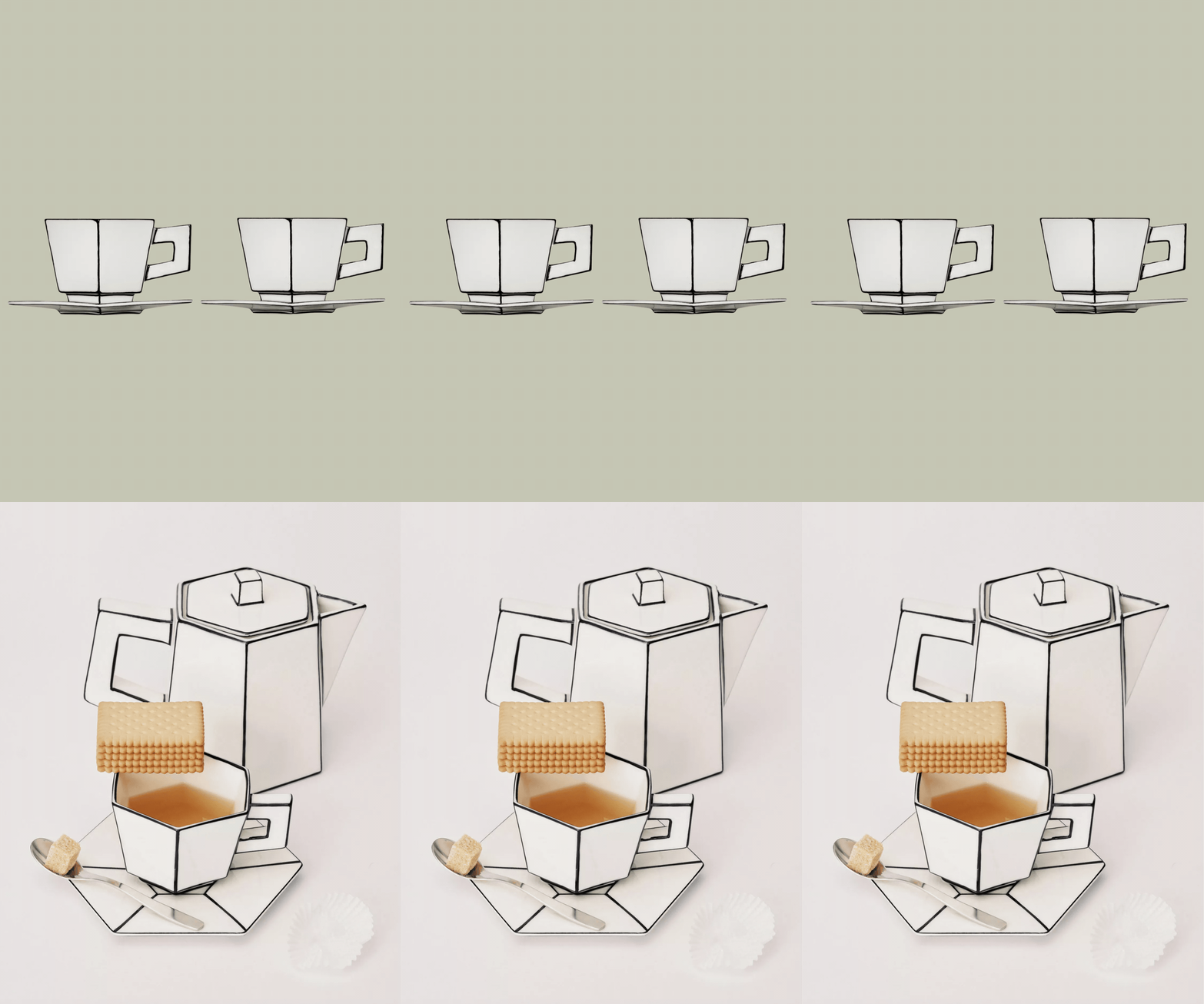
Designed by Annebet Philips, "Carte Blanche" strips it back to archetypal forms and an essential palette that capture the spontaneity of making with paper. It's a reminder "there's no pressure for things to be perfect"


It is not every day that an independent designer gets to transform their love of making, and making in the most hands-on of ways, into a collaboration with the likes of SERAX, the heritage Belgian homeware brand known for its high-end, imaginative collections of lighting, furniture, decorative pottery, and dinnerware. But for Dutch emerging designer Annebet Philips, a Delft University of Technology Industrial Design Engineering graduate born in Gorinchem and now based in Amsterdam, the Netherlands, reaching out on a whim worked out pretty well.
"I approached SERAX submitting a proposal with the concept and pictures of some of the first Carte Blanche prototypes," she says of how the line, which debuted at Maison&Objet last year, first came to be. The response was not long in coming. "They responded almost immediately and invited me to come in," Philips explains. "From that first meeting, there was a real sense of mutual enthusiasm, and things moved very naturally and quickly." They haven't quite stopped moving since, as "a completely new collection is launching this September".
How "Carte Blanche" Was Made — From Paper Dreams to Reality

"I love working with cardboard because it's so immediate," says Philips. "You can just cut, fold, and tape and see an idea come to life without complicated tools, technical drawings, or someone else to make it for you."
"The name Carte Blanche refers both to the blank material that serves as the tableware line's starting point and to the feeling of freedom you get whenever you begin something new, fresh," Philips says of the name of her inaugural SERAX drop, her first-ever body of work in ceramic.
To envision it, she leaned into the honest essence of paper. "I've been making cardboard models for as long as I can remember as a designer, across all kinds of projects. I love working with cardboard because it's so immediate. You can just cut, fold, and tape, and see an idea come to life without complicated tools, technical drawings, or someone else making it for you. I love being able to capture a new idea quickly, in a raw and pure way."
In an AI-driven age, there is something quietly refreshing about getting to work with such an ordinary yet physical material, Philips suggests, joining in the manual crafts renaissance at the heart of the ongoing DIY revival. "There's no pressure for things to be perfect, which makes the process playful, intuitive, and a little naïve." Maybe, that's all you need, really.
The Goal — Searching for "the Essence of Archetypal Forms"

Debuted last September, the SERAX Carte Blanche collection originally comprised a series of mugs, teapots, egg cups, milk jugs, and salt and pepper grinders, and was later expanded to include equally irreverent vases and candleholders. A new collection is expected this September.
Philips's work strives to capture the essence of archetypal forms, and the flatness and slight stiffness of cardboard lend themselves perfectly to reducing a form to its most recognizable lines and shapes. "Carte Blanche is really about translating the character of those first raw cardboard prototypes into ceramic: the angularity of folded cardboard, the seams, the slightly naïve lines, and the spontaneity of making something quickly by hand."
I ask the designer whether focusing on tableware for this launch was always on the cards, or if the process itself led her to it. "The earliest prototypes were actually made during a stay in Italy, so perhaps it's no coincidence that the first object I made was a little espresso cup," she explains. Before she knew it, a cappuccino cup and saucer had found their final shape. Together with SERAX, Philips expanded that small coffee moment into a wider tea and coffee collection, adding mugs, a teapot and milk jug. Then came bowls, plates, and egg cups, making Carte Blanche a broader tableware collection. Most recently, the drop has grown even further to include vases and candleholders.
"In my work, I often take something very familiar and try to offer a slightly different perspective on it: a common silhouette with an unexpected twist," says Philips. "The white surfaces and black lines emphasize the essence of those familiar forms, while giving them a fresh and playful character." Explore the SERAX Carte Blanche collection, and keep an eye out for the designer's forthcoming launch.


Discover more such homeware launches first by joining the Livingetc newsletter today.
